FUNAAB Begins First Semester Examinations for 2025/2026 Session
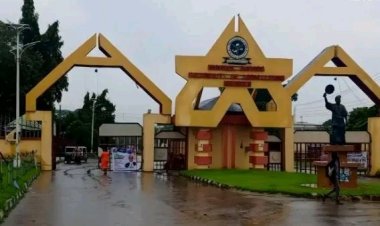
The Federal University of Agriculture, Abeokuta (FUNAAB) commenced its First Semester examinations for the 2025/2026 Academic Session on Monday, January 5, 2026, with the exercise recorded as peaceful, orderly, and efficiently coordinated across the campus.
 Philip22

The Federal University of Agriculture, Abeokuta (FUNAAB) commenced its First Semester examinations for the 2025/2026 Academic Session on Monday, January 5, 2026, with the exercise recorded as peaceful, orderly, and efficiently coordinated across the campus.

The examinations, conducted through a combination of electronic and written formats, followed weeks of intensive preparation, monitoring, and infrastructure upgrades by the University Management.
While monitoring the process, the Deputy Vice-Chancellor (Academic), Professor Olusegun Idowu, attributed the smooth conduct of the examinations to detailed planning, staff commitment, and sustained management support. He explained that continuous readiness checks and weekend monitoring contributed significantly to the success of the exercise.
Professor Idowu disclosed that recent infrastructure upgrades played a key role, including the refurbishment and compartmentalisation of the existing 500-capacity e-examination hall, now fully air-conditioned, and the establishment of a new 240-capacity computer-based test (CBT) laboratory equipped with new laptops. He noted that the improvements had eliminated previous operational challenges and reinforced the University’s commitment to quality academic service delivery.
The Chairman of the Timetable and Examinations Committee (TIMTEC), Professor Pius Dada, stated that the examination period spans three weeks and two days, a timeline designed to accommodate the growing student population, particularly at the 100 Level, which currently stands at about 7,000 students.

Professor Dada commended the Vice-Chancellor, Professor Babatunde Kehinde, and the Management Team for approving the new CBT facility, noting that it has increased examination efficiency by over 40 per cent. He added that examinations commence daily at 9:00 a.m., with morning sessions ending around 1:00 p.m., while all examination activities conclude by 5:00 p.m. He further disclosed that potential challenges were addressed in advance through the provision of additional computers, functional power supply, and upgraded facilities, with support from the Directorate of Works, the Directorate of Information and Communication Technology Services (DICTS), and the University Health Centre.
At the new CBT hall, an invigilator, Dr. Matthew Whetto, described the examination environment as calm and conducive, reporting high levels of compliance among students and staff. He noted that minor login issues experienced by a few students, largely due to late course registration, were promptly resolved.
Another invigilator, Professor Adebayo Jegede of the Department of Animal Nutrition, also confirmed the peaceful conduct of the examinations, stating that regulations were strictly enforced and commending Management for ensuring uninterrupted power supply.
The Acting Director of DICTS, Mr. Temitope Soretire, attributed the stress-free examination process to enhanced ICT infrastructure and improved planning. He revealed that the new 240-capacity CBT hall operates without diesel, making it both cost-effective and environmentally friendly, and added that plans were underway to extend the alternative power solution to other examination centres through the University’s 3MW solar power infrastructure.
Students who participated in the examinations expressed satisfaction with the arrangements. Oluwademilade Elemide, a 100 Level Geology student, described the experience as exceptional, while Boluwatife Afolabi of the Department of Pure and Applied Chemistry noted the peaceful and organised nature of the exercise. Olaitan Kausarat, a 100 Level student of Food Science and Technology, acknowledged minor login challenges that were swiftly resolved, and Famoroti Michael of the Department of Statistics commended the efficiency of the CBT process.

Overall assessments from Management, staff, and students confirmed a smoothly executed examination exercise anchored on strategic planning, improved infrastructure, and coordinated institutional effort.