FUTA Don Urges Nigeria to Prioritize Local Insulin and Antivenom Production to Bolster Bio-Economy
FUTA Don Urges Nigeria to Prioritize Local Insulin and Antivenom Production to Bolster Bio-Economy
 UmarFarouk123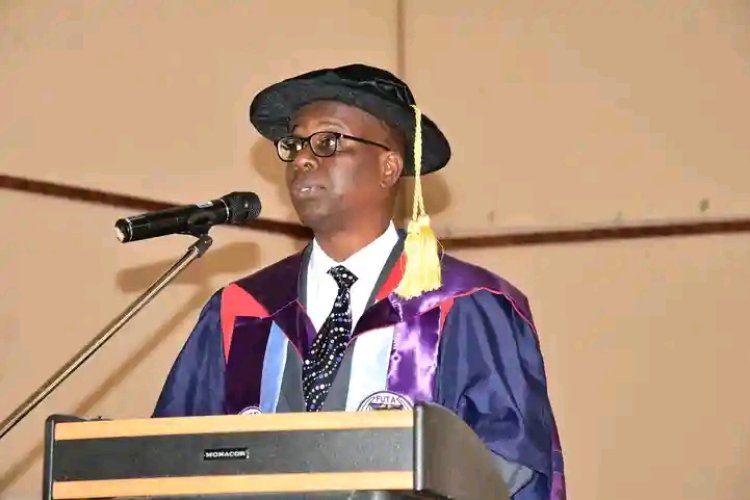
Nigeria can achieve self-sufficiency in the production of insulin for diabetes management and antivenoms for snake and scorpion bites if the right policy environment and sustained investment in research are put in place.
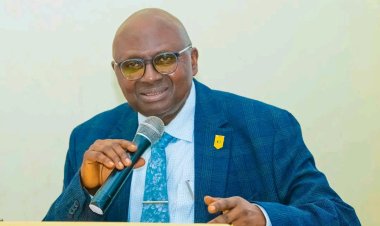
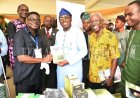
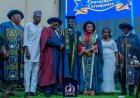
This assertion was made by a Professor of Enzymology and Biophysical Chemistry at the Federal University of Technology, Akure (FUTA), Prof. Ayodele Kolawole, while delivering the institution’s 190th Inaugural Lecture on Tuesday, 13 January 2026.
Delivering a lecture titled “Exquisiteness of Enzymes: Its Economy in Its Entrepreneurial Ecosystem,” Prof. Kolawole emphasized that Nigeria possesses the scientific capacity and natural resources required to locally produce critical biopharmaceuticals. He noted that enzymes of immense industrial and medical value abound in the country’s environment and can be isolated, purified, and deployed for large-scale industrial and laboratory use through collaborative efforts and shared research facilities.
Describing enzymes as “superbly crafted biological catalysts,” Kolawole explained that they drive virtually all biochemical reactions in living systems by drastically lowering activation energy while maintaining high precision in biochemical processes. According to him, these properties make enzymes indispensable to food processing, healthcare delivery, and industrial development.
To stimulate local production, the FUTA don urged the Federal Government to take decisive steps, including banning the importation of enzymes used in bio-processing and actively supporting indigenous enzyme production. He stressed that Nigeria’s overdependence on imported enzymes—particularly amylases and proteases used in food and health industries—constitutes a major drain on foreign exchange and undermines national industrial growth. By prioritizing local production, he argued, Nigeria could unlock the full economic potential of its indigenous raw materials, especially cereals.
Professor Kolawole also criticized Nigerian universities for not playing a sufficiently transformative role in driving innovation. He warned against what he described as a troubling trend in which universities merely replicate societal business practices instead of leading technological and scientific advancement. He urged higher institutions to move beyond conventional agricultural ventures and refocus on cutting-edge research capable of generating economic empowerment.
Calling for increased government funding for biochemical research, Kolawole highlighted the crippling effects of unreliable and expensive electricity supply on bioscience research. He noted that frequent power rationing and rising tariffs have severely disrupted research activities in universities over the past two years. According to him, electricity for universities and research institutes should be heavily subsidized or made free, to enable meaningful scientific breakthroughs.
The professor further lamented the acute shortage of trained enzymologists in Nigeria, noting that many biochemists shy away from the field due to inadequate facilities and limited research support. He advocated the establishment of a dedicated Institute of Enzymology or Protein Research to coordinate, stimulate, and advance enzyme and protein research nationwide.
At the continental level, Kolawole described enzymology as a strategic pathway for Africa’s development, offering opportunities for decentralized economic activities, participatory research, and community-driven innovation. He urged African scientists to mobilize their expertise to harness enzymology as a driver of national and continental progress.
Earlier, while introducing the lecturer, the Vice-Chancellor of FUTA, Prof. Adenike Oladiji—represented by the Deputy Vice-Chancellor (Development), Prof. Sunday Oluyamo—described Prof. Kolawole as a distinguished scholar who has attracted several research grants to the university. She commended him for his contributions to teaching, research, and mentorship, noting that many of his undergraduate and postgraduate products are excelling globally, in addition to his extensive service on university committees."