FUTA Hosts Staff Training on Project Management and Service Delivery
The Federal University of Technology Akure Directorate of Physical Planning has conducted its first quarter staff training programme for 2026, themed “Improved Service Delivery through Project Management and Planning.”
 Philip22
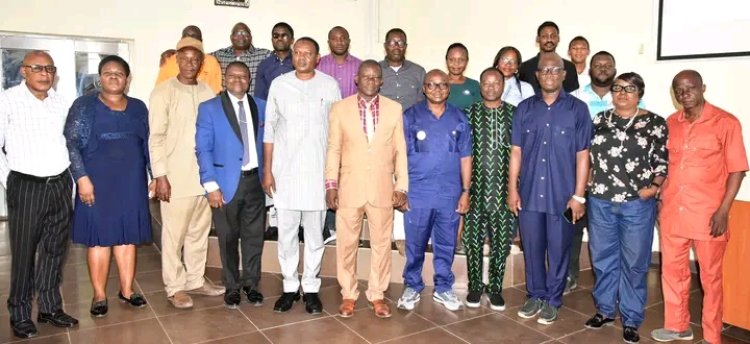
The Federal University of Technology Akure Directorate of Physical Planning has conducted its first quarter staff training programme for 2026, themed “Improved Service Delivery through Project Management and Planning.”
The initiative aimed to equip staff with the skills and knowledge necessary to enhance service delivery, effectively manage projects, and explore consultancy opportunities beyond the University.
The training was spearheaded by the Director of Physical Planning, Engineer Boyinbode Folorunsho, who encouraged participants to leverage insights gained to improve professional practices and project outcomes.
Representing the Vice-Chancellor, Professor Adenike Oladiji, the Deputy Vice-Chancellor (Development), Professor Sunday Oluyamo, stressed the importance of continuous training and professional development. He highlighted the dynamic nature of technology and administrative work, emphasizing that regular skill updates are essential to institutional growth. The Vice-Chancellor’s representative commended the Directorate for organizing the training, noting its focus on project management, code of conduct, and collaboration with other University units. He urged participants to become trainers themselves and requested the Directorate to schedule follow-up sessions within four months to reinforce learning.
Professor Oluwaseyi Awodele, Director of Academic Planning, delivered a lecture on the principles and practical application of project management in the University setting. He highlighted six key areas critical for successful project delivery: scope management, cost management, time management, quality management, risk management, and procurement management. Professor Awodele emphasized the need to prevent scope creep, prepare accurate bills of quantity, use market-based pricing, and adhere to work programs, ensuring timely and budget-conscious project execution while balancing multiple stakeholders.
Victor Blackwell, Executive Officer in the Vice-Chancellor’s Office, addressed the role of effective record-keeping in project management. He stressed that maintaining accurate project files—from proposals and financial statements to contracts and progress reports—is crucial for transparency, legal compliance, accountability, and institutional memory. Blackwell advised that each project should have a dedicated file managed systematically to ensure easy access, tracking, and continuity.
Deputy Director of Physical Planning, Akinlolu Fadiyimu, highlighted the broader benefits of consultancy services for staff and the University. He noted that professionals in the Directorate, including engineers, quantity surveyors, and urban planners, are strategically positioned to provide expertise in master planning, project supervision, financial advisory, facility management, and sustainability consulting. Fadiyimu emphasized that such consultancy collaborations with government, private, and individual clients can enhance the University’s reputation, expand professional skills, and generate additional revenue, while cautioning staff to maintain ethical standards and separate official duties from private engagements.
The training concluded with a call for participants to apply the knowledge gained in both University projects and external consultancy, positioning the Directorate of Physical Planning as a model for professional excellence and strategic impact.