Industrial Relations Expert Calls for Policy Coherence as FUTA SSANU Marks 30th Anniversary
An industrial relations expert and former Registrar of the Federal University of Agriculture, Abeokuta, Dr. Bola Adekola, has urged the Federal Government to pursue coherent and sustainable labour policies to strengthen industrial harmony and national development.
 Philip22

An industrial relations expert and former Registrar of the Federal University of Agriculture, Abeokuta, Dr. Bola Adekola, has urged the Federal Government to pursue coherent and sustainable labour policies to strengthen industrial harmony and national development.

Delivering a keynote lecture titled “Industrial Relations Policy Under President Bola Ahmed Tinubu: Matters Arising” at the 30th Anniversary Celebration of the Senior Staff Association of Nigerian Universities (SSANU), Federal University of Technology Akure (FUTA) Branch, Dr. Adekola traced the origins of Nigeria’s labour challenges to its colonial legacy, which he said entrenched structural imbalances between employers and employees.
He noted that both democratic and military administrations have failed to create enduring solutions, alternating between negotiation and coercion without addressing the systemic roots of industrial conflict. “Nigeria’s labour history has been a cycle of coercion and compromise,” he said, lamenting that successive governments have preferred suppression or temporary settlements to comprehensive reform.
Commending President Tinubu’s recent initiatives — the National Industrial Relations Policy (NIRP) 2025 and the National Industrial Manpower Development Policy (NIMDP) — Adekola described them as bold efforts toward modernizing labour administration. He explained that the NIRP provides a unified framework for trade union regulation and tripartite cooperation in line with International Labour Organization (ILO) standards, while the NIMDP seeks to align education with industry needs through manpower planning and digital workforce mapping.
Despite these developments, Dr. Adekola expressed concern over lingering disputes involving non-teaching university unions, particularly SSANU and NASU, on issues such as earned allowances, promotion arrears, and unimplemented agreements since 2009. He warned that continued government inaction could trigger another prolonged shutdown of the university system.
He criticized the recurrent renegotiation cycles — from the Babalakin (2017) to Yayale Ahmed (2023) and the recently expanded 2025 Committee — for producing “agreements of hope without consistent implementation,” deepening mistrust between labour and government.

Highlighting broader national concerns, Dr. Adekola said insecurity, corruption, and economic instability have worsened industrial unrest. “Debating labour reforms in a climate of pervasive insecurity,” he cautioned, “is like discussing the colour of curtains in a burning house.”
To strengthen ongoing reforms, he recommended the creation of a National Industrial Relations Council, regular labour policy audits, expansion of labour courts for faster dispute resolution, integration of AI-driven workforce analytics, and inclusion of gender and disability rights in labour frameworks to promote inclusivity. He concluded by urging stakeholders to “rise not just to critique, but to contribute,” stressing that Nigeria’s future depends on “a new social contract anchored on dialogue, equity, and accountability.”
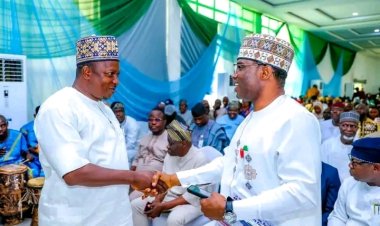
During a panel session, the National Vice President (Western Zone), Comrade Abdussobur Olayiwola Salaam, and Comrade (Sir) Uchenna Nwokeji, President of Owerri Sports Club, called for urgent government intervention in the ongoing funding crisis in public universities to avert another total system shutdown. They cautioned that the establishment of new universities amid inadequate funding for existing ones could further destabilize the higher education sector and intensify brain drain.
In his welcome address, Comrade Felix Adunbi, Chairman of SSANU-FUTA, expressed gratitude to members and guests for their participation in the milestone celebration. He described the anniversary as “a day of reflection, recognition, and renewal,” acknowledging the founding members who championed the welfare and dignity of senior non-teaching staff.
He highlighted weeklong anniversary activities, including a Jumu’at Service, interdenominational thanksgiving, health awareness talk, pre-retirement lecture, cultural celebration for retiring members, and a novelty football match between SSANU-FUTA and SSANU-AFUED. Adunbi also announced the launch of the SSANU-FUTA Secretariat Building Project, describing it as “a symbol of unity, growth, and institutional strength.”
The National President of SSANU, Comrade Mohammed Haruna Ibrahim, represented by Comrade Salaam, commended the FUTA Chapter for its discipline, consistency, and constructive engagement. He praised the leadership for maintaining peace without compromising its advocacy for fairness and justice, urging other universities to emulate FUTA’s model of cooperative union-management relations.
In her goodwill message, the Vice-Chancellor of FUTA, Professor Adenike Temidayo Oladiji, FAS, congratulated the union for its resilience and responsible leadership over the years. She described SSANU-FUTA as “a model of constructive unionism that combines advocacy with collaboration,” and announced that one of the anniversary events would henceforth be adopted as an annual university celebration — to be known as ASA Day (Cultural Day) — symbolizing appreciation, solidarity, and advancement.
The Registrar, Mr. Charles Adeleye, lauded the union for its maturity and consistency, noting that its approach to dialogue had contributed significantly to the university’s industrial harmony. Also speaking, Basorun Seinde Arogbofa, OFR, the Father of the Day, described SSANU-FUTA as a model of purposeful unionism and urged members to remain united and forward-looking, emphasizing that “unionism guided by wisdom and humility becomes a tool for progress, not protest.”

The event featured award presentations to distinguished individuals and organizations for their contributions to SSANU-FUTA’s growth and national development. Honourees included Aare Afe Babalola, Chief Michael Ade-Ojo, Prof. Peter O. Adeniyi, Ambassador Godknows Boladei Igali, Engr. Ayorinde Abiola Olawoye, Prof. Oyedapo A. Fagbenro, Akogun Adetunji Adeleye, Mr. Ademola Bobola, Mr. Ife Oluwole, Chief Omololu Adegbenro, Mrs. Oluwafunmibi Ruth Ayodeji, Arc. Adetunji Bello, Comrade Johnson O. Esho, Comrade Taiwo Olawole, Comrade Basorun (Barr.) Adeboye Olatunji, as well as Johnvents Industries Limited, Wema Bank Plc, OPay Digital Services, NUPEMCO, and AccessArm.
The ceremony concluded with reflections on three decades of responsible unionism, unity, and impactful service to the university system and the wider Nigerian academic community.