UI Don Suggests Panacea for Sustainable Economic Development in Nigeria
UI Don Suggests Panacea for Sustainable Economic Development in Nigeria
 UmarFarouk123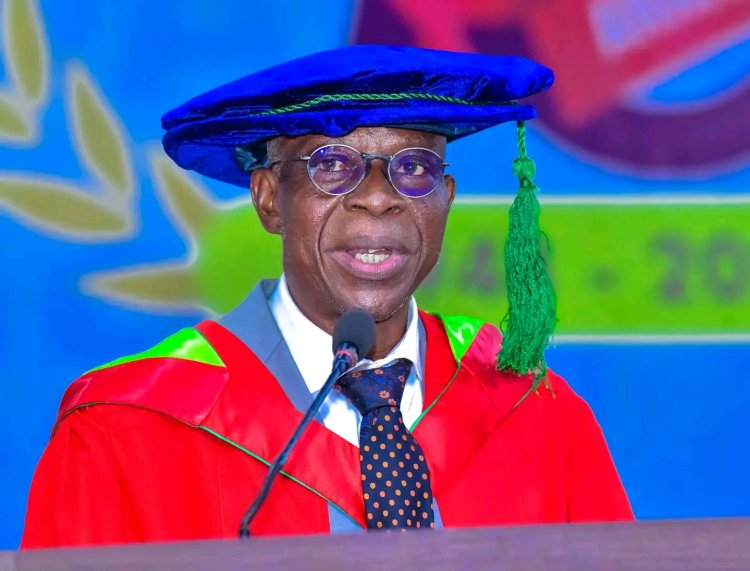
A Professor of Development Economics, Professor Taiwo Timothy Awoyemi, has suggested that to achieve sustainable economic development in Nigeria, economic growth must be sustained, inequality reduced and poverty eradicated.
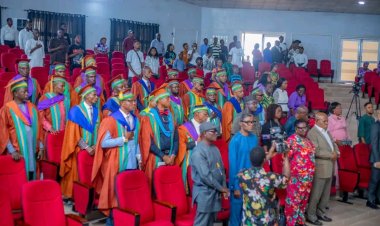
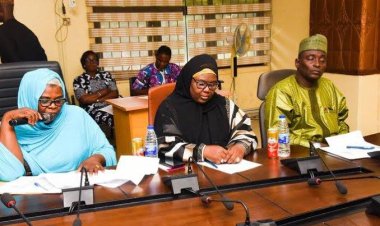
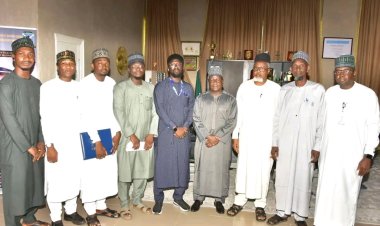
He made this suggestion while delivering the 610th Inaugural Lecture of the University of Ibadan on behalf of the Faculty of Agriculture.
The title of the lecture was: "Nigeria in Persistent Struggle: Nuisance of Unfaithfulness to the Trio of Economic Development."
Professor Awoyemi said that if Nigeria commits consistently and faithfully to the trio of economic development, the persistent struggle can give way to sustained transformation that translates into shared prosperity for the populace.
He explained that the trio of economic development - economic growth, equality, and poverty eradication are interconnected and indivisible, warning that neglecting one will undermine others.
The Professor of Development Economics stated that the bane of achieving impressive development in Nigeria has been the blatant neglect and unfaithfulness to these trio of economic development.
He stressed that there has been unfaithfulness by governments in the past towards addressing the trio of development, adding that unfaithfulness manifests in the form of perennial abuses of power, neglect of human capital development, politically motivated skewed distribution of developmental infrastructure across the country, ethnicity, political tension, and inefficiencies in the use of resources
The Inaugural Lecturer noted that Nigeria's growth trajectory has been characterised by episodic expansion, volatility, and limited inclusiveness as the oil boom of the 1970s marked the most dramatic episode of growth in Nigeria's economic history.
The Don decried the fact that economic growth achieved in Nigeria in time past has generally not reached the poor to an extent that would have been necessary to reduce the number of poor people, in spite of a rapidly increasing population.
According to him, increasing income inequality and poverty continue to be the most challenging economic factors facing most developing countries, particularly Nigeria where inequality has persisted across periods of both growth and contraction.
Professor Awoyemi explained that high inequality weakened the poverty-reducing impact of growth, concentrating income gains on a small segment of the population while leaving the majority vulnerable.
He added that without structural transformation and deliberate distributional reforms, inequality will continue to reduce the development of Nigeria's economic growth.
He said the level of regional inequalities in Nigeria might have been aggravated as a result of new causes associated with technology, lack of good governance, corruption, weak democratic institutions, past military rule, excessive deflationary programmes adding that policy measures which focus on rapid privatisation might have risen to an unprecedented concentration of wealth and income in the hands of the few rich in the society.
The Don lamented that the combination of initial endemic poverty, high inequality, and low growth has been detrimental to the achievement of poverty reduction and more generally, overall socio-economic development in Nigeria.
According to him, in spite of some improvements in poverty and social indicators over the last few decades, the problem of poverty in Nigeria has by no means diminished, rather it appears more severe.
Professor Awoyemi advocated commitment to pro-poor growth rather than growth alone, whose pace and structure enables the poor to participate, contribute, and benefit from economic expansion.
He stressed the importance of the consolidation of the middle class, a policy aimed at strengthening the middle-income group through protecting purchasing power against inflation, creating structural stability for employment-generating sectors, supporting small and medium enterprises with credit and infrastructure, expansion of non-farm business opportunities and investment in digital skills to prevent technological displacement.
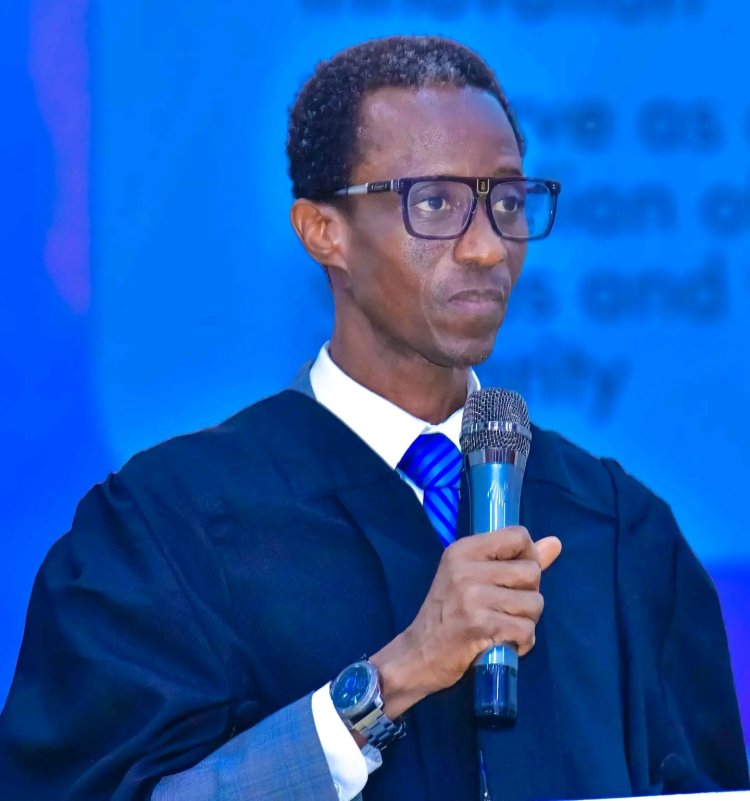
The lecturer called for increased agricultural productivity and efficiency through the establishment of agricultural processing hubs for major crops in every senatorial district.
He said this will reduce post-harvest losses, investment in digital commodity exchanges using platforms like African Exchange (AFEX), increased budget for agricultural research and development and shifting the educational curriculum towards Science, Technology, Engineering and Mathematics (STEM).
The Professor of Development Economics stressed that growth should be aligned with deliberate inequality reduction measures and he also advocated political stability.
He called on government agencies to regularly update household surveys, publish disaggregated poverty and inequality data and use decomposable inequality indices and polarisation measures to guide policy design and targeted interventions.
The Inaugural Lecture was the seventh in the series for the 2025/2026 academic session.