UI Vice-Chancellor: Africa Must Change the Narrative on Mineral Wealth Through Research and Value Addition
UI Vice-Chancellor: Africa Must Change the Narrative on Mineral Wealth Through Research and Value Addition
 UmarFarouk123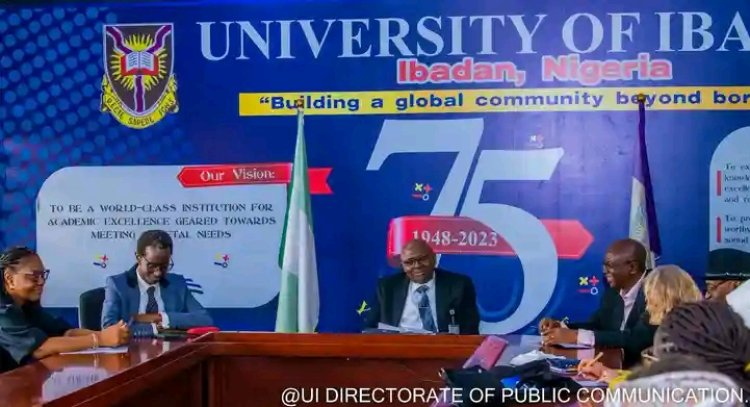
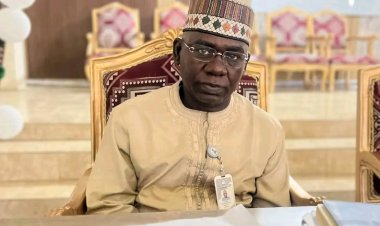
The Vice-Chancellor of the University of Ibadan, Professor Kayode O. Adebowale, mni, FAS, has called on Africa to change the narrative around its mineral wealth by moving beyond raw exports and becoming a driver of the next industrial revolution through research, innovation, and value addition.
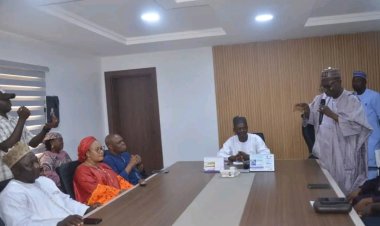
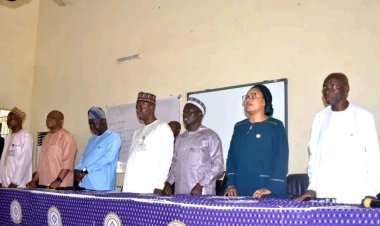
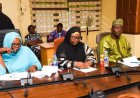
Professor Adebowale made the call while receiving participants and organisers of the 10th SGA Metallogeny Short Course 2026 during a courtesy visit to the Vice-Chancellor’s Board Room.
The Vice-Chancellor noted that Africa possesses enormous mineral resources but continues to export them in raw form, only to import finished products at higher costs.
He said education, enlightenment, research, and capacity building are essential to reversing the trend and ensuring the continent derives greater value from its natural resources.
He described the SGA short course as a timely intervention capable of equipping a new generation of researchers with the knowledge and skills required to transform the continent’s mineral resources sector.
Professor Adebowale also highlighted the longstanding contributions of UI’s Department of Geology to geoscience education and research in Africa, noting that many leading professionals in the field were trained at the institution.
The Vice-Chancellor underscored the importance of international collaboration and active institutional partnerships. He reiterated UI’s commitment to ensuring that Memoranda of Understanding translate into tangible outcomes through research cooperation, capacity building, grant opportunities, staff and student exchanges, and joint academic initiatives.
He directed that discussions be initiated with the visiting scholars towards developing a mutually beneficial Memorandum of Understanding between the University of Ibadan and relevant partner institutions.
Speaking earlier, Professor Beate Orberger said Nigeria has immense human and mineral resource potential. She noted that the short course provides an important platform for knowledge sharing, networking, and capacity building among geoscientists across Africa and beyond.
She explained that the programme, organised by the Society for Geology Applied to Mineral Deposits (SGA), strengthens networks among geoscientists and gives students and early-career researchers access to international expertise. SGA works closely with the Society of Economic Geologists (SEG) in the United States and is run under UNESCO.
According to her, UNESCO has supported the initiative over the years through publicity and sponsorship for foreign students to expand participation and strengthen geoscience capacity building across Africa.
Professor Orberger said the programme has been hosted in several African countries over the past decade and has helped produce a new generation of geoscientists now serving as researchers, lecturers, consultants, and industry professionals.
She stressed the need for strong partnerships among academia, industry, government, and international organisations, noting that innovation thrives when stakeholders collaborate. She also commended the University of Ibadan for hosting the 10th edition and for its hospitality.
The courtesy visit formed part of activities for the 10th SGA Metallogeny Short Course 2026, which brought together geoscientists, researchers, academics, and students from different countries to explore emerging issues in mineral exploration, resource development, and sustainable mining.