UNIMAID Unveils Major Reforms, Digital Transformation Gains Ahead of 25th Convocation and Golden Jubilee
The University of Maiduguri has announced sweeping reforms across academics, digital infrastructure, research development and campus facilities as it prepares for its 25th Combined Convocation and 50th Anniversary celebrations.
 Philip22

The University of Maiduguri has announced sweeping reforms across academics, digital infrastructure, research development and campus facilities as it prepares for its 25th Combined Convocation and 50th Anniversary celebrations.

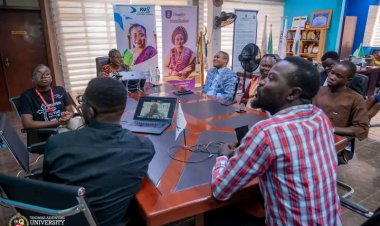
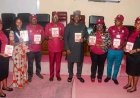
The Vice-Chancellor, Professor Mohammed Laminu Mele, outlined the institution’s recent milestones during a world press conference held on Monday, 24th November 2025, marking the official commencement of activities for the landmark events.
Professor Mele described the achievements as historic for a university that began in 1975 with modest assets inherited from the former North-East College of Arts and Science. He noted that the institution has evolved into a major hub of scholarship and innovation serving Nigeria and the wider Lake Chad Basin.
According to him, the past 18 months have seen intensified academic reforms, including full domestication of the NUC Quality Assurance Framework to strengthen curriculum monitoring, departmental oversight and teaching standards. The University has expanded digital and physical learning resources through updated subscriptions to electronic databases, improved study spaces and enhanced collaborations with global research institutes, diplomatic missions, international NGOs and partner universities.
On digital transformation, the Vice-Chancellor described ICT advancement as the backbone of UNIMAID’s modernization drive. He disclosed that the University’s fibre-optic backbone and network infrastructure are nearing completion. New platforms for administration, finance, research management and student services are already in use.
He further revealed that UNIMAID is a direct beneficiary of the USD 617.7 million Investment in Digital and Creative Enterprises (IDICE) project funded by AfDB, AFD, IDB and the Federal Government—an opportunity he described as a catalyst for digital innovation in the region. The University has also launched the UNDP–UNIMAID UNIPod Innovation Hub at the Abdul Samad Rabiu International Centre, now equipped with laboratories for renewable energy, prototyping, electronics, textiles, food processing, creative design and advanced engineering. In addition, UNIMAID is among ten federal institutions selected for the USD 4 million Blueprint ICT Development Project focused on e-learning, workflow automation and digital competency building.
Professor Mele announced that the French Embassy has listed UNIMAID in the Gold Category of its Bilingual and Competitive Fund, supporting the establishment of a French Language Digital Resource Centre and sponsoring DELF/DALF certifications to enhance students’ global competitiveness.
The Vice-Chancellor also highlighted ongoing efforts to expand agricultural and revenue-generation capacity. UNIMAID’s commercial farm is undergoing revitalization to boost crop production, dairy processing, poultry and fishery operations, supported by a ₦1 billion TETFund grant. Reforms are also underway in the University’s Consultancy Services Ltd., Microfinance Bank and UNIMAID Ventures to strengthen internally generated revenue.
On infrastructure, he reported significant improvements, including the renovation of 32 lecture theatres, upgrades to student hostels, refurbishment of staff offices, improved street lighting, landscaping, sanitation and five new middle-aquifer boreholes funded by the Borno State Government. He commended the Federal Government for sustained support, particularly the 12MW Hybrid Solar Power Plant, which has stabilised electricity supply across campus, especially in the College of Medical Sciences. Additional TETFund interventions include ₦4 billion for expanding medical training facilities, a medical hostel project and a Simulation Laboratory. The North-East Development Commission has also continued its ongoing support to the institution.
He expressed deep appreciation to Governor Babagana Umara Zulum for exceptional support through staff housing schemes, scholarships, laboratory upgrades, solar-powered boreholes and the construction of a new academic complex for the University Demonstration Secondary School.
Announcing details of the upcoming convocation, the Vice-Chancellor disclosed that 20,164 graduates will receive various degrees and diplomas, one of the largest cohorts in the institution’s history. The breakdown includes 66 PhDs, 1,020 Master’s degrees, 3,851 postgraduate diplomas, 13,624 Bachelor’s degrees and 1,603 diplomas. Among the Bachelor’s degree recipients, 205 earned First Class honours, 3,114 obtained Second Class Upper Division and 9,501 graduated with Second Class Lower Division.
Reflecting on the University’s 50-year history, Professor Mele described its journey as one of resilience and growth through decades marked by insurgency, economic pressure and global disruptions. From its original two faculties, UNIMAID now boasts 17 faculties, a College of Medical Sciences, a College of Postgraduate Studies and 17 specialized research centres. The Golden Jubilee will feature the recognition of distinguished Nigerians and conferment of the title of Professor Emeritus on eminent scholars whose work has shaped the University.
He also announced the establishment of the UNIMAID Endowment Fund, designed as a long-term mechanism for strengthening research capacity, expanding infrastructure, funding innovation, sustaining scholarships and securing the University’s financial future. He called on alumni, corporate organisations, development partners and philanthropists to support the initiative.
Professor Mele concluded by affirming that as UNIMAID marks its 25th Convocation and Golden Jubilee, the institution stands renewed, more resilient and fully prepared to drive the future of higher education in Nigeria and beyond.