DAAD Representative Visits FUNAAB After Landmark MoU
DAAD Representative Visits FUNAAB After Landmark MoU
 UmarFarouk123
The Deutscher Akademischer Austauschdienst, also known as the German Academic Exchange Service (DAAD), has taken a significant step in deepening academic collaboration with the Federal University of Agriculture, Abeokuta (FUNAAB), following the recent signing of a landmark Memorandum of Understanding (MoU) with the University.
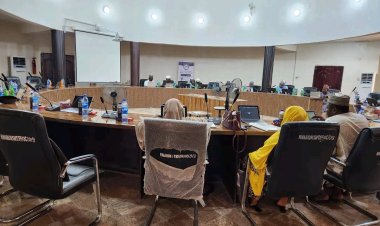
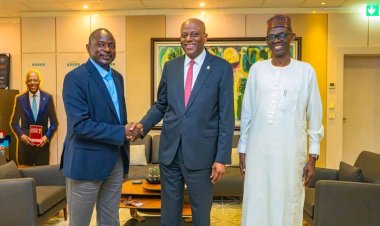
The agreement designates FUNAAB as a host institution for DAAD’s In-Country/In-Region Scholarship Programme for the 2027–2029 intake cycle. As part of ongoing engagements, a representative from DAAD’s Ghana Regional Office, Mr. Komivi Lasmothey, visited the University on March 19, 2026, where he delivered a comprehensive presentation outlining a broad spectrum of academic, research, and training opportunities available to Nigerian students and institutions.
During the session, Mr. Lasmothey highlighted initiatives focused on student mobility, research funding, and inclusive scholarship schemes, emphasising DAAD’s commitment to fostering global academic exchange and capacity development.
Welcoming the delegation on behalf of the Vice-Chancellor, Prof. Babatunde Kehinde, the Deputy Vice-Chancellor (Academic), Prof. Olusegun Idowu, reaffirmed the University’s readiness to strengthen its partnership with DAAD. He emphasised that all funding opportunities arising from the collaboration would be transparently and effectively utilised.
Commending staff members of the University for attending the engagement despite a public holiday, Mr. Lasmothey described their participation as a reflection of strong institutional commitment to academic excellence and international cooperation. He also expressed enthusiasm about his first visit to Nigeria and his interactions with staff at FUNAAB.
Mr. Lasmothey noted that his prior involvement in the selection process for the University’s Master’s programme in Physics informed his decision to include FUNAAB in his broader academic engagements in Nigeria.
He further explained that Germany has continued to prioritise international university partnerships as a means of promoting knowledge exchange, research collaboration, and institutional capacity building. According to him, such initiatives enable students and faculty to study, teach, and conduct research across borders.
Highlighting structural support mechanisms, he pointed to DAAD’s network of regional offices, research centres, and innovation hubs, as well as ongoing efforts to deploy lecturers to partner institutions, particularly to support German language instruction and deepen academic linkages.
Encouraging prospective applicants, Mr. Lasmothey advised students and researchers to explore opportunities through DAAD’s scholarship database, carefully review eligibility criteria, and ensure timely and complete submission of applications. He stressed the importance of diligence and personal responsibility in securing competitive international scholarships.
Meanwhile, the partnership aligned with global development priorities, particularly in advancing quality education, gender equality, and international collaboration. The In-Country/In-Region Scholarship Programme supports internationally oriented higher education systems and sustainable development by funding development-related postgraduate studies for individuals pursuing careers in teaching or research in their home country or region.