FUNAAB Don Urges Law on Recycling Non-Biodegradable Waste for Construction
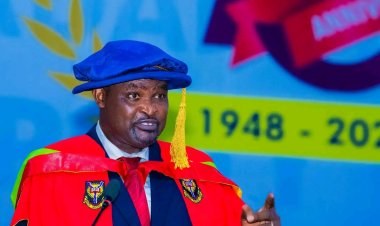
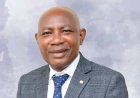
A Professor of Civil Engineering Structures, Prof. Joseph Akinyele, from the Department of Civil Engineering, College of Engineering (COLENG), FUNAAB, on 19th November 2025, called on the Federal Government to enact legislation mandating the recycling of non-biodegradable waste for construction, emphasizing it as critical for environmental protection and sustainable development.
 Philip22

A Professor of Civil Engineering Structures, Prof. Joseph Akinyele, from the Department of Civil Engineering, College of Engineering (COLENG), FUNAAB, on 19th November 2025, called on the Federal Government to enact legislation mandating the recycling of non-biodegradable waste for construction, emphasizing it as critical for environmental protection and sustainable development.

Delivering the University’s 107th Inaugural Lecture titled “From Waste to Strength: The Power of Geopolymer, Rubberized, and Plastic Waste Concretes for a Cleaner Environment,” Prof. Akinyele urged cement manufacturers, universities, and research institutions to collaborate on adopting eco-friendly construction materials nationwide.
He highlighted that geopolymer concrete, an alternative to traditional Portland cement, provides superior compressive strength and resistance to sulphate and chloride ions, the main causes of deterioration in reinforced structures. Beyond performance, these materials reduce environmental pollution.
Prof. Akinyele detailed how waste conversion could be applied in construction:

- Plastic waste can replace up to 20% of aggregate in concrete.
- Rubber from waste tyres can substitute up to 16% of aggregate.
- Glass and plastic waste may be used in burnt bricks at recommended limits of 5% and 3%, respectively.
- Metakaolin can substitute 20% of cement, lowering energy consumption and CO₂ emissions from clinker production.
He emphasized that Nigeria must adopt policies enforcing the recycling of non-biodegradable waste in construction, linking the initiative to Sustainable Development Goal 13 – Climate Action. Prof. Akinyele also called for increased funding for research, laboratory upgrades, and establishment of a world-class Central Engineering Workshop at FUNAAB to drive innovation in the construction sector.
The Vice-Chancellor, Prof. Babatunde Kehinde, commended Prof. Akinyele for his over 60 publications and significant contributions to engineering research and infrastructure projects.

The lecture underscored the urgency of sustainable construction solutions as Nigeria faces growing environmental challenges and climate change realities.