FUNAAB Professor Advocates Predictive Data Models for National Planning as FUNAAB Holds 108th Inaugural Lecture
A Professor of Statistics at the Federal University of Agriculture, Abeokuta (FUNAAB), Olaniyi Olayiwola, has called on government institutions and policymakers to adopt predictive statistical models in national planning, warning that continued reliance on reactive decision-making could slow Nigeria’s development in a data-driven global economy.
 Philip22
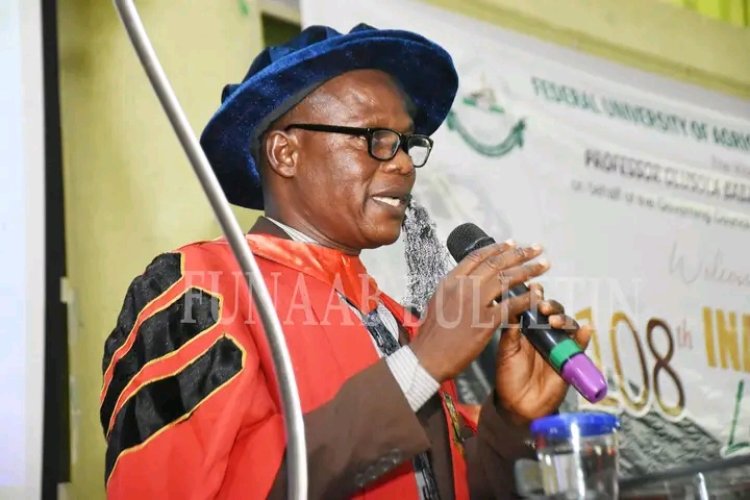
A Professor of Statistics at the Federal University of Agriculture, Abeokuta (FUNAAB), Olaniyi Olayiwola, has called on government institutions and policymakers to adopt predictive statistical models in national planning, warning that continued reliance on reactive decision-making could slow Nigeria’s development in a data-driven global economy.
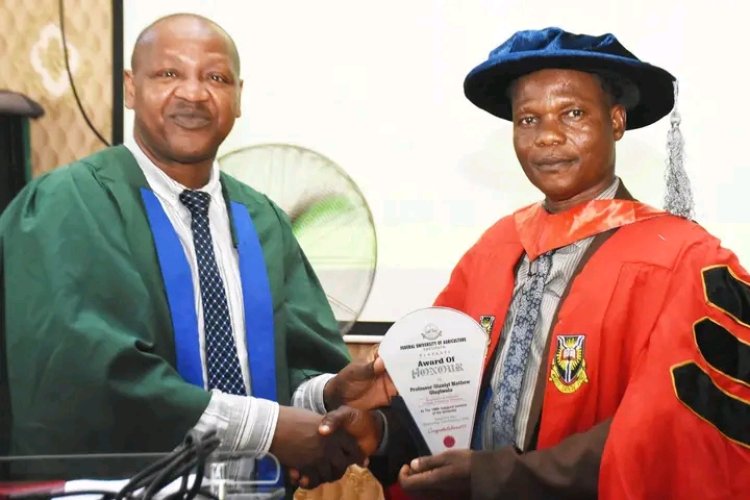
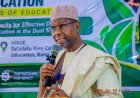
The Professor made the call on February 11, 2026, while delivering the University’s 108th Inaugural Lecture titled “From Sample to Solution: Harnessing Statistics for Evidence-Based Public Decision-Making in the Data Age.” He described data as strategic tools for governance, sustainable development, and social transformation rather than mere numerical outputs.
Reflecting on his three decades of academic and research experience, the inaugural lecturer noted that Nigeria generates large volumes of data across sectors but fails to maximise their value due to weak integration into policy processes. Drawing on practical case studies, he demonstrated how adaptive sampling designs, model-based estimators, and spatial analytical methods have been applied to address challenges in public health management, fertility pattern analysis, agricultural forecasting, and institutional development.
According to him, the persistent disconnect between statistical evidence and policy implementation can only be resolved through effective communication of research findings, stronger interdisciplinary collaboration, and improved institutional trust in data-driven systems.
Professor Olayiwola therefore proposed a series of recommendations targeted at government, academia, and industry stakeholders. He urged the restructuring of national development frameworks to incorporate predictive tools such as spatial regression models, Bayesian adaptive sampling, and time-series monitoring systems to enable proactive risk assessment and long-term planning.
In public health and survey methodology, he advocated the strengthening of data collection systems to improve response accuracy while reducing operational costs. He also recommended institutionalising environmental exposure studies involving children and vulnerable populations, with outcomes translated into actionable interventions within schools and communities.
For tertiary institutions, the Professor suggested the adoption of predictive academic analytics to identify students at risk of poor academic performance early, allowing for timely mentoring, counselling, and remedial support.
He further highlighted the relevance of predictive analytics in aviation safety, recommending systematic archiving and long-term analysis of operational data to support preventive maintenance and risk management beyond routine compliance measures.
Speaking on agriculture, he emphasised the need for scientific evaluation of locally available resources using statistical optimisation techniques to improve productivity and sustainability in farming practices.
The Professor stressed that these recommendations depend on stronger collaboration among academia, industry, and government, noting that statistical research must ultimately translate into measurable national development outcomes. He concluded that credible governance rests on data that are properly collected, rigorously analysed, and clearly communicated.
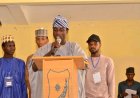
Earlier in his opening remarks, the Vice-Chancellor of FUNAAB, Babatunde Kehinde, represented by the Deputy Vice-Chancellor (Development), Olawale Dairo, described the lecture as the second inaugural presentation from the Department of Statistics and the ninth within the College of Physical Sciences. He commended the inaugural lecturer for his contributions to the university and national development through research and institutional service.
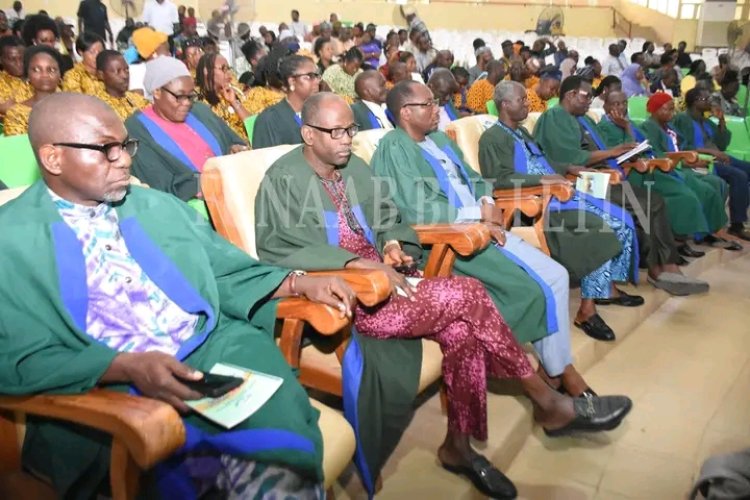
Dignitaries present at the event included former Federal Commissioner of Education, Old Western Region, Biyi Afonja; former Vice-Chancellor of FUNAAB, Felix Kolawole Salako; Vice-Chancellor of Aletheia University, Ago-Iwoye, Olukayode Akinyemi; Rector of Oyo State College of Agriculture and Technology, Akinola Akinlabi; and former Deputy Vice-Chancellor (Development), Kola Adebayo, among others.