KWASU Professor Urges Protection of Medicinal Plants
KWASU Professor Urges Protection of Medicinal Plants
 UmarFarouk123
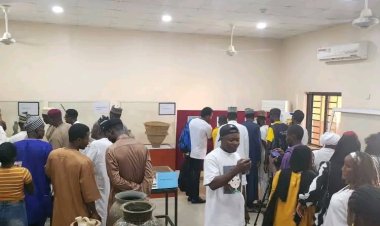
Professor Olusogo Adewole Olalubi of the Department of Public Health, Kwara State University (KWASU), has called for the effective implementation of policies on sustainable harvesting practices and stronger environmental safeguards to protect medicinal plants used in the treatment of malaria.
Professor Olalubi made the call while delivering Kwara State University's 20th Inaugural Lecture on Wednesday, April 15, 2026, titled “The Malaria Odyssey: Test-tube to Natural Products and Geospatial Modelling.”
The inaugural lecturer noted that a large proportion of traditional medicines originate from plants, which also serve as key raw materials for both pharmaceutical and traditional health systems.

Professor Olalubi emphasized that medicinal plants remain critical in the fight against malaria, particularly in rural and underserved communities, where access to modern healthcare facilities is limited. According to him, these plants continue to be widely used to manage illnesses, especially malaria, due to their affordability, accessibility, and cultural acceptance. He added that these plants provide a vital healthcare alternative for communities with limited access to hospitals and modern drugs.
The public health expert, however, warned that several medicinal plants in the Malete area of Moro Local Government Area of Kwara State are under increasing threat from environmental degradation and rapid urban expansion. He identified species such as Aristolochia ringes, Mucuna pruriens, Azadirachta indica, Kigelia africana, Citrus limon, Ludwigia suffruticosa, Parkia biglobosa and Picralima nitida as some of the species gradually disappearing from degraded woodland and settlement clusters.
He attributed the threat largely to deforestation caused by construction activities and expansion around the university community, urging that urban planning in Malete should incorporate the cultivation and preservation of medicinal plants as part of the Kwara State government’s rural healthcare agenda. He added that malaria remains not only a public health concern but also a major development challenge in Nigeria, requiring strong leadership, inclusive policies, and sustained interventions to ensure access to prevention, diagnosis, and effective treatment.