UI Don Advocates Practical-Oriented Chemistry Curriculum in Nigerian Educational System
UI Don Advocates Practical-Oriented Chemistry Curriculum in Nigerian Educational System
 UmarFarouk123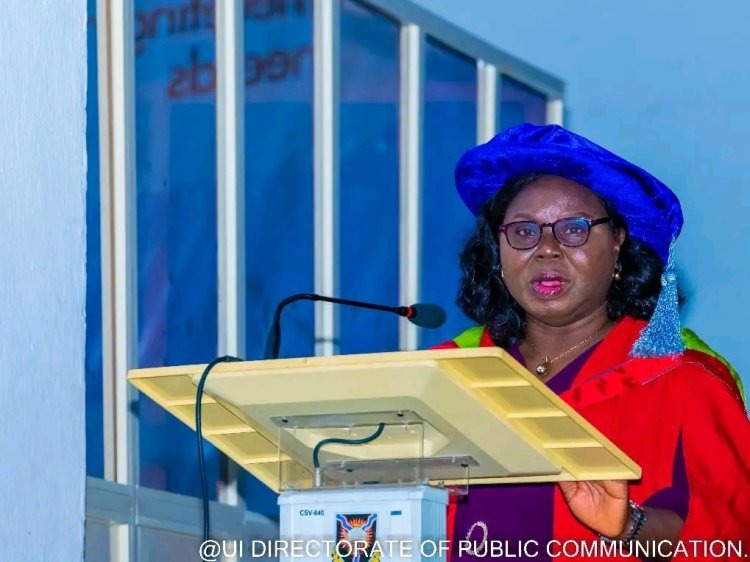
A Professor of Science Education and Educational Evaluation at the University of Ibadan, Professor Mobolanle Modupe Osokoya, has advocated a practical-oriented chemistry curriculum in Nigerian educational system to enhance the viability of Chemistry as a subject and a course of study.
She made this advocacy while delivering the 589th Inaugural Lecture of the University of Ibadan on behalf of the Institute of Education.
The title of the lecture was: "Science Education in Nigeria: What About It? A Science Educator-Evaluator's Perspective."
Professor Osokoya asserted that there is an urgent need for a comprehensive review of the chemistry curriculum across Nigerian universities to make it more practical and skill-based.
She emphasized the exigency for both conventional and technology-based institutions to prioritize the acquisition and demonstration of chemistry process skills in the course of training Chemists for the industry and entrepreneurial world.
According to her, embedding more practical and skill-oriented approaches into the curriculum will enhance students’ hands-on experience, deepen their understanding of scientific concepts, and better equip them to address real-world challenges in science and industry.
She acknowledged the challenges of graduate unemployment and lack of self-reliance among chemistry students, attributing it to the absence of vocational skills in the curriculum; a gap that needs to be bridged by laying emphasis on the vocational aspects of chemistry education.
Professor Osokoya said graduates of Chemistry are expected to possess the ability to apply knowledge and skills to solve theoretical and practical problems in Chemistry and other allied industries in relation to national and societal needs, stressing that a well-developed curriculum will incorporate in-class and out-of-class learning activities that aid deeper engagement and understanding, as well as specify the knowledge, skills, and attitudes that learners are expected to acquire.
The inaugural lecturer explained that Chemistry is a core science subject and because it is also a vocational subject, university graduates of Chemistry should not be jobless, but should be able to make use of their training to create wealth as entrepreneurs.
She decried the trend whereby universities still emphasize theory with little practical training, saying this is the reason many graduates cannot solve problems or think analytically and are not practically equipped when faced with job specifications in the labour market.
She also expressed worries that applicants who scored below average in post UTME still get admitted into tertiary institutions, particularly universities, describing this trend as self-deception.
In the light of these concerns, Professor Osokoya recommended that government should go back to the implementation of the 6-3-3-4 education policy which dictates that after the first 3 of the 3-3 components, those who could not cope with academic rigours should be identified and streamed into technical and vocational centers, stressing that candidates with low UTME scores should be directed to vocational training schools rather than polytechnics and Colleges of Education.
She added that government at all levels should set up technical and vocational training centres for skill acquisition and to equip subscribers with one vocational knowledge or another, urging that vocational training should be presented as a respectable career path.
The don advised that science teachers should thoroughly prepare for lessons by gathering relevant materials which illustrate the practical applications of scientific theories and principles, stating that this would help students connect abstract concepts to real-life situations, foster deeper understanding, engagement and retention of scientific knowledge.
She also suggested that examination bodies should incorporate assessments of students' practical process skills in practical examinations, stating that by doing this, provision will be made for a more comprehensive evaluation of students' abilities which goes beyond theoretical knowledge to assess their hands-on skills, critical thinking, and problem-solving capabilities.
The lecturer proposed that Nigerian universities should conduct annual surveys of all graduates to enable universities to develop a comprehensive database of their graduates and track their experiences and outcomes after completing their programmes.
The Inaugural Lecture was the twelfth in the series for the 2024/2025 academic session.