FUTA Don Calls for Shift to Renewable Energy, Stricter Control of Industrial Emissions
A Professor of Air Quality Forecasting and Climate Change at the Federal University of Technology, Akure (FUTA), Prof. Ayodeji Oluleye, has urged countries, including Nigeria, to deliberately manage the atmosphere to harness its benefits while preventing environmental disasters.
 Philip22
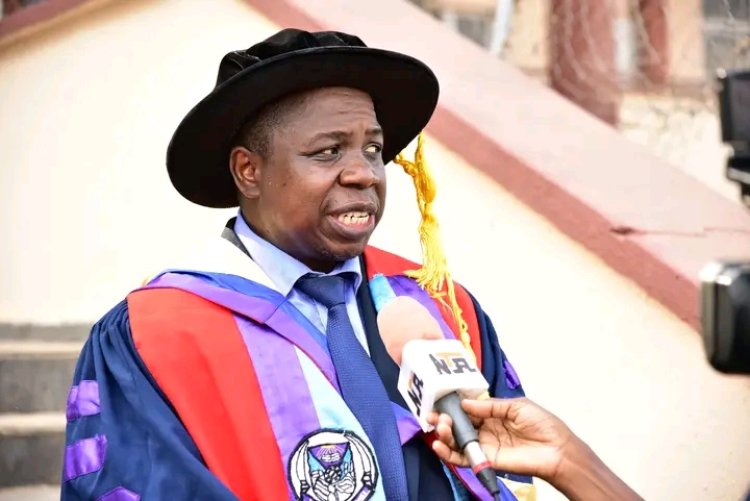
A Professor of Air Quality Forecasting and Climate Change at the Federal University of Technology, Akure (FUTA), Prof. Ayodeji Oluleye, has urged countries, including Nigeria, to deliberately manage the atmosphere to harness its benefits while preventing environmental disasters.
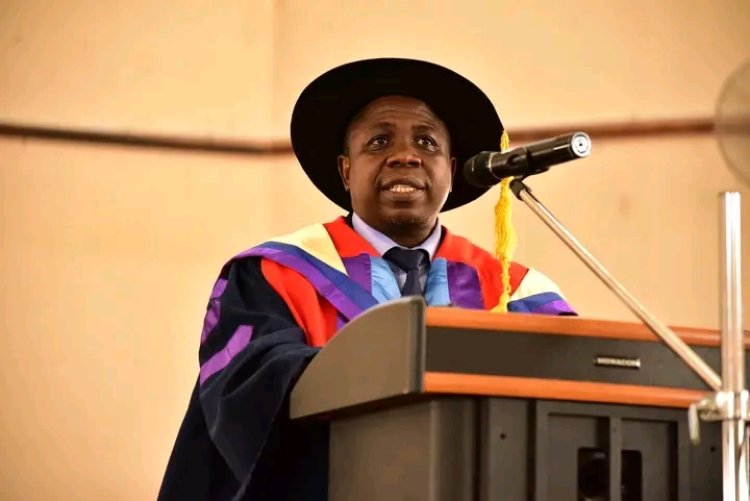
Prof. Oluleye made the call while delivering FUTA’s 191st Inaugural Lecture on Tuesday, January 27, 2026, where he stressed that restoring atmospheric balance requires integrated and science-driven strategies. These, he said, include a transition to renewable energy and cleaner transportation, stricter regulation of industrial and agricultural emissions, expansion of air quality monitoring and modelling, and stronger regional collaboration in data sharing and mitigation.
Speaking on the lecture titled “Wonders of Weather in a Polluted World,” the don explained that weather remains the most immediate way humans experience the planet, but one now heavily shaped by human activity. According to him, aerosols from industrial emissions, vehicle exhaust, agricultural burning, and wildfires act as cloud condensation nuclei, increasing the number of cloud droplets while reducing their size. This process, he noted, can cause clouds to last longer but yield less rainfall, leading to prolonged dry spells in some regions. Under other conditions, it can trigger intense rainfall over short periods, heightening the risk of flash floods.
Prof. Oluleye emphasized that understanding the chemistry of pollution is no longer an academic exercise but a critical input for effective policymaking and environmental stewardship. He warned that as human activities increasingly determine weather outcomes, scientific knowledge must be matched with responsibility to improve air quality, stabilize weather patterns, reduce extreme events, and promote environmental sustainability.
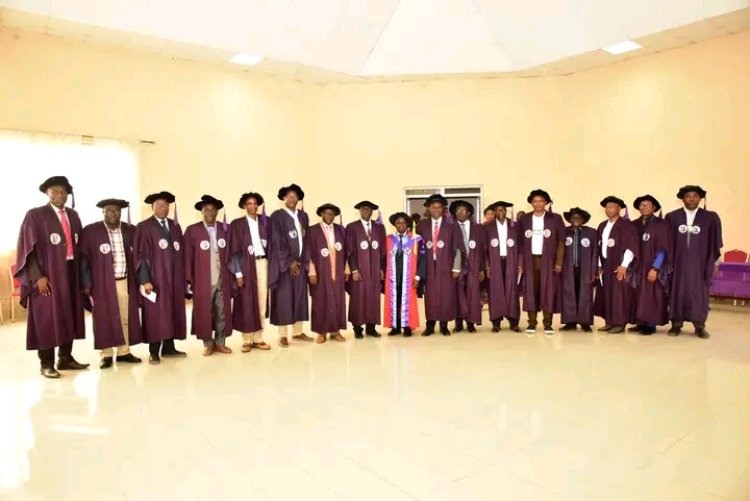
He observed that humanity stands at a defining moment in its relationship with the atmosphere, as once-predictable weather systems become increasingly erratic. The warming of the planet—driven by greenhouse gas emissions, deforestation, and industrialisation—has intensified extreme events such as floods, droughts, heat waves, and tropical cyclones across the globe.
Focusing on Africa, Prof. Oluleye noted that atmospheric stewardship is especially critical for the continent. Despite contributing the least to global emissions, Africa bears a disproportionate burden of climate impacts, including heat stress, flooding, and air pollution that threaten public health and food security. He described atmospheric stewardship as both a moral obligation and a development imperative.
To address these challenges, he advocated the integration of air quality education into school curricula and community outreach programmes. He also encouraged citizen-led data collection through low-cost sensors and smartphone applications, alongside behavioural changes such as reducing open burning, conserving energy, and adopting green mobility options. “Every citizen is a stakeholder in atmospheric stewardship,” he said.
The Professor, who is also Dean of the School of Earth and Mineral Sciences, outlined key policy priorities for Nigeria. These include developing national emission inventories and sectoral reduction targets, integrating air quality forecasting into the National Early Warning System, increasing investment in renewable energy, sustainable transportation, and research-based climate adaptation, and strengthening the Nigerian Meteorological Agency (NiMet) for improved air quality prediction and public communication.
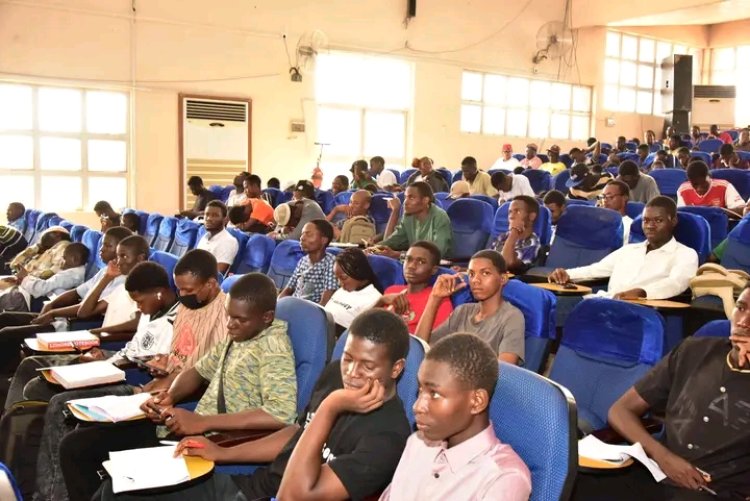
The Vice-Chancellor of FUTA, Prof. Adenike Oladiji, who chaired the occasion and was represented by the Deputy Vice-Chancellor (Academic), Prof. Taiwo Amos, underscored the importance of rigorous climate research in mitigating pollution impacts. She described the lecture as timely and intellectually stimulating, commending Prof. Oluleye for a delivery she said was both cerebral and impactful.