FUTA, University of Johannesburg Deepen Research Collaboration as Experts Call for Stronger Academic Output and Global Visibility
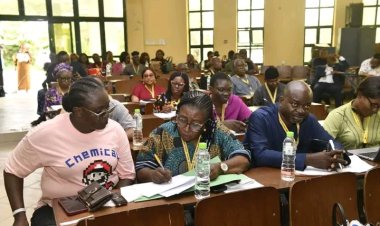
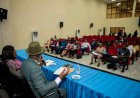
The Federal University of Technology, Akure (FUTA), in partnership with the University of Johannesburg, South Africa, has hosted a two-day capacity-building workshop aimed at strengthening research productivity, academic visibility, and international collaboration among scholars.
 Philip22
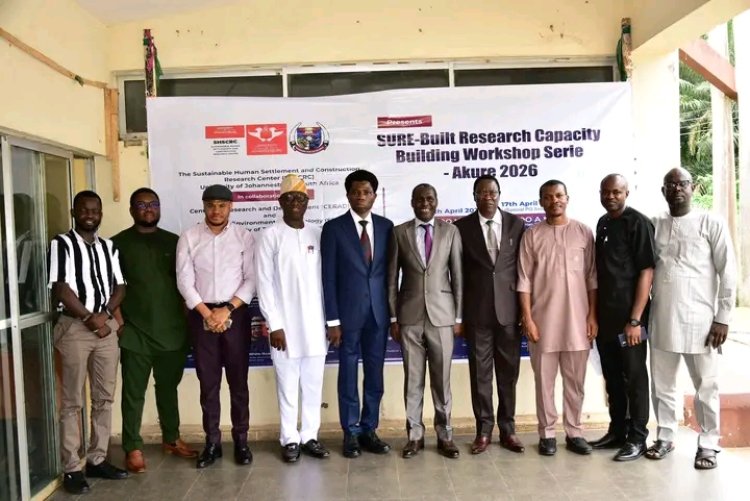
The Federal University of Technology, Akure (FUTA), in partnership with the University of Johannesburg, South Africa, has hosted a two-day capacity-building workshop aimed at strengthening research productivity, academic visibility, and international collaboration among scholars.
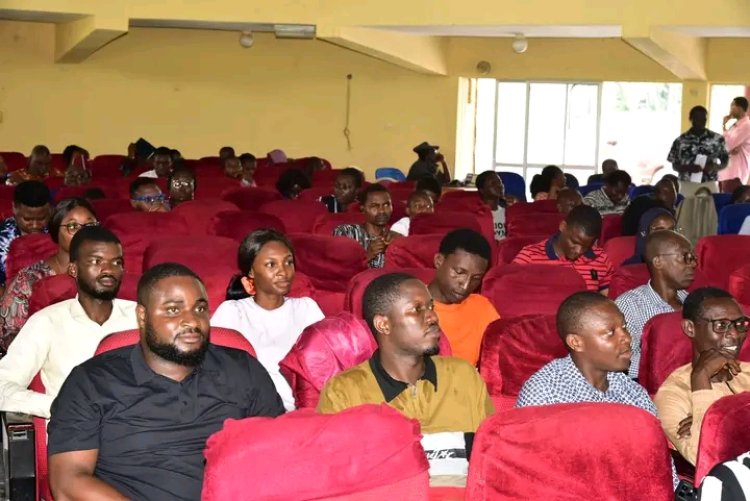
The programme, held from April 16 to 17, was organised by FUTA’s Centre for Research and Development (CERAD) and the School of Environmental Technology (SET) in collaboration with the Sustainable Human Settlement and Construction Research Centre (SHSCRC), University of Johannesburg. The workshop focused on improving research quality, publication outcomes, and access to global funding opportunities within the built environment and sustainable development space.
The workshop featured a series of technical lectures delivered by leading academics from the University of Johannesburg and FUTA, with emphasis on career development, publication strategy, and research funding competitiveness.
Delivering a lecture on “Career Pathing for Emerging Scholars,” Professor Clinton Aigbavboa of the University of Johannesburg stressed that academic growth is deliberate rather than accidental. He noted that successful researchers adopt structured career planning, intentionally developing competencies in writing, supervision, and grant acquisition while avoiding scattered academic engagement. According to him, clarity of purpose and continuous self-assessment remain central to long-term scholarly productivity.
In a separate presentation, Professor Douglas Aghimien, also of the University of Johannesburg, addressed the persistent challenge of unpublished academic work. Speaking on “From Research Projects to Publication: Avoiding Abandoning Completed Research,” he observed that many academics fail to convert completed theses, projects, and assignments into journal publications. He argued that most research outputs already contain publishable material, but often lack the mentorship and follow-through needed to transform them into manuscripts. He urged scholars to adopt a culture of persistence, especially in the face of journal rejections, emphasizing that publication success often depends on sustained refinement rather than initial acceptance.
On research visibility, Dr. Ayodele Oke of FUTA’s Department of Quantity Surveying, who also leads the Sustainable Infrastructure Management Plus research group, delivered a lecture titled “Publishing in High-Impact Journals: From Google Scholar to Scopus and Web of Science.” He explained that academic visibility is now determined by indexed platforms such as Scopus and Web of Science, not merely online presence. He emphasized the importance of aligning manuscripts with journal scope and formatting requirements from the outset, noting that poor journal targeting remains a major cause of rejection. He further stressed that strategic publishing, ethical authorship, and citation awareness are critical for building a credible academic profile.
In another session, Professor Bankole Awuzie of the University of Johannesburg, represented by Professor Clinton Aigbavboa, spoke on “International Grant Writing and Collaboration.” He described grant writing as an essential academic skill for research sustainability and career advancement. According to him, successful funding applications require strong proposal design, effective collaboration networks, and alignment with donor priorities. He noted that competition for international grants is intense, with some calls attracting thousands of applicants for limited awards, making proposal quality and positioning crucial for success. He encouraged academics to continuously build capacity in grant writing, emphasizing that experience and persistence improve success rates over time.
Speaking at the closing session, the Vice-Chancellor of FUTA, represented by the Deputy Vice-Chancellor (Academic), Professor Timothy Amos, commended the collaboration and urged participants to fully implement the knowledge gained. He described the workshop as timely, noting that it aligns with the university’s ambition to improve research output and global relevance. He also reaffirmed management’s commitment to ensuring that all academic staff are actively engaged in funded research initiatives.
Also speaking, the Director of CERAD, Professor Kenneth Alaneme, described FUTA as a leading institution in research productivity, highlighting its growing global footprint and strong presence in indexed academic databases. He noted that the university’s engagement with international partners such as the University of Johannesburg reflects its ambition to remain globally competitive and research-driven.
The Dean of the School of Environmental Technology, Professor Joseph Bashorun, added that the collaboration was designed to strengthen interdisciplinary research and improve access to international funding streams. He emphasized that the initiative aligns with FUTA’s broader vision of advancing innovation in environmental and built-environment studies while strengthening its global academic standing.
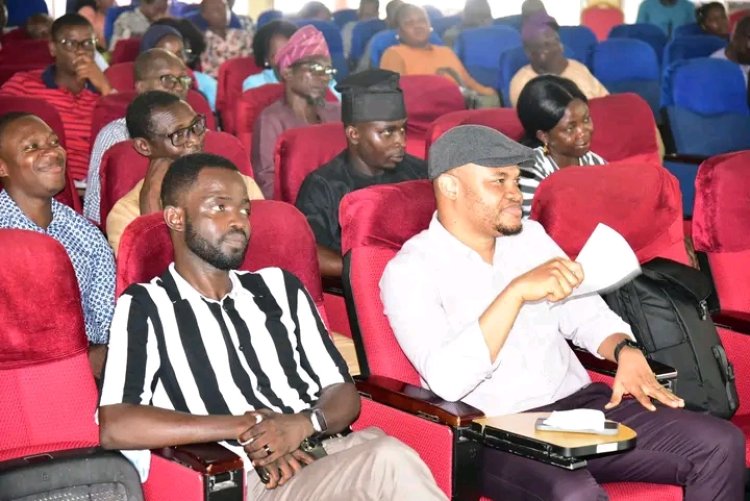
The workshop concluded with a shared commitment from both institutions to deepen collaboration in research development, publication support, and capacity building for emerging scholars across Africa.