LASU Department Of Sociology Hosts Experts Roundtable On Dangote Refinery And National Interest
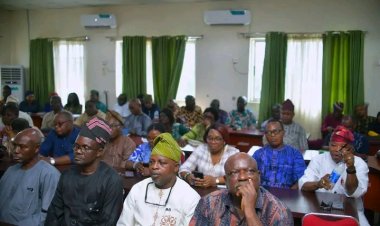
The Department of Sociology, Faculty of Social Sciences, Lagos State University (LASU), on Tuesday, October 28, 2025, hosted a one-day Experts Roundtable themed “Dangote Refinery: The Law, Labour and National Interest.”
 Philip22

The Department of Sociology, Faculty of Social Sciences, Lagos State University (LASU), on Tuesday, October 28, 2025, hosted a one-day Experts Roundtable themed “Dangote Refinery: The Law, Labour and National Interest.”

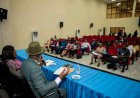
The interactive session, held at the Moot Parliament, brought together renowned scholars and practitioners to examine the refinery’s legal, labour, and economic implications for Nigeria’s industrial growth.
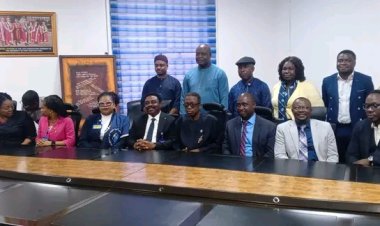
Key speakers included Professor Jubril Jawando (Head of Department), Professor Oluranti Samuel, and Dr. Bolawale Odunaike, with Professor Adedeji Oyenuga moderating the discussions. The event was hosted by the Dean, Faculty of Social Sciences, Professor Olufemi Adigun Lawal, while the Vice-Chancellor, Professor Ibiyemi Ibilola Olatunji-Bello, mni, NPOM, served as the Chief Host.
In his remarks, Professor Jawando cited the Nigerian Export Processing Zones (NEPZ) Act, explaining that the Dangote Refinery’s designation as a free-zone enterprise exempts it from certain labour interventions. He referenced Section 18(5) of the Act, which stipulates that employment within the free zone is governed by regulations made by the Authority rather than by standard labour laws. According to him, this framework has allowed the refinery to operate smoothly while shaping outcomes in disputes with unions such as PENGASSAN.
He acknowledged that the government’s intervention had led to the reinstatement of some redeployed workers but noted that Dangote’s insistence on redeployments underscored a strategy to preserve business stability. Professor Jawando admitted that the government’s protection of Dangote was “justified” in practical terms, as the investment significantly reduces Nigeria’s foreign exchange expenditure on fuel importation and inspires investor confidence.
Dr. Odunaike offered a capital-driven perspective, arguing that major investors with huge loan obligations must prioritise business continuity. He maintained that companies have the right to limit union activities that may threaten productivity and questioned the scope of union jurisdiction when redeployed workers are transferred outside the oil sector.

He further criticised what he termed the “monetisation culture” within some unions, arguing that labour bodies have failed to reinvest their financial strength into sustainable ventures such as establishing a refinery.
Professor Oluranti Samuel, however, emphasised balance, stating that “unionism is not synonymous with antagonism.” He asserted that while employers must safeguard investments, workers equally deserve protection since “labour makes the money work.” He urged unions to remain constructive and prioritise the survival of their organisations alongside workers’ welfare.
The discourse also highlighted inconsistencies in labour activism, with Professor Jawando questioning why unions often appear more vocal in private-sector disputes than in critical public sectors like education and healthcare — describing this as evidence of “double standards.”
In conclusion, the panellists unanimously called for a harmonised legal framework that protects workers’ rights while enabling investors to thrive. They further advocated stronger legal representation for unions, leadership education, and reorientation on the true purpose of unionism.

The roundtable reaffirmed LASU’s commitment to advancing national dialogue on industrial reform, labour relations, and economic sovereignty as Nigeria’s industrial landscape continues to evolve.