LASUED Hosts Maiden Inaugural Lecture, Sets Pace for New Academic Tradition
The Lagos State University of Education (LASUED) has marked a historic milestone with the successful hosting of its first-ever Inaugural Lecture, signaling a decisive step in the institution’s academic evolution.
 Philip22
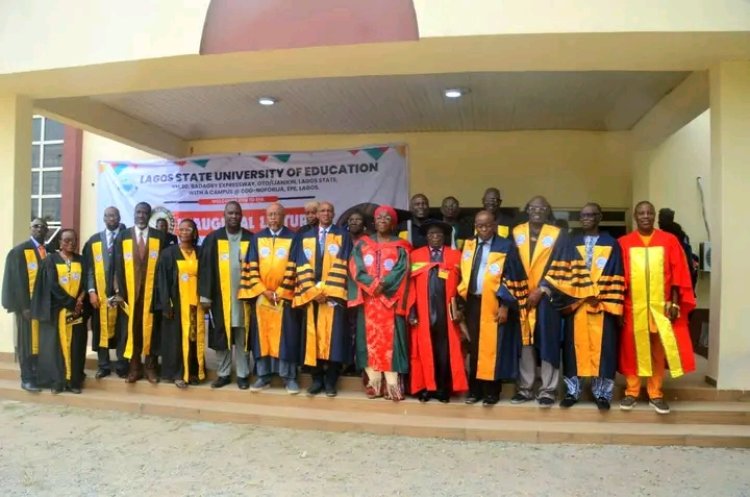
The Lagos State University of Education (LASUED) has marked a historic milestone with the successful hosting of its first-ever Inaugural Lecture, signaling a decisive step in the institution’s academic evolution.
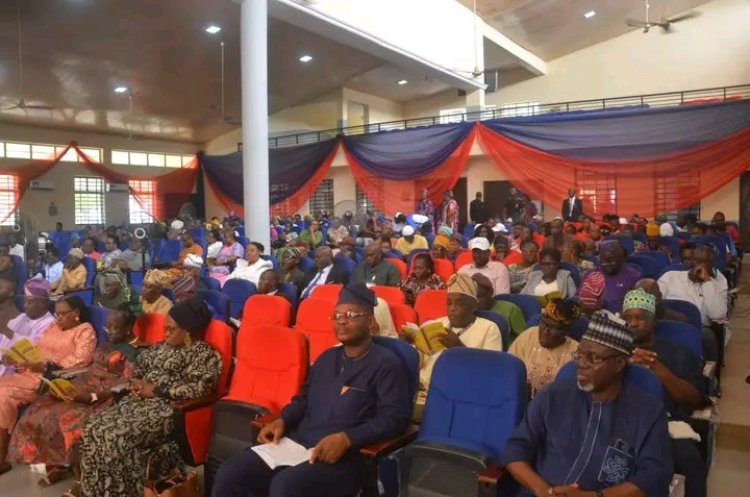
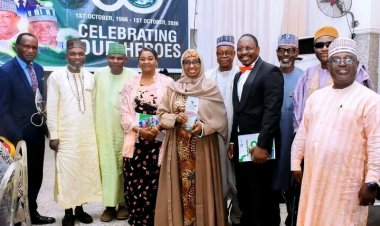
The landmark event, held on Thursday, February 12, 2026, at the Senator Oluremi Tinubu Hall, Oto/Ijanikin Main Campus, featured a lecture titled “Nurturing Eco-Conscious and Socially Just Citizens: My Scholarly Journey in Social Studies and Environmental Education.” The lecture was delivered by Moshood Babatunde Lawal, Professor of Social Studies Education in the Department of Sociological Studies Education, College of Social Science Education (COSSED).
In her remarks, the Vice-Chancellor, Bidemi Bilkis Lafiaji-Okuneye, described the occasion as a defining moment in the university’s institutional history. She noted that hosting the maiden inaugural lecture represents a strong statement of intent regarding LASUED’s commitment to scholarly excellence and intellectual leadership.
According to her, the lecture has inaugurated a new academic culture within the University—one that management intends to institutionalise as a regular intellectual exercise. She disclosed plans to hold inaugural lectures possibly on a monthly basis to entrench the tradition and strengthen research visibility.
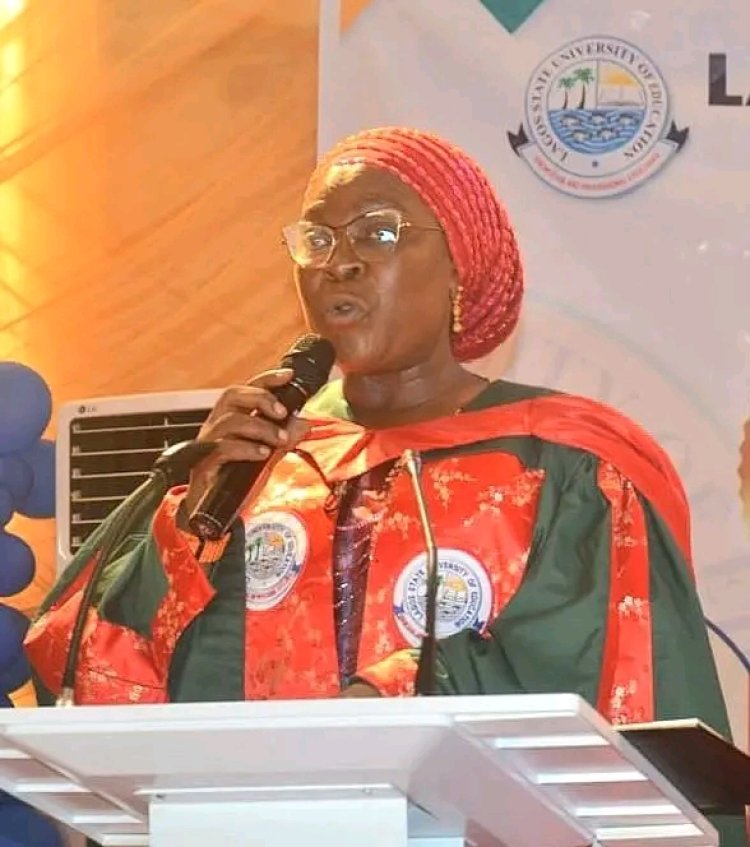
The Vice-Chancellor emphasized that attaining professorial rank is more than a career progression milestone, describing it as a higher call to academic responsibility. She explained that the Inaugural Lecture serves as the formal scholarly rite of passage through which a Professor publicly demonstrates intellectual depth, research impact, and thought leadership.
She further announced that another inaugural lecture is scheduled for March and revealed that the University anticipates hosting up to six such lectures before the end of the year as part of its strategic push toward academic distinction.
Delivering the lecture, Professor Lawal argued that education must transcend rote knowledge transmission and directly address contemporary global and environmental challenges. He maintained that Social Studies plays a critical role in shaping learners who understand the interplay between human activities, society, and the natural environment.
He described eco-social justice pedagogy as a philosophical commitment grounded in three pillars: recognition of the interconnectedness of human and non-human life; the promotion of dignity, equality, and human rights; and the cultivation of active, accountable citizenship.
Professor Lawal concluded with a call for educators to see the nurturing of responsible citizens as a core societal mandate, expressing confidence that through collaborative effort, education can drive the creation of a more sustainable, equitable, and ethically grounded future.