Nasarawa State University Unveils 'One Degree, One Trade, One Enterprise' Initiative to Transform Graduate Development
Nasarawa State University, Keffi (NSUK), has launched the Holistic Graduate Development Initiative (HGDI), a new institutional framework designed to equip students with academic qualifications, practical skills and entrepreneurial capacity to enhance employability and economic productivity.
 Philip22
Nasarawa State University, Keffi (NSUK), has launched the Holistic Graduate Development Initiative (HGDI), a new institutional framework designed to equip students with academic qualifications, practical skills and entrepreneurial capacity to enhance employability and economic productivity.

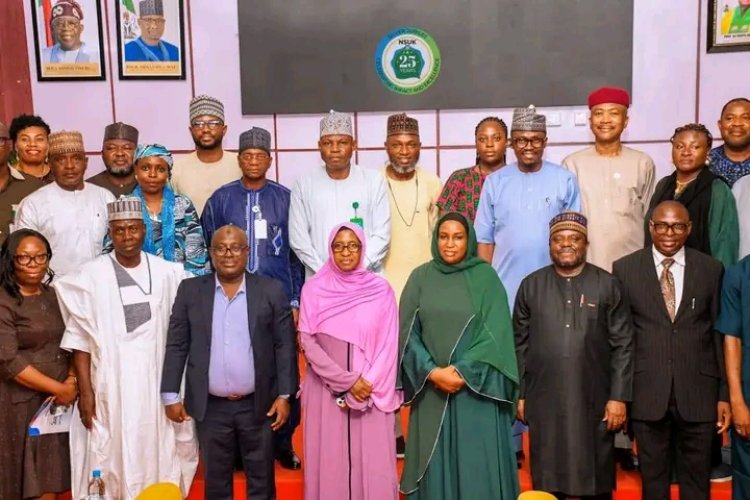
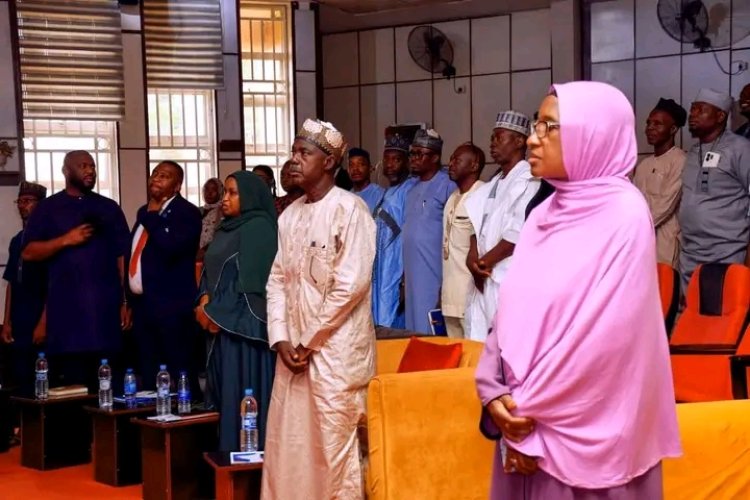
The initiative, themed "One Degree – One Trade – One Enterprise," was unveiled by the Vice-Chancellor, Prof. Sa'adatu Hassan Liman, during a Strategic Stakeholder Engagement Meeting held on July 2, 2026, at the S. B. Mohammed Auditorium of the School of Postgraduate Studies.
Addressing stakeholders from government agencies, industry, professional bodies, development organisations, financial institutions and the private sector, Prof. Liman described the initiative as the university's response to the evolving demands of the global economy and the need to produce graduates who are academically sound, industry-ready, innovative and self-reliant.
She said the Holistic Graduate Development Initiative represents a new direction for higher education by bridging the gap between academic learning and labour market demands.
According to the Vice-Chancellor, the programme reflects her administration's focus on innovation, excellence, entrepreneurship, digital transformation, global competitiveness and community impact.
Prof. Liman noted that since assuming office more than two and a half years ago, the university has implemented reforms to strengthen academic quality, improve curriculum relevance, expand international collaborations, promote digital transformation and create an enabling environment for innovation and enterprise development.
She highlighted achievements including expanded global partnerships through Erasmus+ and collaborations with institutions across Europe and Africa, investments in ICT infrastructure and smart learning facilities, and the construction of new academic buildings, research centres, hostels, roads and innovation spaces across the university.
The Vice-Chancellor also pointed to the establishment of the UNDP-supported MineTech UniPod as evidence of NSUK's growing reputation in research, innovation, technology transfer and enterprise development.
Prof. Liman disclosed that under the initiative, every NSUK student will graduate with three key competencies: an academic degree, a nationally recognised vocational, digital, trade or professional certification, and enterprise development skills capable of supporting business creation and sustainable employment.
She explained that the programme is designed to produce graduates who are employable, entrepreneurial, digitally skilled, innovative and globally competitive, while addressing the challenge of graduate unemployment and underemployment.
According to her, students will undergo structured competency development throughout their academic programmes, with training opportunities in digital technology, agribusiness, renewable energy, manufacturing, construction, the creative industry and other emerging sectors.
She added that the initiative aligns with the National Skills Qualification Framework, the National Universities Commission's Core Curriculum and Minimum Academic Standards (CCMAS), national youth empowerment policies, digital economy strategies and the United Nations Sustainable Development Goals.
The Vice-Chancellor called for stronger collaboration among universities, industry, regulators, development organisations, professional bodies, technology companies and financial institutions to ensure the success of the programme.
She appealed to stakeholders to support the initiative by providing certification pathways, apprenticeship and internship opportunities, industry mentorship, curriculum enrichment, innovation laboratories, business incubation centres and startup financing mechanisms.
Prof. Liman described the Holistic Graduate Development Initiative as more than a university programme, saying it has the potential to become a national model for graduate development across Nigeria and Africa.

She reaffirmed the university's determination to become Nigeria's leading institution for integrated graduate development by producing graduates with academic knowledge, practical competence, entrepreneurial skills, digital proficiency and the capacity to create jobs, drive innovation and contribute to national development.
The stakeholder engagement concluded with renewed commitments from participants to support the implementation of the initiative and strengthen collaboration with the university.
Among those in attendance were the Director-General of the National Power Training Institute of Nigeria (NAPTIN), Ahmed Bolaji Nagode; the Industrial Training Fund (ITF) Lafia Area Manager, Barr. Halima Ali Muhammad; the Chief Executive Officer of Investionaire Academy, El-Yakub Audu; the Chief Executive Officer of El Dorado Fashion, Mr. Kelvin; and representatives of the National Universities Commission (NUC), Standards Organisation of Nigeria (SON), Small and Medium Enterprises Development Agency of Nigeria (SMEDAN), National Information Technology Development Agency (NITDA), Corporate Affairs Commission (CAC), Cisco, Prince Interior Furniture, the Nasarawa State Relevant Technology Board and Wing Commander Abdullahi Ibrahim Vocational Institute, Lafia.

Representatives of the Federal Polytechnic, Nasarawa, Isa Mustapha Agwai I Polytechnic, Lafia, and the College of Agriculture, Science and Technology, Lafia, also attended the engagement, reflecting broad institutional support for the university's graduate development initiative.