Nigeria must take ownership of HIV/AIDS response to end scourge by 2030, says FULafia Prof. Bako
Nigeria must take ownership of HIV/AIDS response to end scourge by 2030, says FULafia Prof. Bako
 UmarFarouk123
Nigeria has been called to take control of its fight against the dreaded HIV/AIDS scourge or risk further loss of patients’ lives.
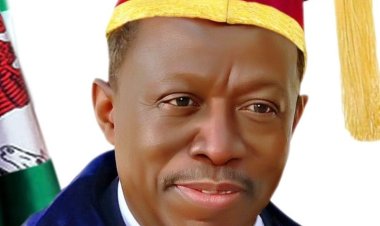
The call was made by a public health scholar at the Federal University of Lafia (FULafia), Professor Ishaku Ara Bako, who, specifically, has urged the Nigerian government to urgently scale up domestic funding and integrate sustainable strategies in the fight against the disease.
Bako’s call came after the USA, which used to be the major financier of the global fight against HIV/AIDS, has, under current President Trump’s administration, decided to withdraw from footing large chunk of the money it used to pay.
Bako warned that rising donor fatigue posed a serious threat to the future of the country’s HIV/AIDS response.
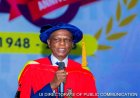
Delivering the 29th Inaugural Lecture of the Federal University of Lafia, titled: “HIV Epidemiology and Control in Nigeria: Socio-political Issues, Challenges and Prospects for Ending Aids ,” Bako emphasised the need for national ownership and rights-based policies to ensure inclusivity, continuity and long-term progress.
The event, held at the MIS Multipurpose Hall of the University’s Permanent Site, Lafia, drew participants from the academia, public health institutions, civil society and local community.
Bako recommended the creation of state-level HIV Basket Funds, leveraging resources from government, private sector and donor partners.
He cited the existing models in Zamfara and Bauchi states and proposed Debt-for-AIDS swaps that channel international debt relief toward local HIV/AIDS programmes.
He called for clear exit strategies for donor-supported programmes, focusing on shared financial responsibility, co-location of services and robust public-sector capacity building.
Bako said that “over-reliance on vertical HIV structures is unsustainable,” advocating for integration into primary healthcare systems.
He warned: “Ending AIDS in Nigeria requires more than donor support. It demands political will, innovation and, above all, ownership strategies of the effort.”
He said that although new HIV infections rate in sub-Saharan Africa has dropped by 39% between 2010 and 2023, Nigeria remained at a crossroads in achieving the UNAIDS 2030 goal to end HIV/AIDS.
He said: “The gains are fragile. Key populations, such as sex workers, men who have sex with men (MSM), and people who inject drugs, remain underserved due to stigma, discrimination, and criminalisation.”
He decried punitive laws hindering access to essential services, calling for legal reforms, inclusive healthcare and targeted outreach as critical components of Nigeria’s HIV response.
Earlier, in his address, the Vice-Chancellor of FULafia, Professor Shehu Abdul Rahman, described inaugural lectures as “sacred academic tradition that allows professors to share the journey and impact of their scholarly work with both academic and public audiences.”
Abdul Rahman praised Prof. Bako as an outstanding scholar whose work in community medicine and public health has significantly advanced the University’s research profile and contributed meaningfully to national development.
He thanked Bako’s family and professional associates for their enduring support throughout his academic journey.
In her welcome remarks, Professor Josephine E. Odey, the Chairperson of the Inaugural Lecture Committee, represented by Prof. Abu Ozegya, lauded Prof. Bako’s scholarship, describing him as a public health expert whose research bridged academic excellence with real-world relevance.
Prof. Odey said that the lecture came at a crucial time when discussions around sustainable healthcare funding and rights-based access to services were gaining global momentum.
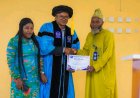
The event was concluded with the ceremonial presentation of a certificate and gifts to Bako by the vice-chancellor."