Traditional Medicine Day and Exhibition at UNILAG: Celebrating African Heritage
The J.P. Clark Building at the University of Lagos (UNILAG) will come alive with the vibrant colors, scents, and wisdom of African traditional medicine.
 UBA CHIDINMA
The J.P. Clark Building at the University of Lagos (UNILAG) will come alive with the vibrant colors, scents, and wisdom of African traditional medicine. From Wednesday, August 28 to Thursday, August 29, 2024, the Traditional Medicine Day and Exhibition will showcase the rich heritage of healing practices that have been passed down through generations.Lagos, August 28, 2024 – The J.P. Clark Building at the University of Lagos (UNILAG) will come alive with the vibrant colors, scents, and wisdom of African traditional medicine. From Wednesday, August 28 to Thursday, August 29, 2024, the Traditional Medicine Day and Exhibition will showcase the rich heritage of healing practices that have been passed down through generations.
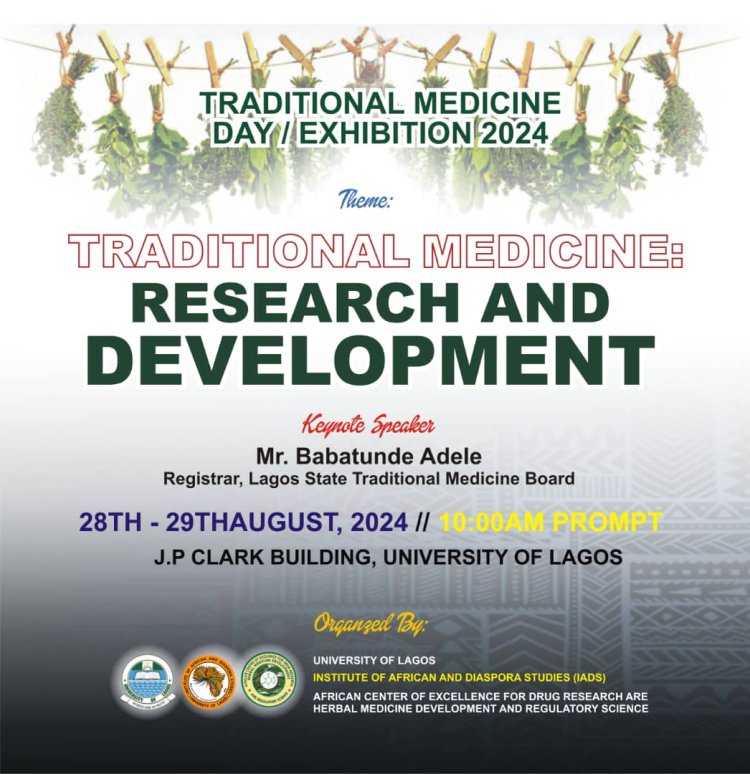
Co-hosted by the Institute of African and Diaspora Studies (IADS) and the African Centre of Excellence for Drug Research, Herbal Medicine Development, and Regulatory Science (ACEDHARS), this event promises to be a unique blend of tradition and modernity. Here are the highlights:
-
Regulatory Standard: The exhibition features traditional medicines that meet rigorous regulatory standards. Visitors can explore remedies, herbs, and practices that have stood the test of time while adhering to quality guidelines.
-
Cultural Showcase: UNILAG celebrates the diversity of African healing traditions. Attendees will witness live demonstrations, learn about indigenous plants, and engage with practitioners who carry forward ancient knowledge.
-
Community Engagement: Members of the University Community and the general public are invited to participate. Whether you’re curious about herbal remedies, seeking alternative health options, or simply interested in cultural heritage, this event welcomes all.