UI DVC Reaffirms the University’s Commitment to Interdisciplinary Research
UI DVC Reaffirms the University’s Commitment to Interdisciplinary Research
 UmarFarouk123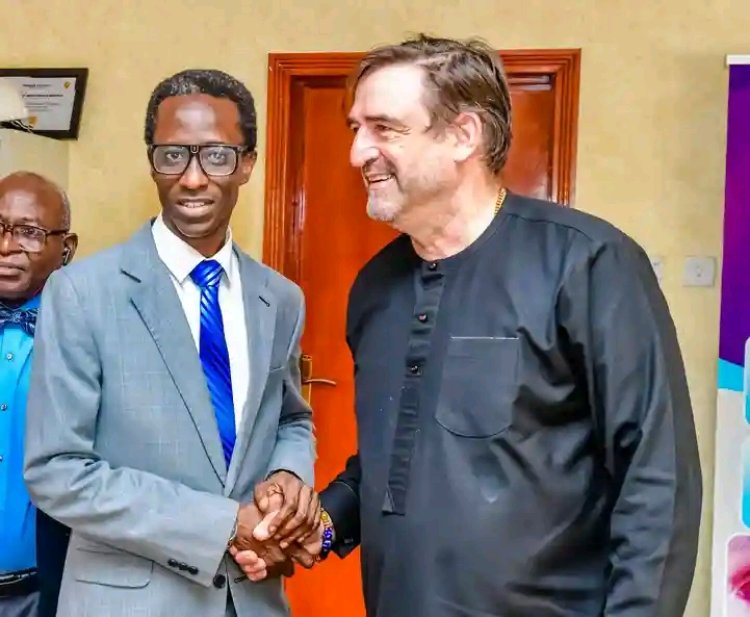
The Deputy Vice-Chancellor, Academic of the University of Ibadan, Professor Juwon T. Arotiba, FICD, FWACS, has reaffirmed the university’s commitment to interdisciplinary research.
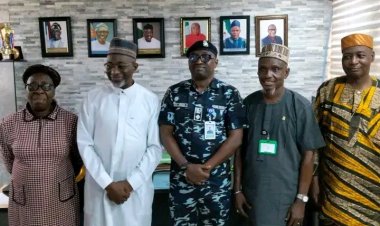
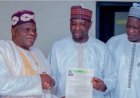
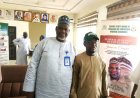
He gave this reaffirmation on behalf of the Vice-Chancellor, Professor Kayode O. Adebowale, mni, FAS, fspsp, while receiving the research team of the Groundwater Sustainable and Equitable Development Under Constraints of Ecosystem Conservation and Saltwater Intrusion Prevention (GWS-SENCE NIGERIA) during a courtesy visit to the office of the Vice-Chancellor.
Professor Arotiba emphasized the critical role of interdisciplinary research and collective action in addressing the growing threat of climate change.
He said that no single institution, discipline, or nation can effectively tackle the crisis in isolation, stressing that sustainable solutions can only emerge through strategic partnerships and shared responsibility.
The DVC acknowledged that the constitution and focus of the research team is in line with the University of Ibadan’s vision to be a world-class institution for academic excellence geared towards meeting societal needs and reaffirmed the university’s commitment to providing an enabling environment for collaborative research.
The Nigeria Team Lead of the GWS- SENCE Project, Professor Moshood N. Tijani of the University of Ibadan disclosed that the project is a consortium and is interdisciplinary in nature.
He added that the research team consists of researchers from four countries: The Netherlands, Nigeria, Kenya and Egypt and the project is being implemented in Nigeria through the University of Ibadan, in collaboration with the international partners.
The Don explained that the initiative was designed to promote the sustainable and equitable development of groundwater resources, while carefully balancing the need for ecosystem conservation and the prevention of saltwater intrusion.
Professor Tijani further disclosed that the Nigerian component of the project is driven by an interdisciplinary research team comprising researchers from the Departments of Geology; Geography; Zoology; and Agricultural Extension and Rural Development, at the University of Ibadan, to reflect the project’s integrated approach to groundwater sustainability, ecosystem conservation, and community engagement.
He emphasized that the initiative brings together stakeholders to share their knowledge and experiences on the current status, challenges, and potential solutions for improving the quality of underground water sources in coastal communities
The Nigeria Team Lead stressed the importance of working closely with local communities to generate relevant data, transform that data into meaningful information, and ultimately translate it into actionable knowledge to drive informed decision-making.
He disclosed that the project is being funded by the government of The Netherlands and researchers from the four participating countries were visiting Nigeria as part of the ongoing activities of the project.
Associate Professor Tibor Stigter, the Overall Coordinator of the project from the IHE Delft Institute for Water Education, The Netherlands restated that the project is a knowledge driven venture which was designed to build knowledge through research.
He explained that it is anticipated that the initiative will be sustained and more collaborators will be encouraged, adding that the goal is to improve sanitation, quality of underground water and livelihood of communities.
Other international researchers on the visiting team were: Professor Daniel Olago, Team Lead, Kenya (University of Nairobi); Assistant Professor Marmar Badr, Team Lead, Egypt (Nile University); Professor Manal Alsaid Alnaimy, Team Member, Egypt (Zagazig University); Dr Bessy Kathambi, Team Member, Kenya (University of Nairobi); and Dr Mohammed Anwa, Team Member, Egypt (Heliopolis University).