UNIMAID Dean Outlines Strategic Roadmap for Student Welfare, Security, and Housing Reform
UNIMAID Dean Outlines Strategic Roadmap for Student Welfare, Security, and Housing Reform
 UmarFarouk123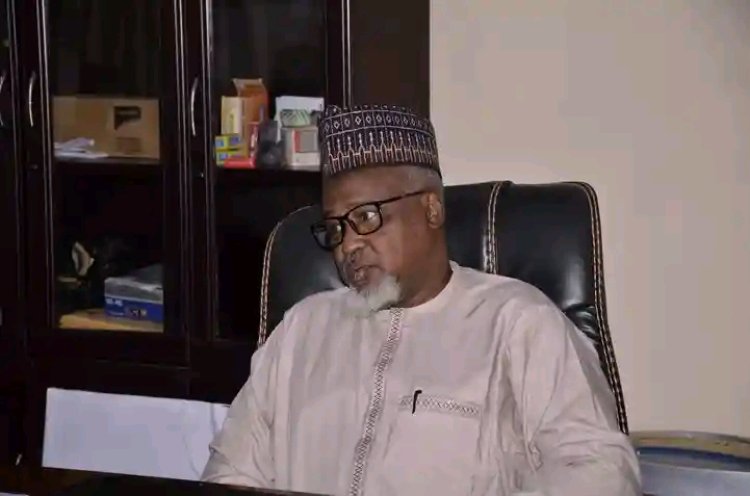
As part of efforts to create awareness on the activities of faculties, units, departments and directorates within the University of Maiduguri, the UNIMAID Bulletin IT student: Zainab Haruna, conducted an interview with the Dean of Students Affairs, Professor Ahmadu Mohammed Bruno, on December 31st, 2025, in his office at the University.
The interview focused on issues bothering on students’ welfare, security, accommodation, sanitation and discipline, as well as the major challenges confronting students on campus and beyond.
Professor Bruno, explained that his responsibility as the Dean of students affairs is to ensure the overall well-being, comfort, safety and social life of students, both on and off campus.
According to him, the University has put in place multiple channels for addressing students’ complaints and grievances. These include hall officers for students residing in hostels, a Student Relations Officer and a desk officer responsible for student clubs and associations. He maintained that more complex issues are handled through collaboration with the university security system and, where necessary, town and state security agencies are involved.
On students’ sensitization, the Dean disclosed that the university runs several awareness and preventive programs to address issues such as harassment, bullying, cultism and drug abuse. These initiatives include the use of billboards and banners displaying the university rules, advocacy campaigns by approved groups, departmental staff advisers, student unions and orientation programs designed to educate newly admitted students on acceptable conduct and campus regulations.
Addressing the issue of accommodation, Professor Bruno admitted that the university’s hostels are inadequate. There are only 13,000 bed spaces for students of about 60,000. To bridge the gap, he noted that the university collaborates with private investors who provide off-campus housing for students.
The Dean identified drug abuse as the major challenge facing students, describing it as a broader national problem with serious consequences. He explained that drug abuse often leads to other vices such as theft, prostitution and other forms of criminal activities. To curb this menace, the university employs intelligence gathering, raids, collaboration with external security agencies and sustained educational campaigns against drug abuse.
On security, Professor Bruno emphasized that the University takes students’ safety seriously by deploying internal security operatives and working closely with the police, DSS and the military. Students are also encouraged to carry their identification cards at all times, while the Dean’s office serves as the first point of contact in emergencies, offering support such as hospital visits and intervention with security agencies. He stressed that security is a collective responsibility.
Concerning cleanliness and sanitation in the hostels, the Dean revealed that sanitation services are largely outsourced to three major companies, while the University’s sanitation unit handles cleaning, fumigation and pest control to ensure a healthy living environment for students.
Professor Bruno described students as the core of the institution and partners in progress, assuring them of the Dean’s office commitment to working closely with student unions and representatives to address their concerns. He noted that although comfort differs from one individual to another, the University remains committed to consistently enhancing students welfare.