Africa Can Still Play Pivotal Role in Global Technology – FUTA Professor
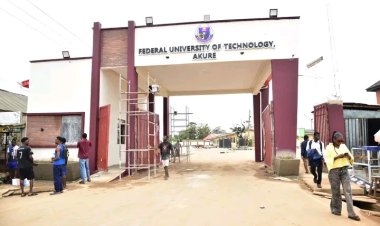
Professor of Applied Manufacturing Technology, Machine Tools and Cutting Tools at the Federal University of Technology Akure (FUTA), Olayinka Awopetu, has asserted that Africa possesses the potential to play a more pivotal role in global technology if visionary leadership, strong structures, and the right policies are put in place.
 Philip22

Professor of Applied Manufacturing Technology, Machine Tools and Cutting Tools at the Federal University of Technology Akure (FUTA), Olayinka Awopetu, has asserted that Africa possesses the potential to play a more pivotal role in global technology if visionary leadership, strong structures, and the right policies are put in place.

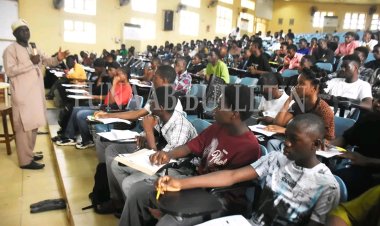
Delivering FUTA’s 184th inaugural lecture on August 26, 2025, titled “Metal Cutting and Theory of Chip Formation: The History of a Science without History,” Professor Awopetu noted that Africa’s innovation, resilience, and unique approaches to local problem-solving are laying the groundwork for not just catching up with the rest of the world, but for redefining the continent’s place in global technology.
According to him, metal cutting—traced back 600,000 to one million years ago in Tanganyika, present-day Tanzania—proves that Africa once led the world technologically and can still accelerate its trajectory through infrastructure investment, education reforms, and industrial policies.

Professor Awopetu explained that although metal cutting has been practiced for millennia, its scientific understanding and theoretical models emerged mainly in the 19th and 20th centuries and continue to evolve through ongoing research and development. He emphasized that metal cutting is the backbone of modern manufacturing, playing a critical role in producing components for smartphones, car engines, laptops, medical implants, turbines, and airplanes—some of which are now manufactured in Africa.

Highlighting its value, he stressed that the precision offered by metal cutting sets it apart from other processes like casting or forging. “Many engineering applications require tight tolerances and smooth finishes, such as in surgical instruments, turbine blades, and engine parts, which can only be achieved through advanced machining techniques,” he said.

He further observed that advancements in high-speed cutting tools, CNC (Computer Numerical Control) machines, and automation have boosted production efficiency, minimized errors, and reduced labor costs, making modern manufacturing more profitable and globally competitive.
Describing metal cutting as “an essential and irreplaceable process,” Professor Awopetu concluded that it provides the accuracy, flexibility, and productivity required to meet present and future engineering needs, support technological innovations, and drive industrial growth.

In her remarks as Chairman of the occasion, Vice Chancellor Professor Adenike Oladiji commended Professor Awopetu for his intellectual depth and consistent scholarly contributions. She praised his commitment to academic excellence and recognized his significant impact on his field and on FUTA’s academic community.