Progress Must Not Undermine Collective Well-Being, Says Professor Abiye Clement Marcus
Professor Abiye Clement Marcus has called for stronger scientific vigilance to ensure that national development does not compromise the health of the environment or the well-being of society.
 Philip22

Professor Abiye Clement Marcus has called for stronger scientific vigilance to ensure that national development does not compromise the health of the environment or the well-being of society.

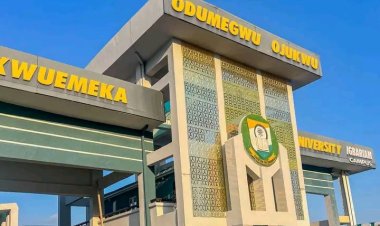
He made this assertion on Thursday, November 27, 2025, while delivering the 73rd Inaugural Lecture of Ignatius Ajuru University of Education (IAUE) at the university auditorium.
Speaking on the topic Environmental Degradation and Remediation: The Test Tube as Advocate for Protecting the Hydrated Carbon Composite, the Professor of Analytical and Environmental Chemistry emphasized that Nigeria must pursue a future where science leads public decision-making rather than operating in the background. He argued that governments, businesses, and communities must be guided by scientific evidence in shaping choices that foster a resilient and sustainable world.
Professor Marcus underscored the need to protect the “living carbon composite,” noting that restoring the environment and allowing it to flourish aligns with the global vision of maintaining a safe operating space for humanity. He stressed that setting ecological boundaries is not about restriction but about ensuring long-term sustainability, biodiversity protection, climate stability, and preservation of natural resources for future generations.
He called for multi-level cooperation—international agreements, supportive national policies, and responsible local action. According to him, farmers adopting sustainable practices, businesses minimizing waste, and communities engaging in tree planting all contribute to the broader global sustainability movement. Protecting the environment, he said, remains both a global imperative and a local responsibility rooted in values such as honesty, stewardship, and respect for life.

Professor Marcus highlighted the symbolic power of the test tube, describing it as a reminder that science holds the tools for healing environmental damage. Through scientific inquiry, he noted, societies can develop cleaner living methods, reduce waste, purify water, restore ecological balance, and convert laboratory innovations into practical environmental solutions. He insisted that scientific findings must be communicated to policymakers and environmental managers so that laboratory knowledge becomes actionable strategy.
He concluded that the test tube should serve as a voice for nature, urging humanity to use knowledge—not carelessness—to renew the earth.
Representing the Vice-Chancellor, Professor Okechuku Onuchuku, Professor Ozioma Adauwu Ekpete commended the lecture and reiterated the importance of environmental conservation, highlighting its direct implications for public health and life expectancy. She also encouraged attendees to consider IAUE’s postgraduate programmes, noting the institution’s rapid growth and its commitment to ensuring students graduate on schedule.

Delivering the vote of thanks, the Dean of the Faculty of Administration and Management Sciences, Professor Kingsley Gbeke Kalagbor, expressed appreciation to the audience on behalf of the university.