Sule Lamido University Commemorates World Soil Day 2025 with Lecture on Urban Sustainability
Sule Lamido University Commemorates World Soil Day 2025 with Lecture on Urban Sustainability
 UmarFarouk123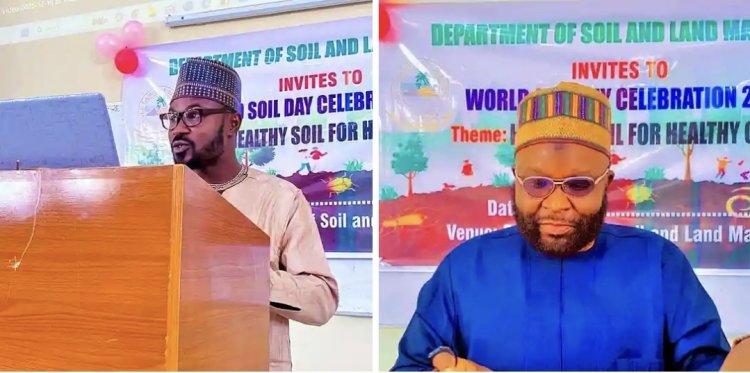
The Department of Soil and Land Management, Faculty of Agriculture and natural Resource Management, Sule Lamido University Kafin Hausa (SLUK) has organised a Public Lecture themed “Healthy Soil for Healthy Cities” to commemorate the 2025 World Soil Day, on Thursday 11th December, 2025.
While declaring the Public Lecture open, the Vice-Chancellor, Professor Muhammad Ibrahim Yakasai, fcasson, mnae, described soil as not only a natural resource but the foundation of food security, economic prosperity, environmental stability and sustainable urban development. The Vice-Chancellor, who was represented by the Deputy Vice-Chancellor Academics of the University, Eng. Professor Nasir Faruk further stressed the commitment of the University administration in the advancement of the Faculty of Agriculture and Natural Resource Management (FANRM) as evident during the recently concluded accreditation exercise, where the University made significant investments in laboratories, field equipment, instructional material, staffing and infrastructure across all programmes offered in the Faculty. The Vice-Chancellor then commended the efforts of Jigawa State Government steered by His Excellency, Malam Umar A. Namadi, FCA, for the recently launched Jigawa State Agricultural Policy 2024-2030 which prioritises sustainable land use, climate-smart agriculture, soil fertility enhancement, mechanisation, irrigation expansion, youths and women empowerment and improved access to inputs and markets.
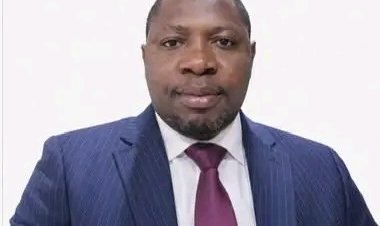
In a paper titled ‘Healthy Soil for Healthy Cities-Why Soil Matter More Than Ever’, the Guest Speaker and President of Soil Science Society of Nigeria, Professor Jibrin Mohammed Jibrin from Bayero University, Kano, disclosed that Healthy soils perform four essential services which include nourishing of crops by providing the nutrients that determine not only yield, but also the micronutrient quality of our diets, regulating water by serving as sponges that absorb rainfall, reduction of flooding through the sustenance of rivers and aquifers through the dry season and regulation of the climate by storing of more carbon than all the world’s vegetation combined - carbon that, if mismanaged, escapes into the atmosphere and amplifies global warming. While enumerating the role of Universities in good soil management, Professor Mohammed listed integrating soil health through teaching, regenerative agriculture and urban soil management into the University curricula, and developing precise soil mapping tools, digital advisory systems, and low-cost soil health diagnostics suited to local contexts through research and innovation and working with local governments and farmer groups through extension to support national programmes.
Earlier in his welcome address, the Head of the Department of Soil and Land Management, FNRM, SLUK, Dr. Shamsu Ado Zakari described soil as the most essential natural resource which forms the foundation of human food systems, regulator of water and nutrients, a habitat for countless organisms and a crucial partner in combating climate change and land degradation. Dr. Zakari also revealed that the celebration was not just a formality but a call to action that reminds us of our collective responsibility to protect, conserve and sustainably manage the soil that sustains our lives.
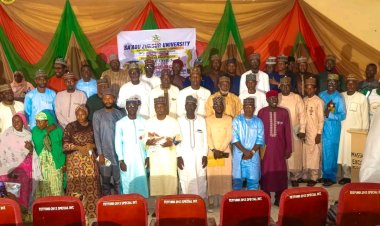
Highpoint of the occasion was Soil Exhibition and Demonstration Tour and a group photograph.