Sustainable Agricultural Extension Requires Strong Institutional Structures, UI Vice-Chancellor Says
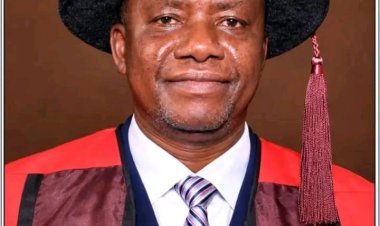
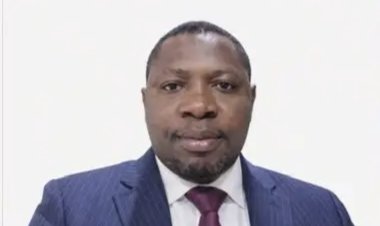
The Vice-Chancellor of the University of Ibadan (UI), Professor Kayode O. Adebowale, has emphasized that the development of functional institutional structures is critical to achieving sustainable agricultural extension programmes in Nigeria.
 Philip22
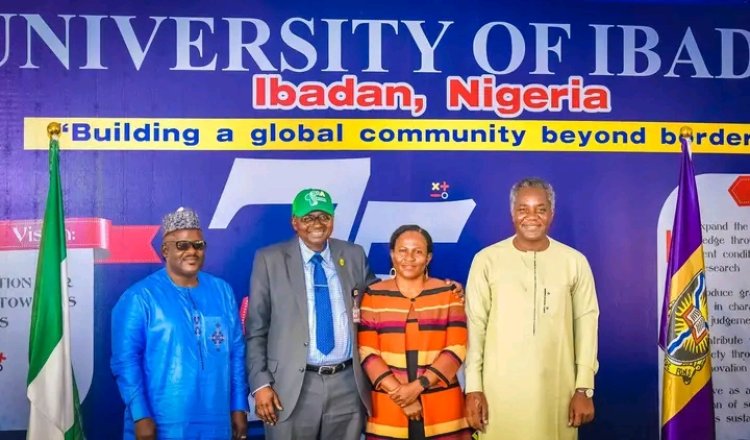
The Vice-Chancellor of the University of Ibadan (UI), Professor Kayode O. Adebowale, has emphasized that the development of functional institutional structures is critical to achieving sustainable agricultural extension programmes in Nigeria.
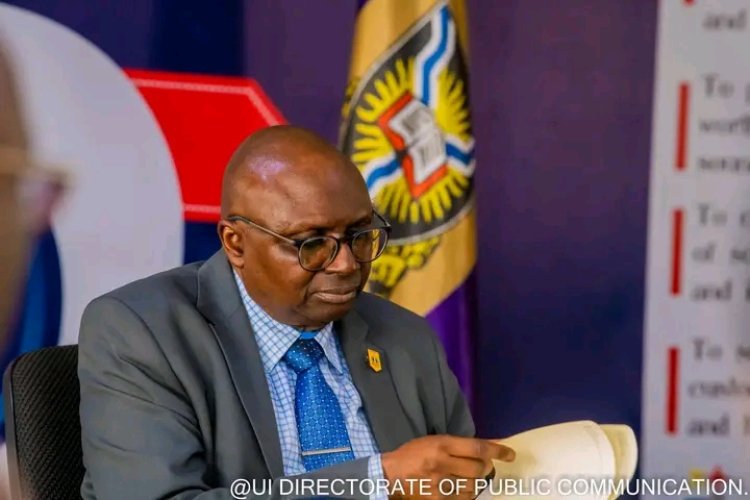
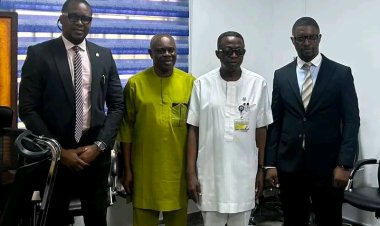
Professor Adebowale made the assertion while receiving the Country Director of the Sasakawa Africa Association (SAA), Dr. Godwin Atser, during a courtesy visit to his office.
Addressing the persistent food security challenges in Nigeria, the Vice-Chancellor identified a major structural gap between agricultural research outputs and practical farming realities. He noted that while universities and research institutes generate significant innovations, there is inadequate dissemination of these findings to smallholder farmers due to weak extension systems.
According to him, sustainable agriculture can only be realized through the deliberate development of robust frameworks and the strengthening of agricultural extension services. He stressed the need to build the capacity of extension officers who can effectively communicate in local languages and translate research findings into practical solutions for rural farmers.
Professor Adebowale described the visit as timely and reaffirmed the University of Ibadan’s commitment to delivering cutting-edge research that addresses food security and broader agricultural challenges. He proposed the establishment of a structured framework to deepen collaboration between UI and SAA, anchored on integrated research, joint research initiatives, institutional capacity building, infrastructure sharing, commercialization of research outputs, and structured development mechanisms.

He further expressed the university’s readiness to formalize the partnership through a Memorandum of Understanding (MoU), noting that all relevant academic and research units within the institution would be actively involved in the collaboration.
Earlier, Dr. Godwin Atser explained that the Sasakawa Africa Association is a Japanese-founded organization established in 1986 to address food security challenges across Africa. The association currently operates in Nigeria, Uganda, Mali, and Ethiopia.
He stated that SAA’s core mandate is to enhance food security, reduce poverty, and promote sustainable agricultural systems through regenerative agriculture, market systems development, and capacity building, particularly in agricultural extension services.
Dr. Atser disclosed that the organization has supported the training of 1,000 PhD graduates across Africa and partners with eleven universities and two colleges of agriculture in Nigeria. He described the University of Ibadan as a strategic partner, given its leadership role in academic and research development in the country.
As part of its new five-year strategic plan, SAA is expanding operations to Oyo State to strengthen support for smallholder farmers and build the capacity of frontline agricultural extension officers through targeted training and skills development initiatives.
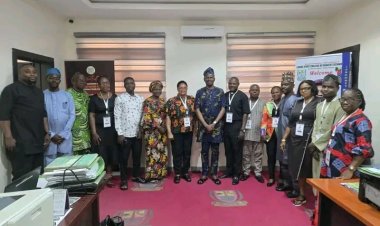
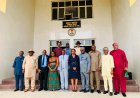
Members of the SAA delegation included Deputy Country Director, Dr. Gambo Abdulfang, and Technical Coordinator, Dr. Anjola Fadairo. Also present at the meeting were the Dean of the Faculty of Agriculture, Professor T. O. Ososanya; the Head of the Department of Agricultural Extension and Rural Development, Professor Stella O. Odebode; other faculty members; and a representative of the Dean of Multidisciplinary Studies, Professor C. Agulanna.