UI Reaffirms Commitment to Strategic Partnerships, Emphasizes Equitable Research Collaboration
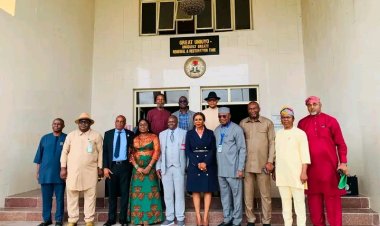
The Deputy Vice-Chancellor for Research, Innovation, and Strategic Partnerships at the University of Ibadan, Professor Simisola O. Akintola, has reaffirmed the institution’s commitment to strengthening strategic partnerships that are equitable, reciprocal, and mutually beneficial.
 Philip22

The Deputy Vice-Chancellor for Research, Innovation, and Strategic Partnerships at the University of Ibadan, Professor Simisola O. Akintola, has reaffirmed the institution’s commitment to strengthening strategic partnerships that are equitable, reciprocal, and mutually beneficial.

She stated that the university continues to welcome collaborations that respect the intellectual sovereignty of African scholars and institutions, while also investing in the capacity development of researchers and postgraduate students. According to her, such partnerships must ensure that knowledge generated within the continent remains accessible and impactful for the communities that need it most.
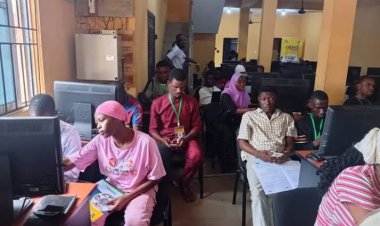
Professor Akintola made the remarks at the opening of a one-day workshop under the INCITIS Food Project, held for members of the university community alongside NGOs, students, farmers, aquaponics and hydroponics practitioners, SMEs, and entrepreneurs. The workshop took place at the University of Ibadan Living Lab in the Department of Aquaculture and Fisheries Management.
The event was themed “Urban Food Production: Lessons from INCITIS Food Project” and was described as a practical platform for translating research into real-world impact through community engagement and innovation.

She noted that the workshop went beyond knowledge sharing, describing it as a practical demonstration of the role African universities must play in bridging science and society. She emphasized that institutions must move outward into their communities, ensuring that research outputs are translated into tangible interventions that are both accessible and socially relevant.
Aligning with the Vice-Chancellor’s vision, Professor Akintola reiterated that the University of Ibadan is positioning itself as a globally competitive research institution that remains firmly rooted in Nigeria’s and Africa’s developmental realities. She stressed that initiatives such as the INCITIS Food Project are central to this vision, as they demonstrate the capacity of African researchers to deliver internationally funded, methodologically sound, and community-focused research.
She also highlighted growing concerns around food insecurity, noting that available data shows millions of Nigerians are affected by varying levels of food scarcity. She urged participants to strengthen collaboration, interrogate assumptions, and continuously refine project strategies to improve outcomes and long-term impact.

The Principal Investigator of the INCITIS Food Project Living Lab, Dr. O. O. Oyebola, explained that the workshop was organized to showcase the activities and achievements of the Living Lab, as well as to promote wider societal impact through knowledge dissemination.
Goodwill messages were delivered by the University Director of Audit, Dr. J. O. Oluyori; Head of the Department of Aquaculture and Fisheries Management, Professor Flora Olaifa; and Mr. Michael Olalekan Adeniyi of the Environmental Conflict Mediation and Women Development Initiative.
Technical presentations at the workshop covered a range of applied innovations and practical systems. These included circular urban food systems and living lab models, operation of insectary systems in urban environments, and aquaponics and hydroponics food production systems. Discussions also focused on problem-driven innovations such as home-grown climate-smart sensors, liquid organic fertilizers, manual aquaponic prototypes, and fish and plant health management solutions.
The INCITIS project, formally known as Integrated and Circular Technologies for Sustainable City Region Food Systems in Africa, is a European Union-funded initiative scheduled to run until 2026. The University of Ibadan Living Lab is one of eight such facilities across Africa and has trained over 200 participants, providing technical support and cascade funding opportunities for trainees.
The project is coordinated by Dr. O. O. Oyebola and supported by a multidisciplinary team including Dr. A. O. Ajiboye, Miss Josephine Adebayo, Miss Aderonke Adelaja, Miss Tobi Ogundipe, Mrs. Tofunmi Ladokun, Miss Nafisat Lawal, Miss Abigail Abdullai, Miss Khadijat Abdulrasaq, and Mr. Festus Onaduja.
Other contributing academics since the inception of the project include Professor Olufunke Fayehun, Dr. O. B. Oduntan, Professor Flora Olaifa, Professor Adeoluwa Olugbenga, Dr. Jumoke Omoniyi, Dr. Siyanbola Omitoyin, and Dr. Olajumoke Alabi.