UNIMAID Drives Scientific Innovation at Microbiology Colloquium, Reaffirms Commitment to Research Excellence
The University of Maiduguri (UNIMAID) has reiterated its commitment to building a strong scientific ecosystem capable of competing globally, as the institution hosted the 3rd Departmental Colloquium of the Department of Microbiology
 Philip22
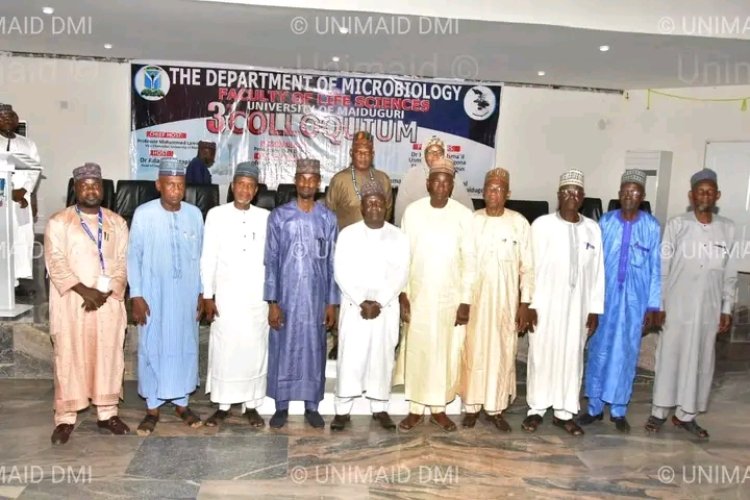
The University of Maiduguri (UNIMAID) has reiterated its commitment to building a strong scientific ecosystem capable of competing globally, as the institution hosted the 3rd Departmental Colloquium of the Department of Microbiology.
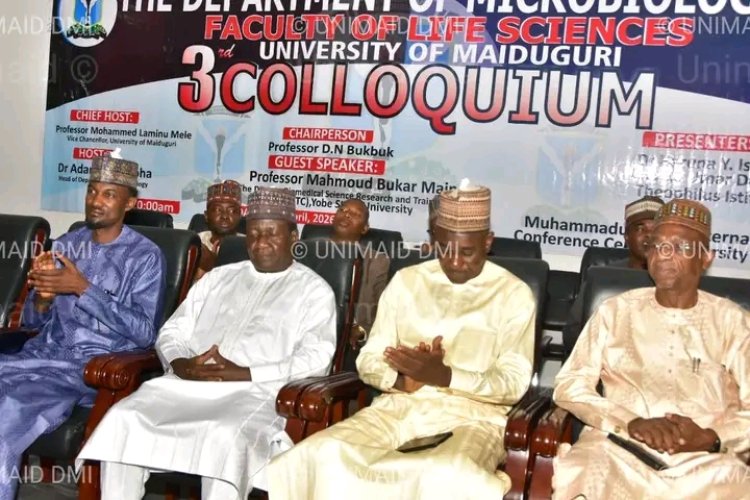
The Vice Chancellor, Prof. Mohammed Laminu Mele, made this known on Monday, April 27, 2026, at the Muhammadu Indimi International Conference Centre, describing the event as evidence of the university’s growing culture of consistency, innovation, and academic discipline.
He expressed satisfaction with the department’s expanding international footprint, noting that it had attracted external research submissions from countries including Malaysia, Turkey, and Libya. According to him, this level of engagement reflects positively on the university’s global academic standing.
Prof. Mele assured continued institutional support to strengthen research output, particularly through improved infrastructure, stable power supply, and upgraded laboratory facilities to enhance productivity for both staff and students.
The colloquium, themed “From Mentorship to System Building: Sustainable Scientific Ecosystem in Resource-Limited Setting,” featured a keynote address by distinguished alumnus and neuroscientist, Prof. Mahmoud Bukar Maina.
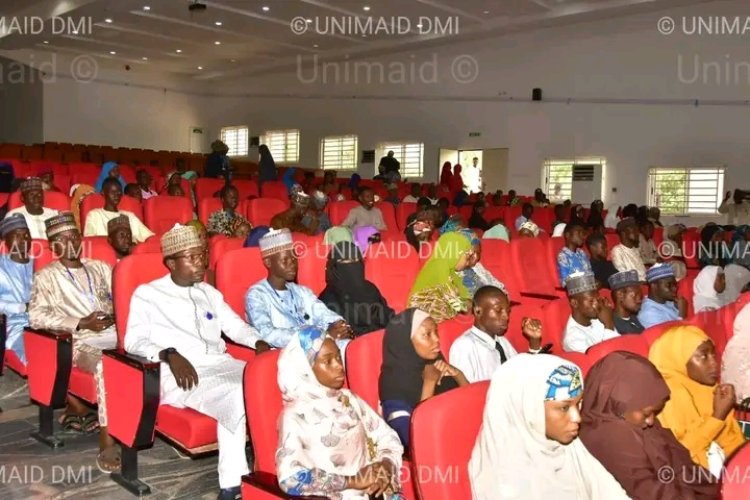
Prof. Maina, now a Director at Trends in Africa and a researcher at the University of Sussex, credited his global research success and access to major international grants to the mentorship foundation he received at UNIMAID.
He urged students and young researchers to adopt strategic mentorship approaches, stressing that mentorship should be viewed as a deliberate alignment of people, networks, and research goals rather than a fixed system.
He also highlighted his ongoing stem cell research focused on developing therapies tailored to African populations, describing it as an outcome of a well-structured academic environment.
Earlier, the Head of the Department of Microbiology, Dr. Adam Mustapha, said the department has strengthened its academic profile by graduating 50 postgraduate students within three academic sessions, while currently supervising over 100 postgraduate candidates.
He also highlighted student-focused initiatives such as the Microbial Board of Fame and the Three-Minute Project competition, designed to promote research engagement and innovation among students.
Dr. Mustapha commended the Vice Chancellor for interventions including solar power installation in laboratories and the activation of the molecular laboratory, which he said have significantly improved research capacity.
The event also introduced a Young Researchers’ Session and ended with a renewed commitment to sustaining mentorship-driven research excellence within the university.