UNIMAID VC Reaffirms Commitment to Global Scientific Excellence at 3rd Microbiology Colloquium
UNIMAID VC Reaffirms Commitment to Global Scientific Excellence at 3rd Microbiology Colloquium
 UmarFarouk123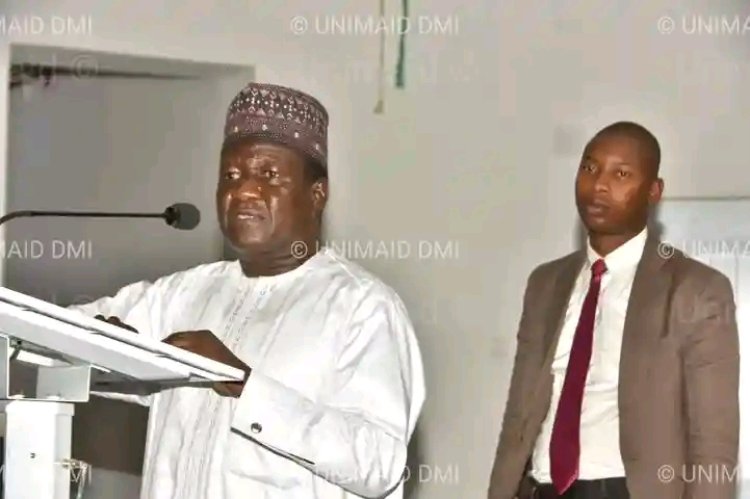
The Vice-Chancellor of the University of Maiduguri, Professor Mohammed Laminu Mele, has reiterated the University Management’s unwavering dedication to fostering a robust and sustainable scientific ecosystem capable of competing on a global scale.
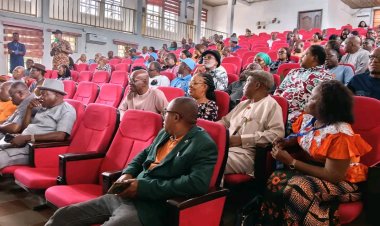
Speaking on Monday, 27th April 2026, at the Muhammadu Indimi International Conference Centre during the 3rd Departmental Colloquium of the Department of Microbiology, the Vice-Chancellor described the event as a reflection to the institution’s culture of consistency, innovation, and academic integrity.
Professor Mele expressed immense pride in the Department’s ability to elevate its scholarly tradition, noting with satisfaction the receipt of external research submissions from countries including Malaysia, Turkey, and Libya.
He emphasized that such international visibility significantly enhances the reputation of the University and promised continued institutional support, particularly in the areas of infrastructural upgrades, stable power supply, and laboratory capacity to ensure that staff and students perform at their peak.
The event, themed “From Mentorship to System Building: Sustainable Scientific Ecosystem in Resource-Limited Setting,” featured a keynote address by a distinguished alumnus and world-renowned neuroscientist, Professor Mahmoud Bukar Maina.
Reflecting on his journey from a UNIMAID undergraduate to a Director at Trends in Africa and a researcher at the University of Sussex, Professor Maina attributed his global success and the acquisition of multi-million pound research grants to the foundation of mentorship he received at the University of Maiduguri.
He challenged the students to be deliberate in seeking diverse mentors, asserting that “mentorship is not a religion” but a strategic alignment of individuals, networks, and problems.
Professor Maina further highlighted his groundbreaking stem cell research, which seeks to develop therapies specifically compatible with African populations, as a direct outcome of the sustainable academic ecosystem he was nurtured in.
Earlier in his welcome address, the Head of the Department of Microbiology, Dr. Adam Mustapha, disclosed that the department has successfully repositioned its academic narrative by graduating 50 postgraduate students within three academic sessions, with over 100 currently enrolled.
Dr. Mustapha highlighted several student-centered innovations, including the Microbial Board of Fame and the Three-Minute Project (3MP) competition, aimed at nurturing the next generation of scholars.
He specifically commended the Vice-Chancellor for the provision of solar power to the departmental laboratories and the activation of the Molecular Laboratory, noting that these interventions have been instrumental to the department's rising profile.
The colloquium, which also featured the introduction of a “Young Researchers’ Session,” concluded with a shared resolve among stakeholders to sustain the momentum of research excellence and mentorship within the University."