Igbinedion University Equips Staff with Intensive Two-Day AI Training to Transform Academic Delivery
Igbinedion University Equips Staff with Intensive Two-Day AI Training to Transform Academic Delivery
 UmarFarouk123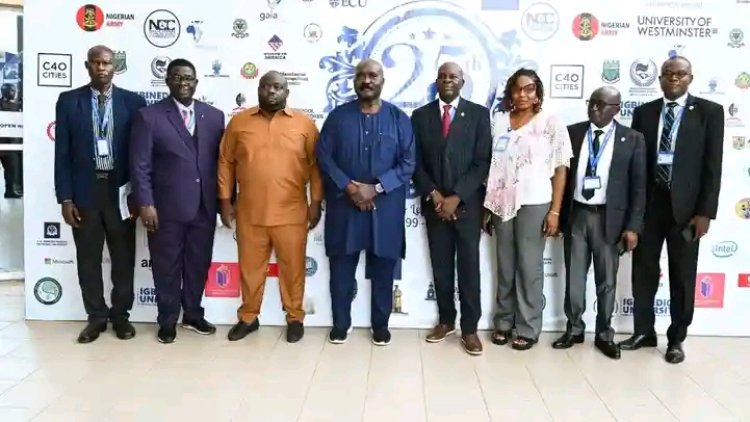
Lecturers and staff of Igbinedion University, Okada, have been urged to embrace artificial intelligence (AI) as a transformative tool for teaching, research, and institutional growth.
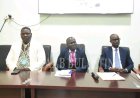
The charge was given during a training session titled “Adapting AI in Higher Learning Engagements,” facilitated by Darlington Onyeagoro, an AI expert, who emphasized the need for educators to acquire practical AI skills to remain competitive in a rapidly evolving academic landscape.
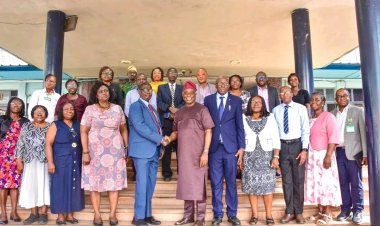
In his opening remarks, the Vice Chancellor, Professor Lawrence Ikechukwu Ezemonye, PhD, FAS, highlighted the University’s commitment to innovation and digital transformation, noting that integrating AI into teaching and learning would enhance academic delivery, research output, and global relevance.
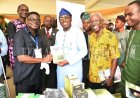
The event was formally declared open by the Deputy Chancellor, His Excellency, Chief, Dr. Lucky Nosakhare Igbinedion, who underscored the importance of equipping staff with relevant training and expertise in a technology-driven education sector.
During the session, Onyeagoro introduced participants to several practical AI tools, including ChatGPT for content generation and brainstorming, Gemini for research support, and Claude for analyzing long documents. Other tools highlighted were Gamma for creating presentations, NotebookLM for knowledge synthesis, Lovable.dev for application development, as well as creative tools like Nano Banana, Whisk, and Veo for media and video generation.
He stressed that mastering a few of these tools could significantly improve efficiency in lecture preparation, research, assessment design, and student engagement.
Speaking on the impact of the training, the Dean of the College of Law, Professor Nat Ofo, described the AI summit as revealing and an eye-opener. According to him, participants gained a deeper understanding of how to effectively apply AI in teaching and research. He commended the University leadership, including the Chancellor, Deputy Chancellor, Governing Council, and the Vice Chancellor, for making the initiative possible.
Also speaking, Engr. Randolph Opute of the Department of Chemical and Petroleum Engineering described the event as “one of a kind,” noting that it exposed participants to the vast possibilities AI offers within the academic space.
A lecturer in the Department of Pharmacognosy, College of Pharmacy, Okunrobo Mary, appreciated the school management for organizing the seminar, emphasizing the need for continuous learning in an increasingly digital world. She noted that the knowledge gained would help her better organize lecture notes, develop teaching slides, and even create personal websites.
Speaking to the media, the Dean of the College of Natural and Applied Sciences, Professor Longy Anyanwu, described the training as successful and impactful for self-development. He highlighted the hands-on nature of the sessions, which allowed participants to practically engage with AI tools and observe real-time outcomes and applications.
Similarly, the Dean of the Postgraduate School and Research, Professor Deborah Omotsefe Odejimi, said the seminar opened participants’ eyes to the depth of AI use cases. She noted that the training, which involved both academic and non-academic staff, provided valuable insights into improving teaching, research, and overall productivity, adding that participants would not remain the same after the experience.
The training also covered key AI concepts such as machine learning, natural language processing, and prompt engineering, alongside practical use cases for lecturers, including automated lecture notes, multi-level teaching, assessment generation, and academic writing support.