University of Ibadan Professor Advocates Transforming Engineering Knowledge into Economic Ventures
Professor Victor Oluwasina Oladokun, a distinguished academic in Industrial Engineering and Engineering Management at the University of Ibadan (UI), has urged universities and research institutions to convert engineering knowledge into economically viable ventures.
 Philip22

Professor Victor Oluwasina Oladokun, a distinguished academic in Industrial Engineering and Engineering Management at the University of Ibadan (UI), has urged universities and research institutions to convert engineering knowledge into economically viable ventures.

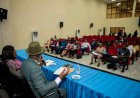
He delivered this call during the 599th Inaugural Lecture of the University of Ibadan, representing the Faculty of Technology.
The lecture, titled “Monetisation of Optimisation: Be Hard, Be Soft To Be Resilient,” emphasized that engineering should go beyond technical problem-solving to generate measurable economic and social value. Professor Oladokun articulated a vision where optimisation becomes monetisation, resilience is designed into systems, and engineering is positioned as a business system capable of driving industrial transformation and national development.
He explained that monetisation of optimisation represents an approach that is rigorous in method, contextually relevant, and resilient in outcome. By designing systems with precision, foresight, and adaptability, engineering knowledge and innovations can be converted into economic outputs, commercial solutions, and policy-relevant impacts. According to him, optimisation, soft computing, and systems thinking are essential tools for converting inefficiency into productivity, vulnerability into resilience, and ideas into tangible economic outcomes.
Professor Oladokun clarified his principle, “Be Hard, Be Soft to Be Resilient,” noting that the “hard” embodies mathematical rigour, modelling, optimisation, machine design, fabrication, and construction of physical structures. The “soft” encompasses adaptability, creativity, and sensitivity to human and environmental contexts, drawing on disciplines such as artificial intelligence, ergonomics, and participatory design. He warned that the hard without the soft risks rigidity, while the soft without the hard risks vagueness, and only by integrating both can resilient, adaptable, and high-performing systems emerge.

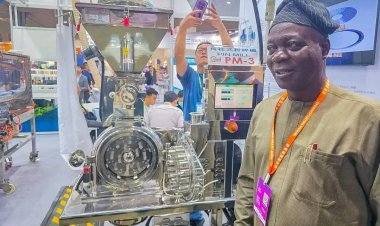
Highlighting the current challenges in Nigeria, he lamented that many engineering initiatives stall at the design or prototype phase despite the country’s large pool of engineers and pressing industrial needs. He emphasized that industrial engineers have a critical role in addressing systemic inefficiencies in energy, infrastructure, public services, and industrial processes. Professor Oladokun advocated for models, methods, and mindsets that produce resilient systems capable of adapting to evolving needs while continuing to deliver value.
He further recommended that universities foster corporate entrepreneurship and intrapreneurship through sustainable legal frameworks that commercialize research outputs, skills, and technologies. He called for the integration of engineering education with dual methodologies that support national development, as well as structured collaborations between industry, universities, and government, including joint ventures and alumni-driven innovations.
Professor Oladokun also stressed the urgent need for investment in data systems and indigenous AI-driven decision-support tools to serve as the backbone of innovation in Nigeria. He appealed to the Federal Government to enhance the remuneration of university lecturers, particularly engineers, noting that fair compensation would curb brain drain and accelerate sustainable national development.

The 599th Inaugural Lecture marked the twenty-second lecture in the 2024/2025 academic session at the University of Ibadan, reinforcing the institution’s commitment to linking academic research with practical, transformative outcomes for the nation.