FG Reviews Curricula of Basic, Senior Secondary and Technical Education
The Federal Government, through the Ministry of Education, has announced the successful completion of the comprehensive review of curricula across all levels of basic, senior secondary, and technical education in Nigeria.
 Philip22

The Federal Government, through the Ministry of Education, has announced the successful completion of the comprehensive review of curricula across all levels of basic, senior secondary, and technical education in Nigeria.
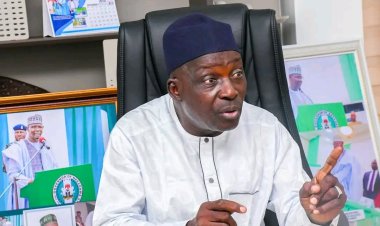
Speaking on behalf of the Honourable Minister of Education, Dr. Maruf Tunji Alausa CON, the Honourable Minister of State for Education, Professor Sulaiman Said Ahmad, explained that the review was carried out in collaboration with all key stakeholders, including the Nigerian Educational Research and Development Council (NERDC), Universal Basic Education Commission (UBEC), National Senior Secondary Education Commission (NSSEC), National Board for Technical Education (NBTE), and relevant departments within the Ministry.
According to Professor Ahmad, the review process was not only about streamlining subjects but also about improving content to allow for deeper learning. At the primary school level, pupils in Primary 1–3 can now offer a minimum of 9 and a maximum of 10 subjects, while those in Primary 4–6 can offer 10 to 12 subjects. For Junior Secondary School, students can take 12 to 14 subjects. At the Senior Secondary level, the range is 8 to 9 subjects, while technical schools can offer between 9 and 11 subjects.

Director of Press and Public Relations, Boriowo Folasade, added that the revised curricula are designed to reduce content overload and create more learning time for students. She stressed that this reflects the government’s commitment to delivering quality education that is relevant, practical, and responsive to the needs of learners in today’s rapidly changing world.
The Federal Ministry of Education commended all stakeholders for their commitment and teamwork in the review process, which has produced a stronger, future-focused curriculum for Nigerian learners. The Ministry assured the public that the revised curricula will be implemented with strict monitoring to guarantee effective adoption and a smooth transition in schools nationwide.