
FUTA Expands Specialized Farming with New Greenhouses to Boost Food Security
The Federal University of Technology Akure (FUTA) has taken a significant step in specialized agriculture with the completion of 11 new greenhouse structures, designed to enhance production of Bell pepper and Habanero pepper.
 Philip22
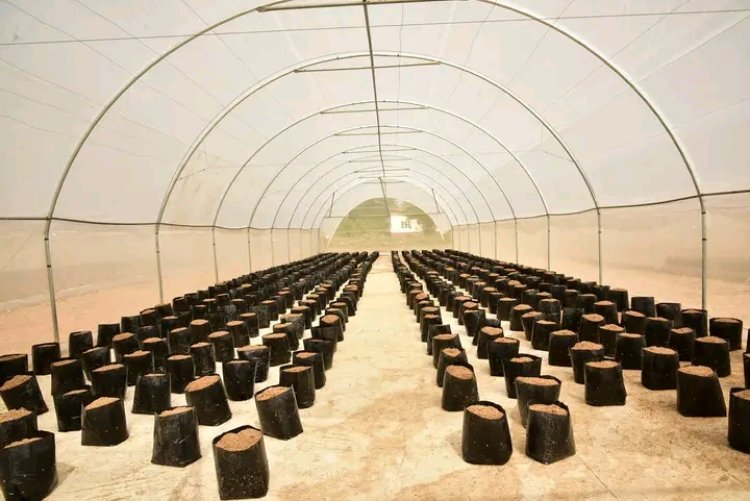
The Federal University of Technology Akure (FUTA) has taken a significant step in specialized agriculture with the completion of 11 new greenhouse structures, designed to enhance production of Bell pepper and Habanero pepper.

Each greenhouse measures 5 by 30 metres, built with reinforced imported steel, locally assembled, and equipped with an indigenously designed drip irrigation system.
The new facilities are designed to hold 550–600 plants per greenhouse using a soilless planting system, with the nursery phase set to commence soon. The project is supervised by Professor Ayo Olalusi, with support from Professor Kehinde Jaiyeoba, Professor Jav Olumurewa, and a team of students.
Speaking on the project, Vice-Chancellor Professor Adenike Oladiji said, “This initiative aligns with President Bola Tinubu’s food security agenda. It is imperative to teach our students profitable ways to contribute to national food production, while also extending training opportunities to interested farmers.” She noted that the additional greenhouses will strengthen FUTA’s pepper production, meet rising market demand, and provide training capacity for both students and external stakeholders. “FUTA is not paying lip service to food security. We are ready to partner with governments and organizations to make this produce readily available at affordable prices, with potential for exportation as we expand,” she added.
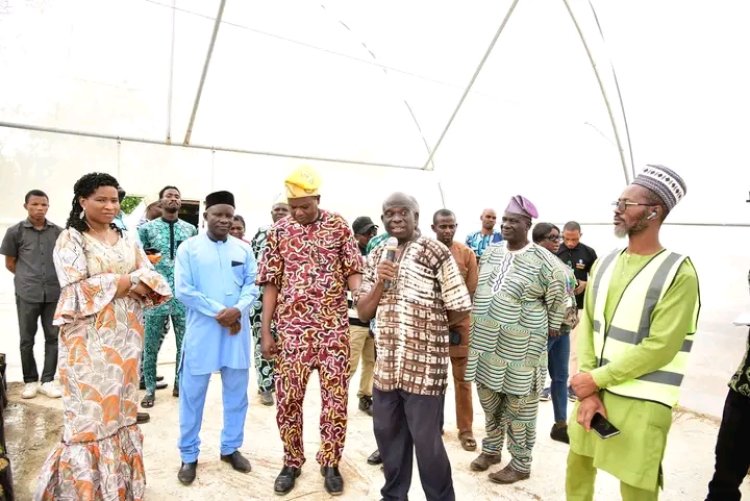
Professor Olalusi highlighted the advantages of the F1 Bell pepper, describing it as an early-ripening hybrid with a bushy growth habit that does not require staking. He noted its disease resistance, strong plant vigor, sweet flavor, and fruit size ranging from 10–11 cm in width and 11–12 cm in length, weighing between 250–280 g. “The uniqueness of this variety is that it can only be propagated in a greenhouse. FUTA is committed to guiding farmers and interested individuals in greenhouse cultivation on both small and large scales,” he said.
Professors Olumurewa and Jaiyeoba described the project as a landmark achievement, emphasizing that it demonstrates FUTA’s commitment to translating research into practical, revenue-generating products.
The Vice-Chancellor also acknowledged the construction company for adhering to the university’s mandate, as well as university staff, including Engr. Oladeji Boyinbode, Director of Physical Planning, for ensuring timely delivery. She further noted that the project has attracted additional agricultural grants, which will help operationalize the greenhouses and support other farming initiatives.
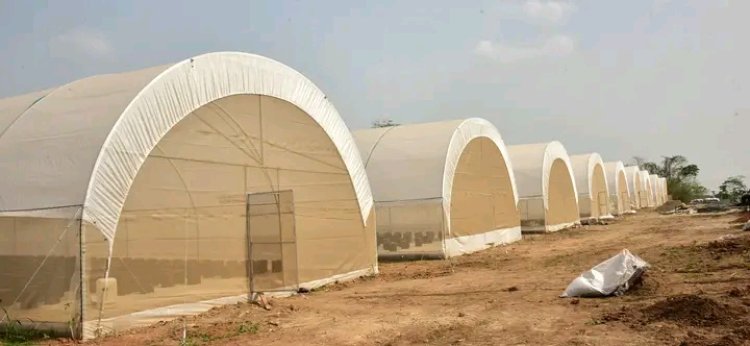
This initiative underscores FUTA’s leadership in combining academic excellence with applied research, while contributing meaningfully to national food security and agricultural innovation.