FUTMinna Empowers Academics with NRF Proposal Writing Workshop to Sustain Research Leadership
FUTMinna Empowers Academics with NRF Proposal Writing Workshop to Sustain Research Leadership
 UmarFarouk123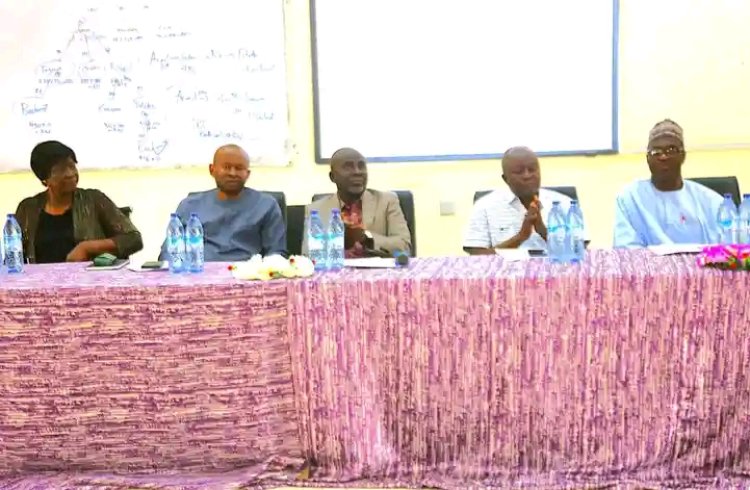
The Federal University of Technology, Minna (FUT Minna), has organised a one-day workshop on National Research Fund (NRF) Full Research Proposal Writing to strengthen the research capacity of its academic staff.
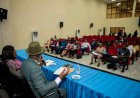
The workshop was held on Tuesday, 27 January 2026, at the SICT Lecture Hall, Main Campus.
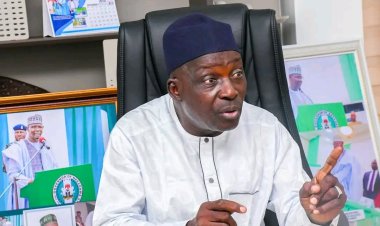
Declaring the workshop open, the Vice-Chancellor of FUT Minna, Professor Faruk Adamu Kuta, stated that the programme was designed to build on participants’ existing knowledge and further equip them with the skills required to develop competitive research proposals. He encouraged researchers to intensify their efforts and ensure that their research addresses issues relevant to the local community and the nation at large.
Professor Kuta attributed the institution’s growing research achievements to the hard work and dedication of its staff, urging them to mentor younger academics by imparting their skills and talents. He also noted that FUT Minna was rated the best institution by the NRF in 2024, with 15 successful research proposals.
In his overview of the workshop, the Director of the Directorate of Research, Innovation and Development (DRID), Professor Chiemela E. Chinma, emphasised the importance of a clear understanding of TETFund guidelines, particularly budgetary requirements. He noted that the NRF Screening Committee prioritises research proposals that demonstrate innovation and have the potential to address national and global challenges.
The first technical session, led by the Chairperson of the Research and Proposal Assessment Committee (RPAC), Professor Helmina Olufunmilayo Akanya, focused on project titles, executive summaries and general project background. She stressed that executive summaries should not exceed 600 words and that project aims and specific objectives must be SMART, clearly leading to defined procedures and outcomes. She also highlighted the need to clearly identify the research problem and its scope.
Speaking on literature review, methodology, project activities and expected outputs, Professor Evans Egwim explained that full research proposals are designed to test delivery capacity, shifting ideas from possibility to credibility. He noted that TETFund funding prioritises clarity and measurable impact rather than effort alone.
Professor Abdulsalami S. Kovo delivered a presentation on project timelines, key performance indicators, monitoring and evaluation mechanisms, and dissemination strategies. He emphasised that the project timeframe strictly 24 months under TETFund guidelines is a critical performance indicator, as it demonstrates project feasibility and a realistic understanding of scope.
The session on research team profiling was handled by Professor Jimoh O. Tijani, who provided practical examples on how to write concise research profiles. He advised participants to regularly update their research records and publications to enhance proposal quality.
Other presentations included a session by Professor Ambali Saka Abdulkareem on budget justification, covering personnel costs and allowances, equipment, consumables, data collection and analysis, travel, and dissemination. He stressed the need to align budgets strictly with project objectives.
Additionally, the Deputy Director of DRID, Professor Lanre J. Olatomiwa, presented the NRF full proposal scoring template, outlining the assessment parameters and explaining how researchers can maximise their scores by adhering to stipulated guidelines.
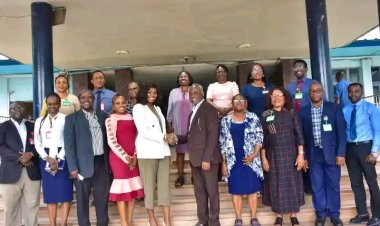
In her vote of thanks, Professor Akanya expressed appreciation to the University management and all facilitators and participants for their commitment to the success of the workshop. She wished participants success in developing competitive research proposals for the 2026 NRF cycle.