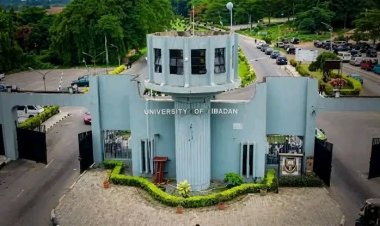
How Late Resumption, Economic Hardship Are Holding UDUS Students Back in Their Academic
How Late Resumption, Economic Hardship Are Holding UDUS Students Back in Their Academic
 UmarFarouk123
Late resumption is a common practice among university students across various levels and disciplines. Interviews conducted with students at Usmanu Danfodiyo University Sokoto (UDUS) reveal that many individuals remain at home as late as the eighth week of the semester, posing a serious threat to their academic engagement.
For Muhammad Salim Abdulrasheed, a 400-level student in the Department of Science and Vocational Education, late resumption results in a constant struggle to catch up. Instead of focusing on current lectures, he is often forced to revise previous topics just to understand what is currently being taught.
“Resuming late caused me to miss several lectures, tests, and assignments. Overall, I found myself struggling to keep up academically and constantly playing catch-up,” he laments.
Despite low turnout in the early weeks, lecturers typically proceed with the syllabus. This exposes late-arriving students to numerous difficulties, including poor attendance records, missing foundational lectures, welcome tests, and initial assignments.
Reports from across Nigerian universities indicate that students mostly attribute late resumption to economic hardship and the prevailing belief that academic activities do not commence immediately.
Yusuph Abdulquadri, a 300-level student in the Department of Accounting, disclosed that his habit of resuming late is a necessity rather than a choice. Like many others, Yusuph lacks the financial means to resume as early as he would like. “Unfortunately, financial constraints have affected my timeliness in previous sessions as well,” he said sadly.
Even though he misses vital introductory lectures where course outlines, expectations, and foundational topics are established, early resumption remains difficult to achieve. Consequently, Yusuph must exert extra effort to close the gap. “Sometimes, I feel confused during lectures because I lack the background information that other students already have,” he explained.
Emmanuel Moses, a 300-level student in the Department of Sociology, shared similar sentiments. He noted that late resumption disrupted his study routine, making it harder to settle into academic life.
“In some cases, lecturers had already covered key materials or given assignments before I resumed, which increased academic pressure and reduced my confidence in actively participating in class.
Overall, late resumption weakened my engagement and limited my full understanding of the courses,” Moses said.
He further noted that missing lectures meant losing important explanations and class discussions that aid comprehension.
“In some cases, I was unaware of early tests or assignments, which affected my Continuous Assessment (CA) scores. Even when I eventually obtained notes from classmates, it was not the same as being present in class. The extra effort required to catch up ultimately affected my academic performance.” He concluded.
By Odunola Rumaitha