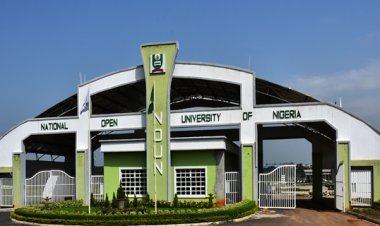
FUNAAB Conducts One-Day Bioinformatics Training for Academic Staff
The Federal University of Agriculture, Abeokuta (FUNAAB), has emphasised the growing importance of bioinformatics in enhancing research quality, fostering innovation, and improving global competitiveness for universities aiming for higher academic rankings.
 Philip22
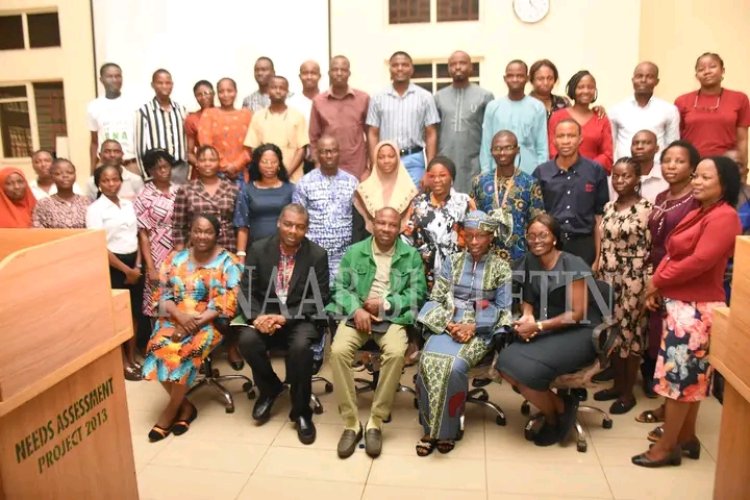
The Federal University of Agriculture, Abeokuta (FUNAAB), has emphasised the growing importance of bioinformatics in enhancing research quality, fostering innovation, and improving global competitiveness for universities aiming for higher academic rankings.

The remarks were made during the opening ceremony of a One-Day Bioinformatics Training Programme for academic staff, held on February 4, 2025, at the 250-Capacity Computer Laboratory.
In his address, the Vice-Chancellor, Prof. Babatunde Kehinde, represented by the Deputy Vice-Chancellor (Academic), Prof. Olusegun Idowu, welcomed participants and described the programme as both timely and impactful. He highlighted that bioinformatics applications across agriculture, health sciences, and related fields are indispensable in today’s globalised research landscape, adding that effective use of these tools is critical for improving research output and international visibility.
Earlier, the Director of the Directorate of Academic Information Systems (DACIS), Prof. Olusegun Folorunso, explained that the second series of the bioinformatics capacity workshop aimed to strengthen sustainable research skills, encourage international collaboration, and support informed scientific decision-making. He noted that the professional networks and interactions established during the workshop, particularly among early-career researchers, would significantly contribute to academic growth and long-term professional development.
Delivering the lecture titled “Introduction to Bioinformatics,” Dr. Adeyemi Adenaike described bioinformatics as a multidisciplinary field integrating Biology, Computer Science, Mathematics, and Statistics, with applications spanning Animal Science, Plant Science, Biochemistry, Microbiology, and Environmental Biology. He observed that advances in sequencing technologies have generated vast volumes of biological data, making computational tools essential and positioning bioinformatics as a cornerstone of modern life sciences.
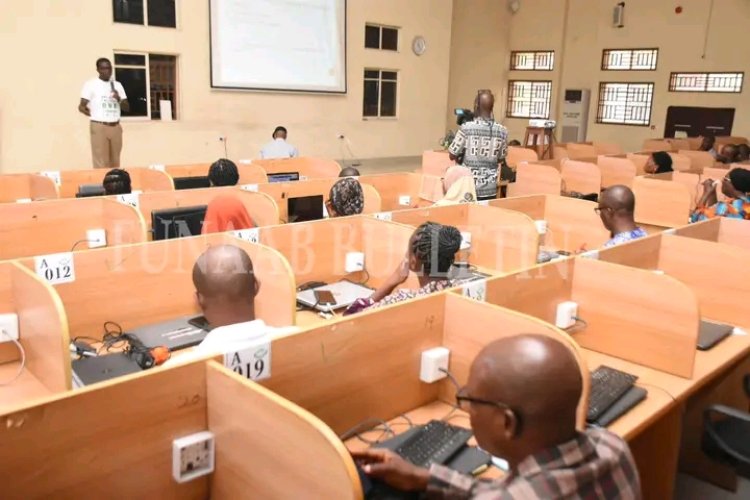
Dr. Adenaike outlined key areas of bioinformatics, including genomics, transcriptomics, proteomics, metabolomics, epigenomics, and metagenomics, highlighting metagenomics as the study of microbial communities directly from their environments. He concluded by stressing that accurate sequence submission, validation, and analysis are critical to producing credible, reproducible, and internationally recognised research outcomes.