LASUED DVC Calls for Comprehensive Overhaul of Arabic Studies Curriculum to Align With Modern Realities
A Professor of Arabic Language and Education and Deputy Vice-Chancellor (Administration) at Lagos State University of Education (LASUED), Oto/Ijanikin, Prof. Morufudeen Shittu, has called for a comprehensive review of the Arabic Studies curriculum to align it with contemporary academic and global realities.
 Philip22
A Professor of Arabic Language and Education and Deputy Vice-Chancellor (Administration) at Lagos State University of Education (LASUED), Oto/Ijanikin, Prof. Morufudeen Shittu, has called for a comprehensive review of the Arabic Studies curriculum to align it with contemporary academic and global realities.
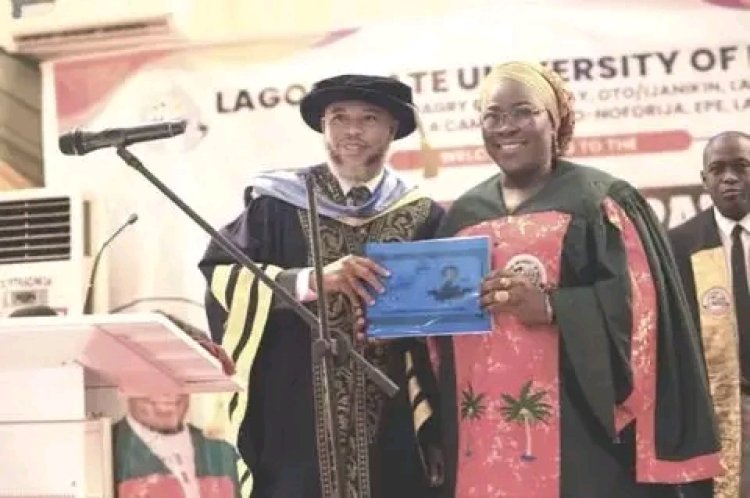
He made the call while delivering the university’s 2nd Inaugural Lecture titled “Synthesizing Convention and Modernity for a Prosperous Future: My Intellectual Footprint to Reinvigorate Arabic Studies in Nigeria.”
Prof. Shittu described the proposed reform as a strategic academic intervention aimed at repositioning Arabic Studies for national relevance and global competitiveness. He stressed that the subject must evolve beyond traditional frameworks to remain impactful in modern education systems.
He noted that Arabic is spoken by over 300 million people across more than 26 countries and remains one of the six official languages of the United Nations. He also highlighted its role as the liturgical language of Islam and the language of the Qur’an, adding that its linguistic structure offers growing relevance in digital and technological development.
Tracing the historical development of Arabic education in Nigeria, the scholar observed that by 1914, over 30,000 Qur’anic schools were already in operation across the country. He noted that despite colonial-era marginalisation, Arabic education survived and expanded through religious and private institutions, eventually becoming one of the most widely studied foreign languages in Nigeria.
He further explained that the future of Arabic Studies depends on the integration of traditional scholarship with modern pedagogical frameworks, arguing that such harmonisation is essential for intellectual continuity and national development.
Prof. Shittu also highlighted the historical role of post-Qur’anic scholarship centres in cities such as Ilorin, Ibadan, and Epe, describing them as critical bridges between foundational Islamic education and structured academic systems. He noted that several of these institutions gradually evolved into formal Arabic colleges, contributing significantly to the modernisation of Arabic education in Nigeria.
He recalled that tertiary-level Arabic Studies in Nigeria began with certificate and diploma programmes at the University of Ibadan, which later expanded into full Bachelor of Arts and Bachelor of Arts (Education) degrees.
He maintained that reinvigorating Arabic Studies is essential not only for academic advancement but also for broader national intellectual development.