OAUTHC Stores and Supplies Department Holds Maiden Seminar
OAUTHC Stores and Supplies Department Holds Maiden Seminar
 UmarFarouk123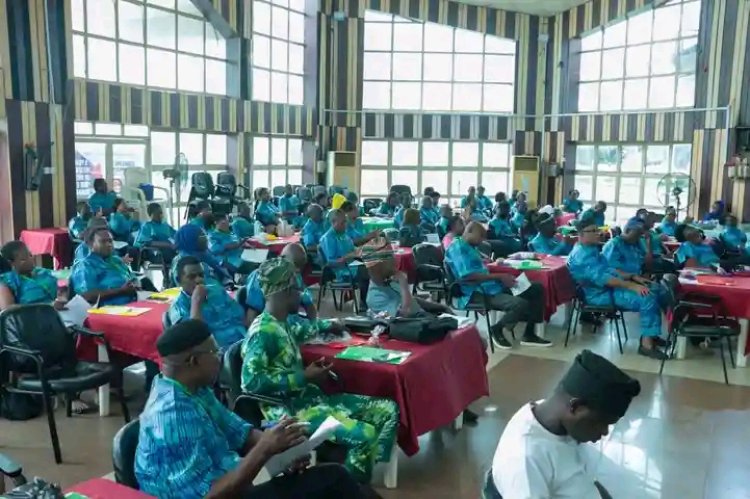
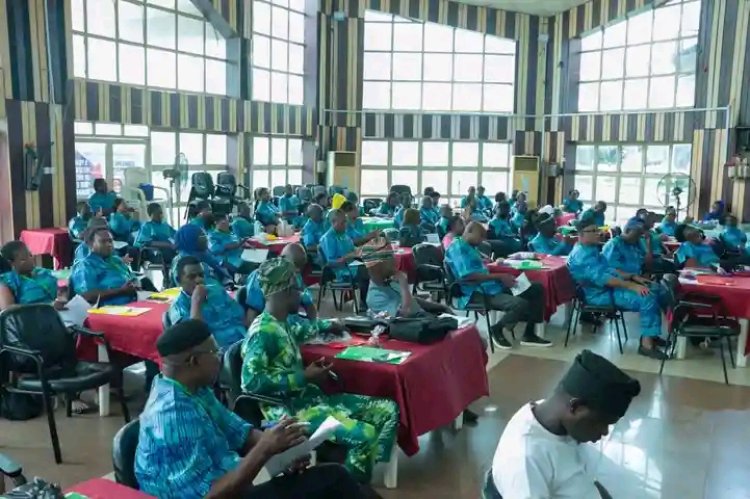
The Stores and Supplies Department of the Obafemi Awolowo University Teaching Hospitals Complex (OAUTHC) held its maiden staff seminar aimed at strengthening knowledge and improving efficiency in inventory and stores management.
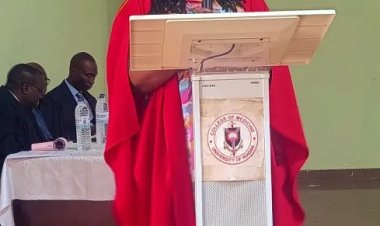
The seminar, themed “A Practical Presentation on Inventory and Stores Management,” took place on Saturday, 16th May, 2026, at the hospital’s Mini Auditorium and brought together staff members to discuss practical approaches to effective inventory control, store administration, and cost reduction in healthcare service delivery.
In his welcome address, the Acting Head of the Department, Mr. Bukola Odugun, emphasized the importance of continuous professional development and capacity building among staff, noting that effective inventory and store management remain critical to the smooth operation of the hospital. He commended members of staff for their commitment to service and encouraged participants to maximize the opportunity provided by the seminar to strengthen their knowledge and improve operational efficiency.
Administration, Dr. Felix Bobade, praised the department for organizing its maiden seminar and described the initiative as a timely step toward enhancing accountability, reducing waste, and improving productivity within the system. He further encouraged staff to embrace innovation, professionalism, and best practices capable of strengthening service delivery across the institution.
In his opening address, the Chief Medical Director, Prof. John Okeniyi, described the Stores and Supplies Department as a pivotal unit within the hospital system, noting that the department plays a critical role in safeguarding hospital equipment, medical supplies, and other essential consumables required for effective healthcare delivery, including items procured by the hospital as well as donated materials. He emphasized that efficient store operations are vital to ensuring uninterrupted patient care and smooth hospital operations.
He urged staff of the department to move beyond traditional methods of store management by embracing digitalization, automation, and artificial intelligence in managing inventory and supply chains. According to him, the adoption of innovative technologies would improve stock monitoring, enhance forecasting accuracy, and ensure that patients do not experience delays in receiving care due to shortage of essential materials.
The CMD also stressed the importance of continuous in-house training and capacity building, noting that regular training programmes would enhance staff competence, improve productivity, and position the department in line with global best practices.
Delivering the first lecture titled “Effective Inventory and Stores Management: A Panacea to Improving Efficiency and Reducing Operational Costs,” Mr. Samuel Olofinsao described the Stores and Supplies Department as a critical backbone of hospital operations despite its limited visibility in clinical areas such as theatres and wards. He explained that the department plays a vital role in ensuring the constant availability of essential medical supplies including sterile gloves, drugs, laboratory reagents, oxygen, syringes, and other consumables needed daily for patient care, research, and training.
He further outlined several practical strategies for improving efficiency, including the adoption of ABC analysis to prioritize high-value items, maintaining appropriate minimum and maximum stock levels, enforcing proper documentation through Goods Received Notes (GRNs) and Store Requisition Vouchers (SRVs), conducting regular stock-taking exercises, and applying FIFO and FEFO inventory methods to minimize waste and product expiration. Participants were also encouraged to strengthen supplier relationships, improve store organization, provide adequate storage equipment, train staff regularly, and adopt Just-In-Time inventory practices to enhance service delivery and reduce operational costs.
In the second presentation, Mrs. Lucy Osilaja focused on the importance of designing and maintaining effective storage facilities, describing them as the foundation for optimal service delivery in any organization. She explained that a store is a designated space equipped for holding stock awaiting dispatch, processing, or further use, while stressing the importance of organized store management systems in maintaining adequate stock levels, improving customer satisfaction, and increasing organizational profitability.
She further encouraged organizations to adopt computerized inventory systems, maintain proper environmental conditions such as temperature control and ventilation, and strengthen security through CCTV surveillance, alarm systems, and controlled access mechanisms. The session concluded with a call for regular staff training, adoption of modern software solutions, and continuous alignment with global supply chain management trends to achieve sustainable and efficient service delivery.
The third lecture, delivered by Mr. Wahab Adegbami, highlighted the growing importance of computerization in modern inventory and store operations. He explained that digital systems and software applications are gradually replacing manual methods in store administration, resulting in improved speed, accuracy, productivity, accountability, and overall efficiency.
According to Mr. Adegbami, computerized systems have significantly enhanced areas such as inventory management, supplier appraisal, stock verification, stock reconciliation, store accounting, and stock balance monitoring. He noted that efficiency in store operations involves achieving maximum output with minimum input while reducing the waste of time, money, and resources.
The seminar also featured practical workshop sessions for participants, providing hands-on experience in inventory and stores management practices. Highlights of the event included the presentation of awards to members of the management team in recognition of their support and contributions, as well as the presentation of certificates to participants at the end of the seminar.