Saving the Next Generation: Nigeria’s Fight Against Drug Abuse in Schools
Nigeria has introduced a policy of mandatory drug testing for secondary school students to address rising substance abuse among young people. The initiative, developed with the Federal Ministry of Education and the National Drug Law Enforcement Agency (NDLEA), aims to detect drug use early, promote rehabilitation, and create safer school environments.
 judithhh
Safeguarding the Future: Why Mandatory Drug Testing in Schools Demands Strong Implementation and Wider Social Action
Drug and substance abuse among young people has become one of Nigeria’s most pressing public health and security challenges. In response, the Federal Government has approved mandatory drug integrity tests for students in secondary schools across the country, alongside provisions for temporary suspension of repeat offenders who fail rehabilitation efforts. The policy, developed in collaboration with the Ministry of Education and the National Drug Law Enforcement Agency (NDLEA), signals a renewed attempt to confront a growing crisis at its roots.
The scale of substance abuse in Nigeria is deeply concerning. According to estimates from the United Nations Office on Drugs and Crime (UNODC), about 14.4% of the population engages in drug use—approximately 14.3 million people aged 15 to 64. This figure is nearly three times the global average.
Among adolescents and secondary school students, particularly in urban areas, various studies suggest prevalence rates ranging between 20% and 40%. Commonly abused substances include codeine, tramadol, cannabis (marijuana), sedatives, cough syrups, industrial glues, alcohol spirits, and ammonia-based products.
The drivers are complex. Academic pressure, unemployment, poverty, peer influence, curiosity, and even parental drug use all contribute to early exposure. Easy access to illicit substances further worsens the situation.
The consequences of drug abuse among students are severe and far-reaching. Medically, substance use damages the liver, heart, and other vital organs, while also contributing to psychiatric disorders that increasingly require hospital admission.
In education, the impact is equally devastating. Many affected students experience declining academic performance, frequent absenteeism, and eventual school dropout.
Beyond individual outcomes, there is also a broader security concern. Substance abuse has been strongly linked to rising cases of cultism, gang violence, armed robbery, and other criminal activities within secondary schools and tertiary institutions. What begins as experimentation can quickly escalate into cycles of dependency and delinquency.

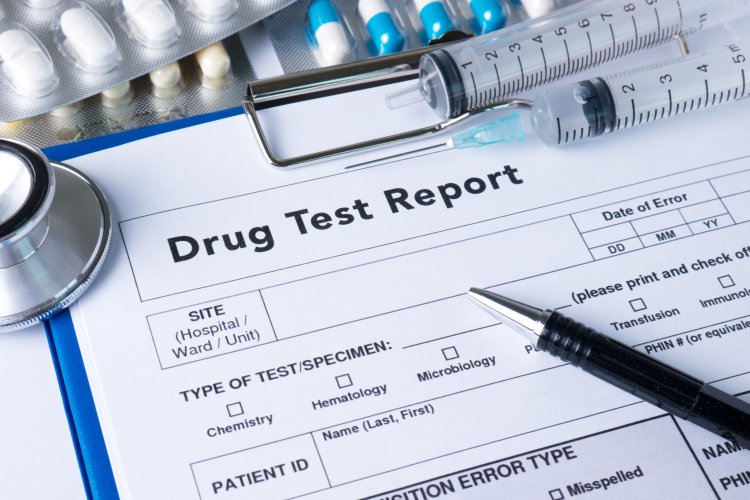
The newly introduced framework requires mandatory drug testing for students at the point of admission into secondary schools. In addition, schools are expected to conduct unscheduled, random, and periodic screenings at least once every academic session.
Testing procedures are to be carried out in partnership with approved health facilities to ensure standardization, accuracy, and ethical compliance.
A structured three-stage response system has also been introduced:
First-time positive cases receive counselling and school-recommended treatment.
Second-time cases are referred for professional rehabilitation and specialized care.
Repeated positive cases may face temporary suspension after completing prescribed rehabilitation programs.
The policy also integrates drug education into school curricula, focusing on addiction awareness, peer pressure resistance, and life skills development. Students who require controlled medications for legitimate medical reasons are expected to declare them through parents or guardians at admission.
While the policy framework is commendable, its success will depend heavily on implementation and broader social support systems. Schools alone cannot carry the burden of prevention and rehabilitation.
There is a strong argument for the reintroduction of structured moral instruction and value-based education in schools. Many observers point to a growing “get-rich-quick” culture that influences young people’s decisions and weakens resistance to harmful behavior. Drug education must therefore go beyond biology and health—it must also address ethics, discipline, and personal responsibility.
Parents and guardians play an equally critical role. Children often mirror the behavior they observe at home. Civil society organizations, religious institutions, and community leaders must also be actively involved in shaping attitudes and reinforcing positive values.
Efforts within schools must be matched by stronger enforcement outside them. Agencies such as the National Agency for Food and Drug Administration and Control (NAFDAC) and the NDLEA must intensify action against the importation, production, and distribution of illicit substances.
Public awareness campaigns led by the National Orientation Agency (NOA) are also essential in sustaining long-term behavioral change. Continuous education on the dangers of drug abuse can help reduce demand while enforcement reduces supply.
Some states are already taking aggressive steps. The Anambra State government, for example, has adopted strict measures under its Homeland Security Law targeting drug-related activities. Authorities have warned that properties used for the manufacture or sale of illicit substances may face forfeiture or demolition—a signal of how seriously some regions are beginning to treat the issue.
A national responsibility
Ultimately, drug abuse among young people is not just a school problem—it is a societal one. While mandatory drug testing in schools represents a bold step toward early detection and intervention, it must be supported by rehabilitation systems, family responsibility, strong law enforcement, and meaningful youth engagement.
Government must also address root causes such as unemployment and lack of opportunity, which often push young people toward substance use in the first place.
If effectively implemented, the policy could help protect thousands of young Nigerians from long-term harm. But the broader goal remains the same: building a society where young people are guided, supported, and empowered to choose healthier paths.
Because when a society loses its youth to drugs, it risks losing its future.