NSUK Vice-Chancellor Hosts AFCSC Delegation, Advocates Community-Based Security Strategy
The Vice-Chancellor of Nasarawa State University, Sa’adatu Hassan Liman, has called for stronger community engagement and institutional collaboration as critical tools for addressing Nigeria’s evolving security challenges.
 Philip22
The Vice-Chancellor of Nasarawa State University, Sa’adatu Hassan Liman, has called for stronger community engagement and institutional collaboration as critical tools for addressing Nigeria’s evolving security challenges.
Professor Liman made the call while hosting participants of Senior Course 48 from the Armed Forces Command and Staff College during a strategic study tour to the university on May 13, 2026.
The visit focused on the theme, “Promoting Community Engagement for Enhanced National Security and Prosperity.”
Welcoming the delegation to the University Senate Chamber, the Vice-Chancellor stressed that contemporary security threats require more than military operations alone, noting that sustainable peace can only be achieved through trust-building, collaboration, and active community participation.
According to her, effective community engagement through information sharing, youth empowerment, and institutional partnerships remains essential in tackling violent crimes, extremism, and growing distrust toward security agencies.
“Security remains a collective responsibility that requires active collaboration among the military, communities, and academic institutions,” Professor Liman stated.
She highlighted the role of tertiary institutions in strengthening Nigeria’s security architecture, citing the university’s expertise in research, data analysis, peace and conflict studies, capacity building, and conflict resolution.
Professor Liman further proposed the establishment of joint community security forums, collaborative training programmes on community policing, and the development of early warning systems capable of detecting and preventing security threats before escalation.
She argued that such initiatives would not only help curb insecurity and insurgency but also improve economic stability, attract investment, and promote sustainable national development.
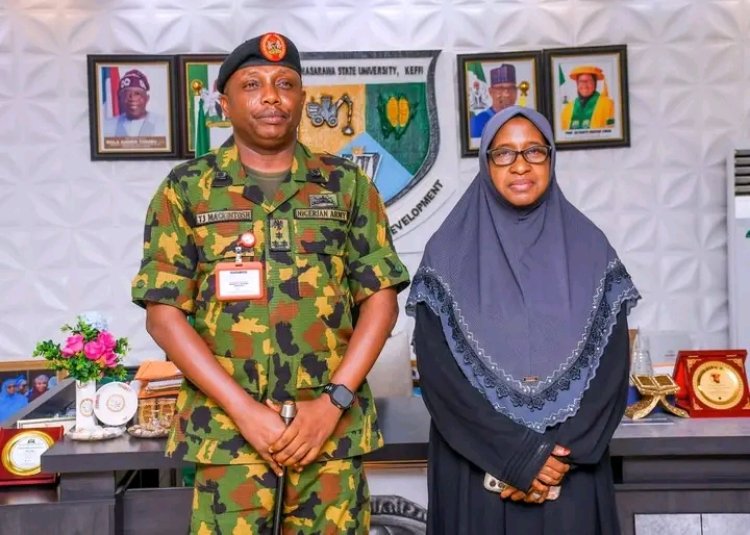
Speaking on behalf of the delegation, T. J. Makintosh, explained that the selection of Nasarawa State University for the study tour was deliberate due to the institution’s growing relevance in policy and research conversations.
According to him, the college is currently conducting research on community engagement as a strategy for improving security within Keffi, Nasarawa State, and Nigeria as a whole.
Brigadier General Makintosh commended the Vice-Chancellor for what he described as an insightful presentation and encouraged the university to continue utilising its academic and communication platforms as strategic instruments for national stability and peacebuilding.
“We all have critical roles to play in this,” he said, while reaffirming the commitment of the college to sustaining long-term collaboration with the university.
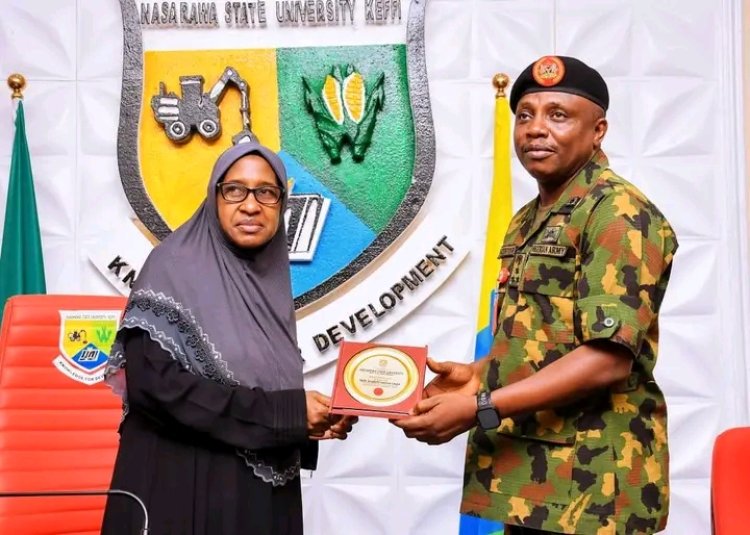
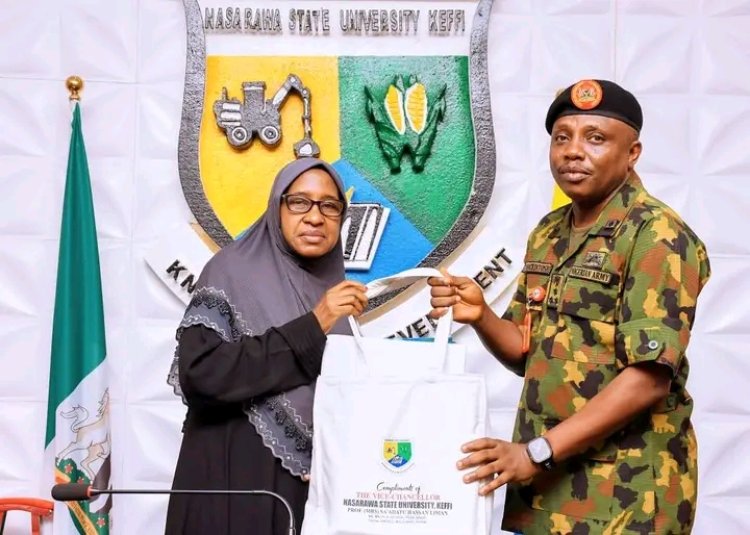
The engagement concluded with an exchange of honours and presentation of souvenirs between both institutions.
As part of the ceremony, Brigadier General Makintosh presented an award to Sa’adatu Hassan Liman on behalf of the college in recognition of her contributions and support.
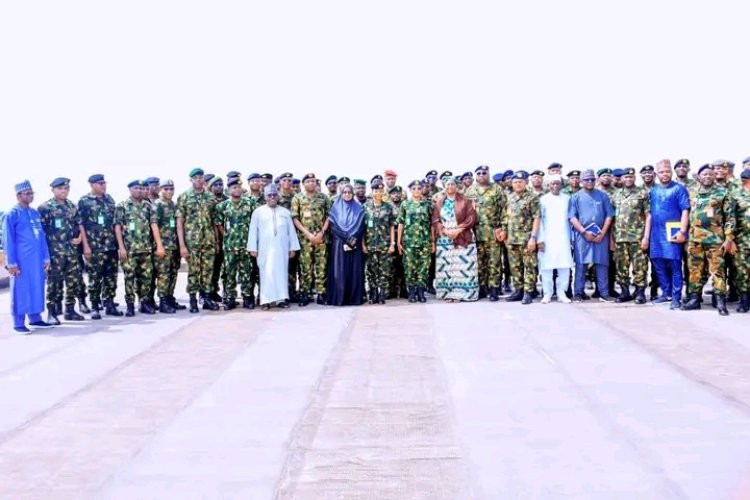
The event also featured a group photograph involving principal officers of the university and participants of Senior Course 48.
University officials noted that the visit further reinforces the institution’s role in contributing intellectual and strategic support toward national security, policy development, and societal advancement.