TAGDEV 2.0 Reinforces FUNAAB’s Commitment to Sustainable, Inclusive Agriculture — VC
The Vice-Chancellor of the Federal University of Agriculture, Abeokuta (FUNAAB), Prof. Babatunde Kehinde, has reaffirmed the University’s dedication to promoting sustainable agriculture, food security, and inclusive capacity development, describing the TAGDEV 2.0 initiative as fully aligned with FUNAAB’s mandate of Teaching, Research, and Community Development.
 Philip22
The Vice-Chancellor of the Federal University of Agriculture, Abeokuta (FUNAAB), Prof. Babatunde Kehinde, has reaffirmed the University’s dedication to promoting sustainable agriculture, food security, and inclusive capacity development, describing the TAGDEV 2.0 initiative as fully aligned with FUNAAB’s mandate of Teaching, Research, and Community Development.
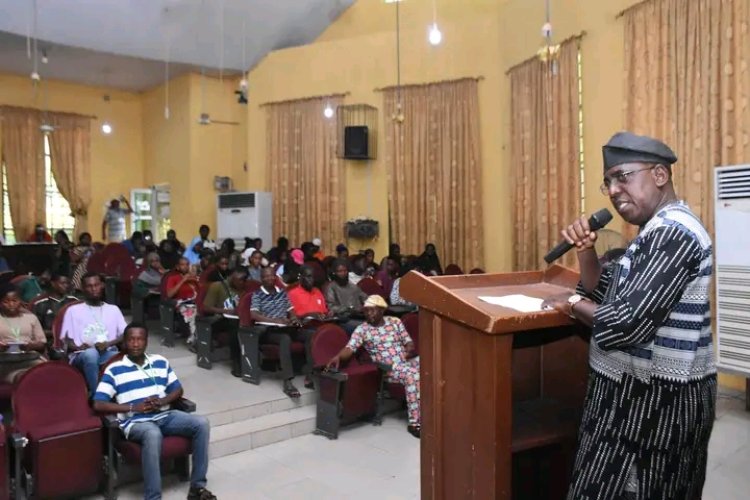
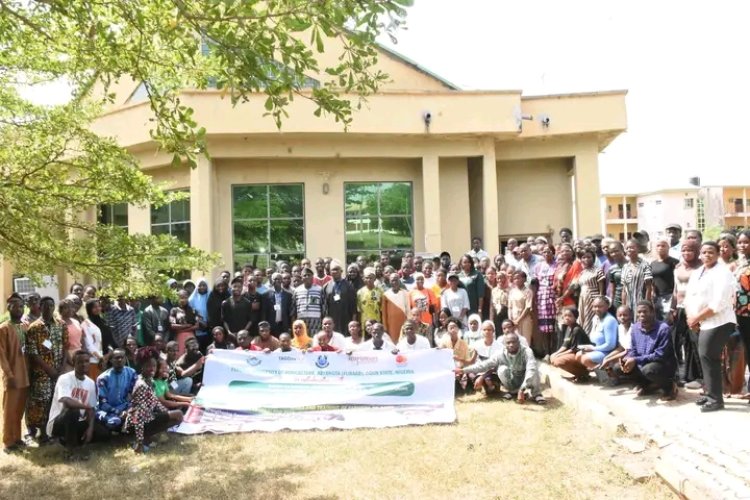
Prof. Kehinde made the remarks on December 20, 2025, while declaring open the Stakeholder Sensitisation and Training of Farmers on Good Agricultural Practices (GAP) for Rice, Fish, and Rice-Fish Systems Capacity-Building Workshop, hosted by FUNAAB in collaboration with the TAGDEV 2.0 Programme of the University of Port Harcourt, with support from the Regional Universities Forum for Capacity Building in Agriculture (RUFORUM) and the Mastercard Foundation.
The workshop was designed to equip farmers, staff, and students with practical skills in rice, fish, and integrated rice–fish production systems under the Transforming African Agricultural Universities to Meaningfully Contribute to Africa’s Growth and Development (TAGDEV 2.0) framework.
Prof. Kehinde highlighted FUNAAB’s interest in participating in the initiative both as a receiving and sending University, noting that TAGDEV 2.0 offers scholarship opportunities for undergraduate, Master’s, and PhD students across Africa. He commended the project partners for their vision and urged participants to maximize the training, stressing that adherence to good agricultural practices would enhance productivity, improve livelihoods, and strengthen resilient food systems.
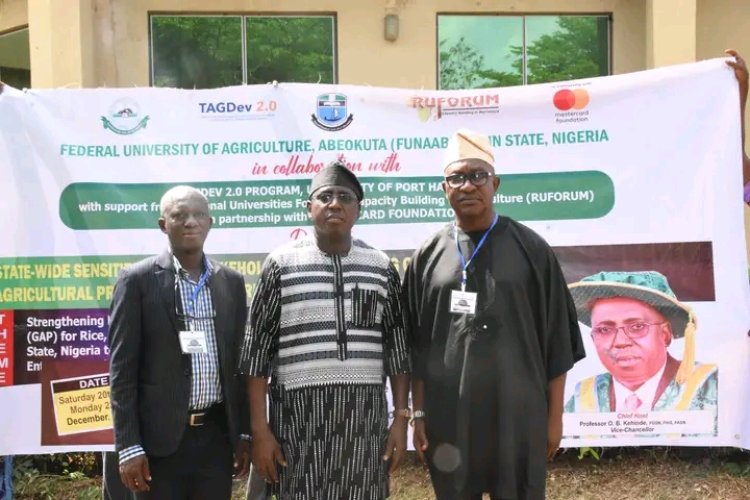
In his welcome remarks, the Provost of the Federal College of Agriculture, Ibadan (FCAIB), Prof. Jonathan Atungwu, lauded FUNAAB Management for facilitating participation and acknowledged Prof. Bolarinwa Senjobi, Dean of the College of Plant Science and Crop Production (COLPLANT), for chairing the Technical Session. Prof. Atungwu described TAGDEV 2.0 as a transformative continental initiative involving 12 universities across Africa, building on the successes of TAGDEV 1.0 with emphasis on strengthening agro-ecosystems in rice, fish, and integrated rice–fish production.
He noted that the initiative integrates Technical and Business Education and Training (T-BET) Centres to boost vocational, entrepreneurial, and digital skills, with a strong focus on youth development and women empowerment, maintaining a 70–30 percent gender balance in favour of women. FUNAAB’s role includes value chain analysis, youth engagement across the agri-food sector, capacity building for staff and farmers, and deployment of digital innovations in agriculture.
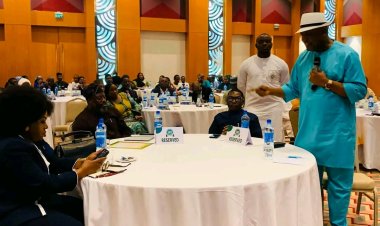
During the Technical Session, Dr. Omolola Ayodeji of the Agricultural Economics and Environmental Policy Programme, Centre of Excellence in Agricultural Development and Sustainable Environment (CEADESE), presented on “Business Skills and Record Keeping as Tools for Boosting Agripreneurship and Wealth”, while Mrs. Jemimah Atsu, a PhD student at the Department of Plant Physiology and Crop Production, spoke on “Unlocking Entrepreneurial Opportunities in Ogun State’s Rice Value Chain: Empowering Youth and Women in Agriculture.”
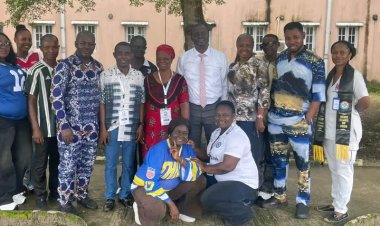
Participants included students, academics, researchers, and farmers’ groups from Budo-Ayetoro, Agbedola, Owo, Idiroko, Ifekowajo, and Abule-Agbo, reflecting the programme’s strong focus on community engagement and capacity building.
The workshop underscores FUNAAB’s strategic commitment to building resilient, inclusive, and commercially viable agricultural systems across Nigeria and the continent.