UI Hosts 34th RuSAN Annual Congress, Champions Resilient and Sustainable Farming for National Development
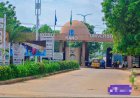
The University of Ibadan has hosted the 34th Annual Congress of the Rural Sociological Association of Nigeria (RuSAN), a gathering of academics, policymakers, and development experts committed to advancing rural food production and livelihoods through resilient and innovative agricultural systems.
 Philip22

The University of Ibadan has hosted the 34th Annual Congress of the Rural Sociological Association of Nigeria (RuSAN), a gathering of academics, policymakers, and development experts committed to advancing rural food production and livelihoods through resilient and innovative agricultural systems.

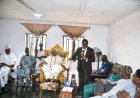
Representing the Vice-Chancellor, Professor Kayode O. Adebowale, mni, FAS, fspsp, the Dean of the Faculty of Science, Professor Ibrahim A. Oladosu, commended RuSAN for sustaining a vibrant intellectual platform that drives national discourse on rural development. He praised the association’s long-standing impact, describing this year’s theme — “Enhancing Rural Food Production and Livelihoods through Resilient, Sustainable Farming and Innovative Agricultural Systems” — as timely, given the country’s current food security challenges.
Professor Oladosu expressed optimism that the congress would inspire innovative ideas to strengthen food systems and rural economies, noting that food security remains foundational to national survival and development.
Delivering her presidential address, Professor Grace M. Adebo, President of RuSAN, highlighted the importance of reimagining Nigeria’s agricultural systems to respond to the pressures of climate change, economic instability, and demographic shifts. She said the congress would serve as a platform for designing practical, evidence-based solutions that are inclusive, sustainable, and resilient.
The keynote speaker, Professor Attanda Muhammed Lawal, Executive Director and Chief Executive Officer of the National Horticultural Research Institute (NIHORT), underscored the centrality of rural agriculture to Nigeria’s economy. In his paper titled “Enhancing Rural Food Production and Livelihoods through Resilient Farming Systems for Economic Growth and Development,” he noted that agriculture contributes between 23–26% to Nigeria’s GDP and accounts for 95% of the country’s recent non-oil economic growth.
Professor Lawal stressed that strengthening rural food systems through climate-smart and resilient farming practices is critical to achieving national food security, generating employment, and ensuring sustainable livelihoods. He advocated crop and livestock diversification, soil and water conservation, and integration of traditional and modern knowledge as pathways toward sustainable farming.
He also urged participants to promote research, innovation, and technology adoption to enhance productivity, reduce vulnerability to climate risks, and promote year-round food security. Strengthening institutional frameworks and coordination, he said, would ensure the sustainability and scalability of agricultural interventions across rural communities.
In her remarks, the Head of the Department of Agricultural Extension and Rural Development, Professor Stella O. Odebode, described the congress as an opportunity for stakeholders to reflect on rural challenges and propose actionable, research-driven solutions. She reaffirmed the University of Ibadan’s commitment to fostering academic engagements that translate into meaningful rural development.

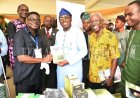
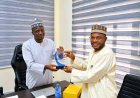
Goodwill messages were delivered by the Executive Directors of the Cocoa Research Institute of Nigeria and the Institute of Agricultural Research and Training (IAR&T), a representative of Sasakawa Africa Organisation, the Dean of the Faculty of Renewable Natural Resources, Professor Adejoke Akinyele, and a retired academic from the Department of Agricultural Extension and Rural Development, Professor Janice E. Olawoye.
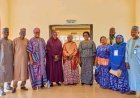
The five-day conference brought together scholars and practitioners from across Nigeria, reaffirming the University of Ibadan’s leadership role in driving agricultural research and rural transformation.