“Your Tears Are Not Weakness”: UI Vice-Chancellor Advocates for Emotional Literacy Among Male Students
“Your Tears Are Not Weakness”: UI Vice-Chancellor Advocates for Emotional Literacy Among Male Students
 UmarFarouk123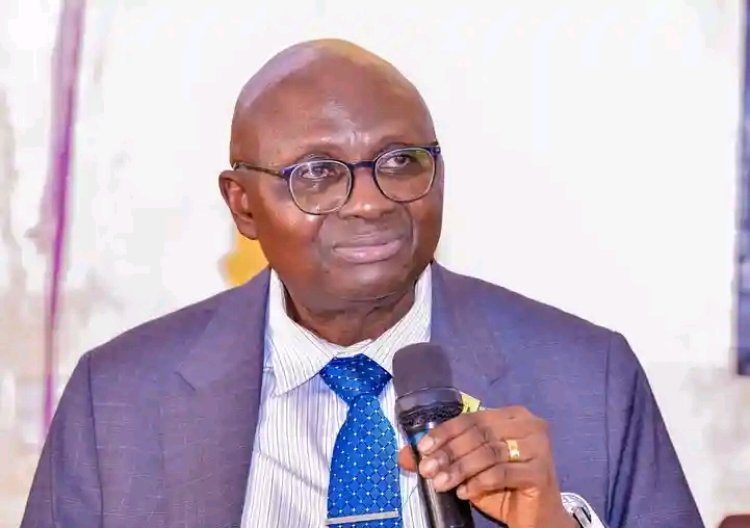
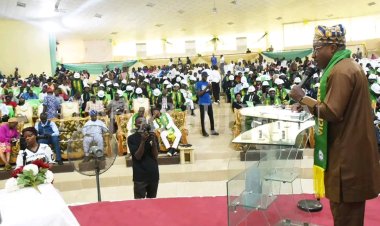
The Vice-Chancellor of the University of Ibadan, Professor Kayode O. Adebowale, mni, FAS, fspsp, has told male students of the university that they are not burdens to the society and that tears are not signs of weakness.
He made this statement at a programme organized by the University of Ibadan Gender Mainstreaming Office in collaboration with the Policy Innovation Centre (PIC) for male students of the university.
Professor Adebowale said that the world does not need another angry, silent man, but a man who can heal, build, and love openly, affirming that the theme of the programme: “From Boyhood to the Man: Imagining Masculinity in the 21st Century Africa,” is not merely an academic exercise, but a necessary intervention.
He lamented that for decades, conversations on gender in Africa have rightly focused on the empowerment of women and girls, but the silent crisis of boyhood and the rigid cage of traditional masculinity is often neglected.
The Vice-Chancellor said the definition of a man has been a recipe for emotional suppression, aggression, and the burden of unattainable strength, decrying the mindset that “men don’t cry.”
He stated that society teaches boys that vulnerability is weakness, thereby conditioning them to see themselves only as providers and protectors, but never as nurturers or as beings deserving of care.
According to the VC, the result is a generation of men struggling in silence, evidenced by the alarming rates of male suicide across the continent which he said is a statistic rarely discussed.
He stated that this development is seen in the perpetuation of violence against women and children, the reluctance of men to seek mental health support, the premature deaths from stress-related illnesses, and in the emotional distance that fractures families which is fundamentally a failure of masculine imagination.
Professor Adebowale restated that the partnership between the University of Ibadan Gender Mainstreaming Office and the Policy Innovation Centre is critical and the programme was not to vilify men, but to liberate them.
He added that it was an opportunity to reimagine a masculinity that is not afraid of empathy, that embraces collaboration over domination, and that defines strength as the courage to be whole, emotionally intelligent, respectful, and peaceful.
The Vice-Chancellor reiterated the University’s commitment to mainstreaming gender not as a zero-sum game, but as a holistic human development strategy and assured that management will continue to support policies and programmes that create safe spaces for boys to become men of integrity, not just men of 'iron'.
The Director of the Gender Mainstreaming Office, Professor Funmilola Ajani in a welcome address commended the efforts of her predecessor, Professor Francisca Ukpokolo, who conceived the workshop before leaving the office.
She explained that the conversation is both timely and necessary and disclosed that across the continent, the idea of what it means to be a man is evolving and challenged by social changes, economic realities, and a growing call for equality, responsibility, and emotional awareness.
Professor Ajani said many young men continue to navigate these expectations without clear guidance, often caught between traditional norms and modern realities. She, therefore, emphasized the importance of the workshop as a platform for honest reflection and dialogue.
The Director noted that it is not about rejecting culture or identity, but about re-examining them and asking what values to carry forward, what behaviours to reshape, and what kind of men boys choose to become in a rapidly changing Africa.
She said that the programme represents a starting point and commitment to redefining masculinity in ways that promote dignity, respect, and positive impact within families, communities, and the broader society.
Two keynote addresses were delivered at the workshop by Ifeoma L. Idigbe, Founder and Executive Vice Chairman of Boys to Men Foundation and Dare Olagoke-Adaramoye, a psychologist and gender specialist and a powerful voice in the conversation on healthy masculinities.