A New Era for Campus Living: Nigeria’s ₦250bn PPP Strategy for Student Hostels
Nigeria’s tertiary institutions are facing a severe student accommodation crisis, with institutions like the University of Lagos (UNILAG) and Yaba College of Technology (YABATECH) offering far fewer bed spaces than their large student populations require. This shortage has forced many students to rely on expensive private hostels or overcrowded off-campus housing.
 judithhh
₦250 Billion Hostel Shock: FG’s Bold PPP Move to Fix Nigeria’s Student Housing Chaos
Across Nigeria’s tertiary institutions, student accommodation has remained one of the most persistent structural challenges, with demand for bed spaces far exceeding supply. From overcrowded campuses in Lagos to strained hostel systems nationwide, the gap between student population and available housing continues to shape campus life in difficult ways.
At the University of Lagos (UNILAG), the student population of over 40,000 competes for roughly 8,000 bed spaces. Securing an official hostel room on campus has become a daunting task, often described by students as nearly impossible without long waiting periods or uncertain lottery systems.
A similar situation plays out at the Yaba College of Technology (YABATECH), where about 20,000 students are served by just 2,600 bed spaces. The challenge has been further intensified this year by the temporary closure of a 1,000-bed hostel undergoing renovation, tightening an already overstretched system.
Across many Nigerian campuses, this imbalance between demand and supply has become a shared reality, affecting students’ comfort, safety, and academic experience.
In response to the shortage, private hostel developments have emerged around many institutions. However, while they provide additional options, they have not significantly eased the burden. For most students, the cost of privately owned accommodation remains prohibitively high, placing them beyond the reach of average families.
As a result, many students are forced into off-campus housing in overcrowded neighborhoods, often far from school, with added transportation costs and safety concerns.
In a renewed effort to address the crisis, the Federal Government, working through the Tertiary Education Trust Fund (TETFund), the Federal Ministry of Education, tertiary institutions, and private developers, has launched a large-scale hostel development programme.
The initiative, estimated at about ₦250 billion in 2026, is designed to expand and modernize student accommodation across universities and polytechnics through a mix of public-private partnerships (PPP) and Build-Operate-Transfer (BOT) arrangements.
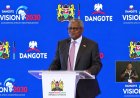
Speaking at the soil-turning ceremonies at Lagos State University (LASU) and YABATECH, the Minister of Education, Tunji Alausa, explained the structure of the intervention:
- ₦100 billion is allocated to build about 50 student hostels across tertiary institutions, each with roughly 500-bed capacity.
- ₦96 billion will fund 24 PPP hostel projects, each providing between 1,200 and 1,500 bed spaces.
- An additional ₦1 billion will support smaller hostel developments delivering at least 300-bed spaces across 24 institutions.
He emphasized that these projects are being fast-tracked, with timelines designed to ensure early delivery. PPP hostel projects are expected to be completed within 24 months, while some other hostel developments are targeted for completion within 12 months.
Beyond student hostels, the Federal Government’s broader tertiary education infrastructure agenda includes rehabilitation of classrooms, lecture theatres, auditoriums, engineering workshops, and construction of new academic spaces. The goal, according to the Ministry, is to improve both learning conditions and student welfare across federal and state institutions.
At LASU, the scale of the challenge is particularly stark. The Vice-Chancellor, Ibiyemi Olatunji-Bello, noted that the institution currently hosts over 85,000 students but has accommodation capacity for only about 7,000.
She explained that the planned 1,500-bed PPP hostel would significantly improve on-campus accommodation, enhance student safety, and strengthen social interaction within the university community. Student leadership has largely welcomed the intervention. The Chairman of the National Association of Nigerian Students (NANS) Joint Campus Council, Lagos Axis, Quadri Ishola Odewunmi, praised the Minister and the management of YABATECH for initiating the new hostel project.

He described the development as a meaningful step toward easing long-standing accommodation challenges and restoring confidence among students. However, he also called for broader reforms that would extend similar attention to lecturers and non-academic staff, emphasizing the need for a more holistic improvement of Nigeria’s education system.
Nigeria’s student housing crisis reflects a long-standing infrastructure deficit that has grown alongside expanding enrolments in tertiary institutions. While private hostel developments have offered limited relief, affordability remains a major barrier.
The ₦250 billion intervention led by the Federal Government represents one of the most ambitious attempts in recent years to close the gap. Whether it will fully resolve the challenge depends not only on funding, but also on execution speed, quality of delivery, and sustained commitment across all levels of implementation.
For now, students across campuses like UNILAG, YABATECH, and LASU continue to wait for relief in a system where accommodation remains one of the most defining pressures of university life.