Academic Integrity in Focus as Nigeria Regulates Honorary Degrees
The Federal Government has approved a new nationwide policy to regulate the award and use of honorary degrees by Nigerian universities. The move aims to stop the growing misuse and commercialisation of honorary doctorates, especially by individuals who adopt the “Dr” title without earning an academic degree.
 judithhh
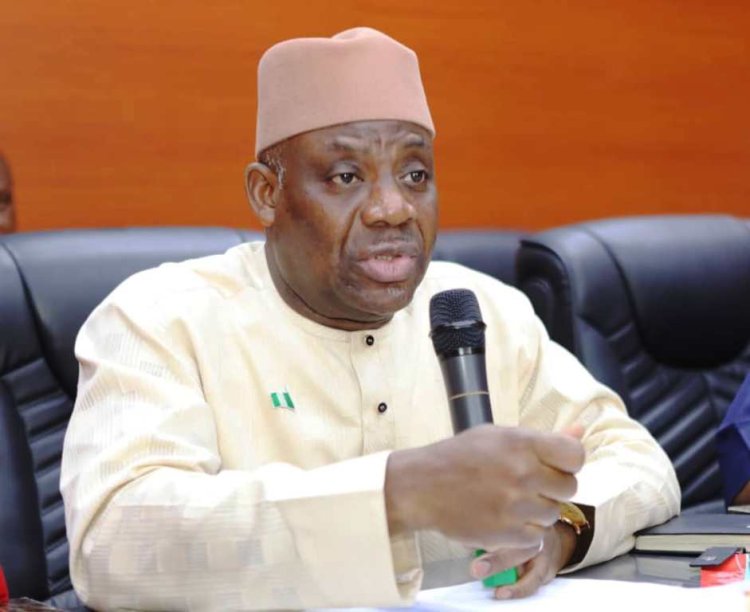
The Federal Government has approved a sweeping new policy to regulate how honorary degrees are awarded and used by Nigerian universities, signaling a major crackdown on the growing abuse of academic titles across the country.
Nigeria’s education sector is set for a major shake-up following the Federal Executive Council’s approval of two significant reforms: a new policy regulating honorary degrees in universities and the creation of a National Research and Innovation Development Fund.
The decisions, announced by Minister of Education Tunji Alausa after a Federal Executive Council meeting chaired by President Bola Tinubu in Abuja, are aimed at restoring credibility to Nigeria’s academic system while boosting the country’s innovation and research capacity.
For years, honorary doctorate awards in Nigeria have sparked controversy, with critics accusing some universities of handing them out indiscriminately to politicians, business figures and public officials. In many cases, recipients have gone on to publicly adopt the title “Doctor,” despite not earning an academic doctorate through formal study.
The Federal Government now says that practice must stop. According to Alausa, the newly approved policy introduces a uniform framework to regulate how honorary degrees are awarded and used across Nigerian universities. The move is intended to protect academic integrity, restore public trust and end what officials describe as the growing commercialisation and politicisation of honorary awards.
Under the new rules, honorary degrees must be clearly identified as “honorary” or “honoris causa” on certificates and in all official references. Recipients will also be prohibited from using the “Dr” title in academic, professional or official settings based solely on honorary recognition.
“Recipients are expected to acknowledge the degree as an award or recognition and not as a formal academic qualification,” Alausa explained.
The minister warned that presenting honorary degrees as earned academic qualifications would now be treated as academic fraud, potentially attracting legal and reputational consequences.
Only Qualified Universities Can Confer Honorary Degrees
One of the most notable aspects of the reform is the restriction on which institutions can award honorary doctorates.
Alausa stated that only universities with established PhD-awarding programmes would be permitted to confer honorary degrees. The government believes it is inappropriate for institutions without doctoral curricula to hand out honorary doctorates.
The policy also reinforces the Keffi Declaration — a guideline previously developed by Nigerian vice-chancellors to regulate honorary awards but which lacked legal enforcement.
Minister of State for Education Suwaiba Ahmad explained that the federal approval now gives the declaration official authority and ensures compliance can be enforced nationwide.
To ensure adherence, the Federal Ministry of Education and the National Universities Commission (NUC) will issue formal directives to universities, monitor convocation ceremonies and publish annual lists of legitimate honorary degree recipients.
The government also plans to work closely with the media to discourage the misuse of honorary titles.
“If I turn around and say I’m Dr Alausa because a university gave me an honorary degree, the media should call it out,” the minister said.
Alausa clarified that the policy is not designed to police casual or social usage of titles, but rather to prevent misrepresentation in formal and professional settings.
He further stressed that university autonomy does not place institutions above national regulations.
“Autonomy does not equate to the right to break the law in this country,” he said, adding that sanctions for non-compliance would be developed and enforced by the NUC.
Nigeria Launches National Research and Innovation Development Fund
Alongside the honorary degree reforms, the Federal Executive Council also approved the establishment of a National Research and Innovation Development Fund — a move officials describe as a transformational step for Nigeria’s scientific and economic future.
Alausa said the new fund is intended to address long-standing challenges in Nigeria’s research ecosystem, including poor coordination, duplication of efforts and weak collaboration between universities, industries and government agencies.
“This is a game-changer,” the minister declared. “If Nigeria wants to become a $1 trillion economy, we must unleash the potential of our researchers and innovators.”
The fund is expected to receive nearly $500 million annually through a dedicated first-line charge and will support research projects in universities, public institutions, private organisations and research institutes.
Funding decisions will reportedly be based on merit, national relevance and measurable impact.
Government officials say the initiative will prioritise strategic national challenges such as food security, healthcare, environmental sustainability, security and social development.
Rather than creating another large bureaucracy, the fund will operate as a lean agency under the supervision of the Ministry of Innovation, Science and Technology.
The structure will include a chief executive officer, three executive directors and a general counsel, supported by technical committees and expert panels from science, technology, engineering and mathematics fields.
Institutions receiving grants will also be required to submit annual performance reports before accessing additional funding.
Oversight of the fund will fall under a National Council on Research and Innovation chaired by Nigeria’s Vice President, with the Minister of Innovation, Science and Technology serving as vice chairman.
Membership will include ministers responsible for education, health, agriculture, food security, livestock development and environment, alongside representatives from universities, research institutes, professional academies and private-sector organisations.
The private sector component will feature representatives from investment, finance, manufacturing and commerce groups, including the Nigerian Association of Chambers of Commerce, Industry, Mines and Agriculture and the Manufacturers Association of Nigeria.
The reforms signal a broader effort by the Tinubu administration to reposition Nigeria’s education and innovation sectors for global competitiveness.
By tightening controls around honorary degrees, the government hopes to restore dignity and credibility to academic honours. At the same time, the massive investment planned for research and innovation reflects a growing recognition that scientific advancement and technological development are critical to Nigeria’s economic future.If effectively implemented, both policies could mark a turning point for higher education, research and institutional accountability in Nigeria.