All Organs of the Body Are Important but Brain Has Relative Dominance - UI Professor of Neuroprotection
A Professor of Anatomy and Neuroprotection, Professor Olatunde Owoeye, has stated that while all organs of the human body are important, the brain occupies a position of relative dominance due to its central role in regulating life functions and cognitive abilities.
 Philip22

A Professor of Anatomy and Neuroprotection, Professor Olatunde Owoeye, has stated that while all organs of the human body are important, the brain occupies a position of relative dominance due to its central role in regulating life functions and cognitive abilities.

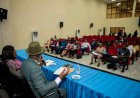
He made the assertion while delivering the 609th Inaugural Lecture of the University of Ibadan on behalf of the Faculty of Basic Medical Sciences. The lecture was titled “The Human Brain; The Three’s (3s) Therein, and Neuroprotection.”
Professor Owoeye explained that any defect, disease, or injury to the brain or spinal cord significantly reduces quality of life, often leading to dependency and placing considerable emotional and financial burden on families and society.
He noted that although the brain is relatively small in size, it is responsible for higher intellectual functions such as thinking, memory, creativity, decision-making, and language, which he described as uniquely human attributes.
The lecturer highlighted what he referred to as the “three S’s” of the nervous system, identifying them as neurones, the brain stem, and the spinal cord. He described neurones as the structural and functional units of the nervous system, the brain stem as the central control hub responsible for critical life decisions, and the spinal cord as a vital extension of the brain stem, making up about two percent of the central nervous system.

He further explained that the spinal cord plays essential roles including mediation of voluntary movement, regulation of muscle tone, transmission of sensory signals, reflex actions, and autonomic functions from thoracolumbar and sacral regions.
Professor Owoeye noted that neurotrauma can result from physical injury, radiation exposure, chemical toxicity, extreme temperatures, and side effects of cancer treatments such as chemotherapy and radiotherapy.
He added that major neurological disorders including Alzheimer’s disease, Parkinson’s disease, multiple sclerosis, and complications arising from brain and spinal cord injuries have been linked to oxidative stress caused by excessive reactive oxygen species that overwhelm the body’s antioxidant defence system.
The lecturer also defined stroke, medically known as cerebrovascular accident, as the sudden loss of brain function due to disrupted blood supply, which may occur through ischemia caused by blockage or hemorrhage, both of which result in neurological impairment.
He warned that certain medications used in treating neurological conditions, including anticonvulsant drugs for epilepsy, may produce toxic side effects that affect brain function.

Professor Owoeye expressed concern over the widespread use of pesticide products in Nigeria, particularly those containing DDVP as a major active ingredient, noting that prolonged exposure could lead to poisoning, tissue damage, and in severe cases, death. He advised the use of protective nose masks and avoidance of enclosed areas recently treated with pesticides.
He emphasized the importance of neuroprotection and research into brain repair mechanisms, particularly the use of antioxidant-rich chemical compounds and medicinal plants in mitigating neural damage regardless of its origin.
He identified bitter lettuce, also known as wild lettuce or “Yanrin,” commonly consumed in southwestern Nigeria, as a plant with potential neuroprotective properties against radiation-induced brain injury.
He also highlighted tomato as a rich source of essential nutrients and bioactive compounds such as vitamin C, vitamin E, carotene, lycopene, flavonoids, and phenolics, noting that tomato pomace powder has demonstrated protective effects against experimental stroke.
Professor Owoeye called on the Federal Government to increase academic, technical, and administrative staffing in universities to match the rising intake of medical and dental students.

The lecture was the sixth in the 2025/2026 academic session of the University of Ibadan Inaugural Lecture Series.