FUNAAB Alumnus Endows College of Biosciences with ₦2M at 4th Annual Conference
FUNAAB Alumnus Endows College of Biosciences with ₦2M at 4th Annual Conference
 UmarFarouk123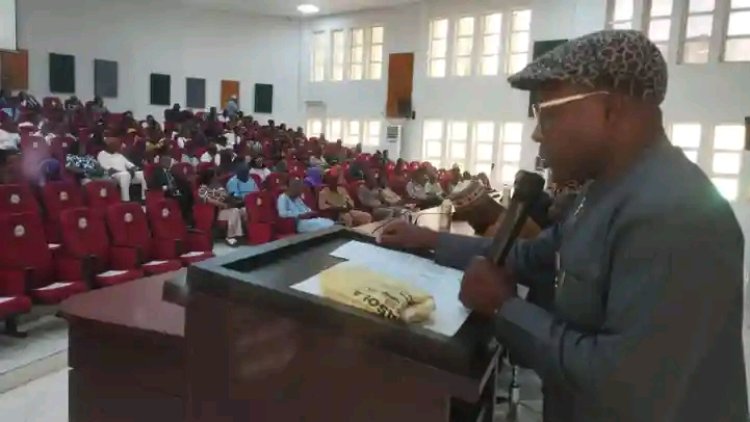
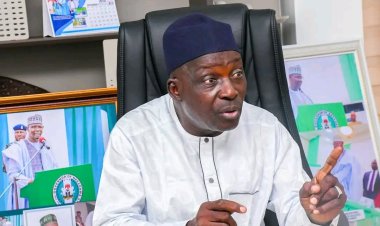
An alumnus of the Federal University of Agriculture, Abeokuta (FUNAAB), Prof. Monsuru Adeleke, has endowed the College of Biosciences (COLBIOS), with the sum of N2 Million to support outstanding and financially-disadvantaged students in the College.
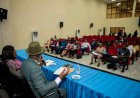
Prof. Adeleke, who is currently the Deputy Vice-Chancellor of the Federal University of Health Sciences, Ila-Orangun, Osun State, announced the endowment while delivering the Keynote Address at the Opening Ceremony of the 4th COLBIOS Conference which began on March 9, 2026, at the Red Chamber of the University.
According to him, the donation would fund two initiatives. The first is a N1 million endowment for the College’s Best Graduating Student, with beneficiaries receiving N100,000 annually for the next 10 years. The second N1 million would support two indigent students over five years. The latter initiative was established in memory of his late father, Alhaji Adeagbo Adeleke, who passed away four months ago.
The conference, themed “Integrating Biotechnology, Artificial Intelligence and Genomics for Sustainable Agriculture, Food Security and Natural Product Discovery,” brought together scholars, researchers, students and industry stakeholders to discuss innovative solutions to contemporary agricultural challenges.
Declaring the conference open, the Vice-Chancellor, Prof. Babatunde Kehinde, represented by the Deputy Vice-Chancellor (Academic), Prof. Olusegun Idowu, described the conference as timely in view of the increasing pressures on agriculture caused by climate change, population growth, food insecurity and environmental degradation.
According to him, these challenges require integrated and technology-driven solutions. He noted that biotechnology, artificial intelligence and genomics represent powerful scientific frontiers capable of transforming agricultural productivity, improving crop varieties, enhancing understanding of disease mechanisms and promoting environmental sustainability.
Prof. Kehinde further stated that the conference sub-themes align with global priorities such as sustainable agriculture, food security, biodiversity conservation, natural product discovery and the One Health approach, which recognises the interconnectedness of human, animal and environmental health.
He encouraged participants to actively engage in discussions, strengthen interdisciplinary collaboration and translate research findings into practical solutions capable of addressing Africa’s agricultural, environmental and health challenges.
Earlier in her Welcome Address, the Dean, COLBIOS, Prof. Iyabode Kehinde, described the conference as an important platform for advancing scientific innovation and collaboration within the biosciences community.
She recalled that the maiden edition of the conference was held in 2017 with the theme “Biosciences for Economic Development,” while the 2019 edition focused on sustainable science for human and agricultural development.
According to the Dean, the current theme reflects the growing importance of integrating biotechnology, artificial intelligence and genomics to tackle emerging challenges in agriculture, medicine and environmental sustainability.
She explained that biotechnology facilitates the development of improved crop varieties through genetic engineering, tissue culture and microbial biotechnology, while genomics enables scientists to understand genetic traits responsible for disease resistance, drought tolerance and increased crop yields.
Prof. Kehinde also highlighted the increasing relevance of artificial intelligence in biosciences research, noting that it enables scientists to analyse large datasets, accelerate natural product discovery and predict bioactive compounds with potential pharmaceutical and industrial applications.
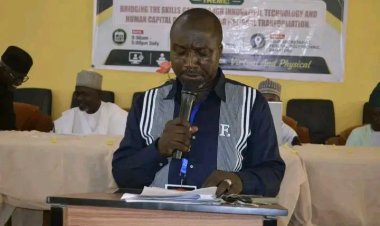
In his Keynote Address, Prof. Adeleke stated that the present era was a digital revolution in biological sciences, driven by the integration of biotechnology, genomics and artificial intelligence. According to him, these technologies were transforming traditional biological research into data-driven scientific innovation capable of addressing major global challenges.
He highlighted the concept of precision farming, where artificial intelligence and machine learning analyse data on crop genetics, climate conditions, soil composition and pest patterns to guide agricultural decision-making. Such data-driven systems, he noted, help farmers determine optimal fertiliser application timing, detect crop diseases early and manage agricultural resources more efficiently while minimising environmental impact.
Prof. Adeleke further explained that the integration of digital technologies, biological sciences and data infrastructure is fostering what he described as a “circular bioeconomy,” where biological resources, technological innovation and data continuously interact to produce sustainable solutions for agriculture, health and environmental management.
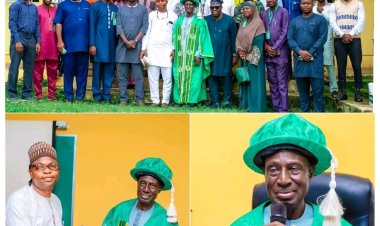
The conference also featured the presentation of the COLBIOS Role Model and Ambassador Awards to individuals recognised for their contributions to research, innovation and the advancement of biosciences. Participants at the conference included scholars from various institutions, postgraduate students and young scientists, who engaged in discussions aimed at strengthening interdisciplinary collaboration and promoting sustainable solutions for food security and global health.
#SDG4 #SDG13 #SDG16