FUNAAB Professor Backs FG Soil Health Policy at 111th Inaugural Lecture
A Professor of Soil Physics at the Federal University of Agriculture, Abeokuta, Johnson Adesodun, has endorsed the Federal Government’s Nigerian Farmers Soil Health Scheme (NFSHS), describing it as a strategic intervention capable of strengthening sustainable agriculture and national food security.
 Philip22
A Professor of Soil Physics at the Federal University of Agriculture, Abeokuta, Johnson Adesodun, has endorsed the Federal Government’s Nigerian Farmers Soil Health Scheme (NFSHS), describing it as a strategic intervention capable of strengthening sustainable agriculture and national food security.
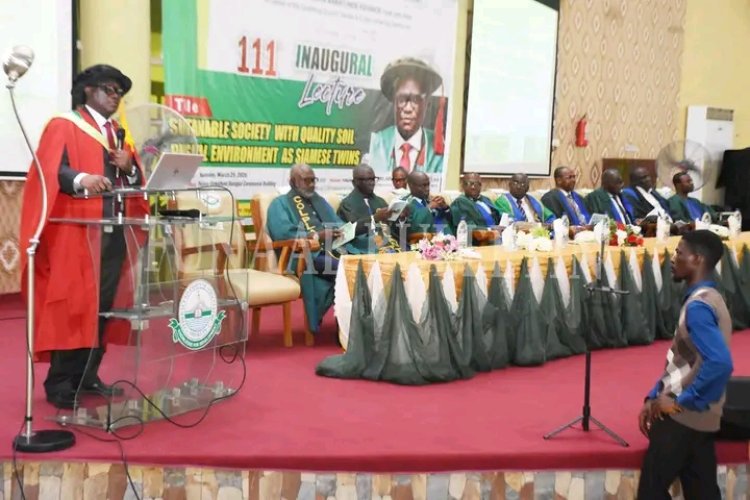
Speaking at the University’s 111th Inaugural Lecture held on March 25, 2026, the academic commended the initiative introduced under President Bola Ahmed Tinubu’s Renewed Hope Agenda, noting that its focus on establishing soil testing laboratories and a national soil information system represents a critical shift in agricultural policy direction. He, however, stressed that the programme’s success would depend heavily on sustained political commitment and effective implementation.
Delivering a lecture titled “Sustainable Society with Quality Soil Physical Environment as Siamese Twins,” the scholar positioned soil as a foundational asset in national development, warning that its neglect could undermine long-term agricultural productivity and environmental stability. He called for the integration of soil health into core economic planning frameworks, arguing that its role in climate resilience and ecosystem sustainability remains underappreciated in policy circles.
According to the Professor, soil physical quality is central to achieving sustainable agricultural systems but has historically been marginalised in public discourse and government strategy. He urged policymakers to recalibrate priorities by embedding soil management into national and sub-national development agendas.
Highlighting implementation gaps, he advocated targeted government interventions to ease adoption of sustainable practices among farmers, particularly smallholders who often face prohibitive upfront costs. He noted that while conservation techniques deliver long-term value, the absence of financial incentives continues to limit widespread uptake.
The lecture also advanced a multi-stakeholder execution model, emphasising the need for coordinated engagement among government agencies, research institutions, extension services, and farming communities. He cautioned against a one-size-fits-all approach, recommending context-specific strategies tailored to Nigeria’s diverse ecological zones.
On innovation, the soil scientist called for accelerated investment in digital agriculture, including soil monitoring systems powered by mobile technologies, artificial intelligence, and data analytics. He stressed that technological deployment must be complemented by structured capacity-building programmes to ensure farmers can effectively utilise these tools.
In his introductory remarks, the Vice-Chancellor, Babatunde Kehinde, described the lecturer’s academic and administrative trajectory as distinguished, citing his contributions to research, institutional leadership, and capacity development.

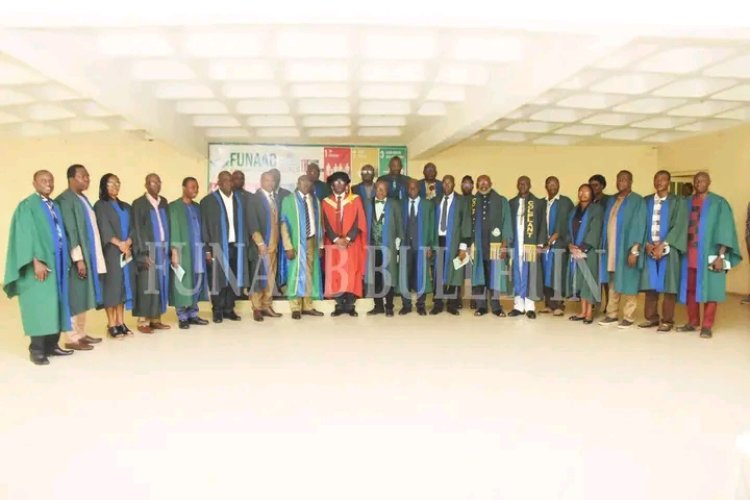
The event attracted key figures from the academic community, including Felix Kolawole Salako, Abayomi Fasina, Ololade Enikuomehin, and Jonathan Atungwu, reflecting broad institutional interest in advancing discourse on sustainable soil management and agricultural transformation.