
Degrees on Hold: Nigeria Cannot Survive Another ASUU Shutdown
The looming ASUU strike poses a serious threat to Nigeria’s university system and the future of students across the country. The federal government is being urged to honour its agreement with ASUU to avoid another disruption of academic activities. Frequent strikes have weakened the quality of education, extended students’ graduation periods, and exposed many young people to social vices during long periods of idleness.
 judithhh
Nigeria’s public university system is once again standing at the edge of disruption.
The looming strike action by the Academic Staff Union of Universities (ASUU) threatens not only academic activities, but also the future of millions of students whose lives have already been battered by years of uncertainty, interrupted calendars, and broken promises. If the federal government fails to act swiftly, the country may be heading toward another avoidable crisis.
The government must not renege on the agreement it entered into with ASUU. Any administration that signs an agreement with university lecturers has a moral and institutional responsibility to honour it fully. Failure to do so sends a dangerous message about the credibility of governance and weakens public trust in the government’s commitment to education. Agreements are not meant to be political tools for calming tensions temporarily; they are binding commitments that must be implemented in good faith.
When the federal government reached an agreement with ASUU last December, many Nigerians welcomed the development with relief. After years of strikes that repeatedly shut down universities, the resolution appeared to signal a fresh start for the nation’s tertiary education sector. Sadly, barely five months later, the government has reportedly failed to fully implement key aspects of the agreement. This failure now threatens the relative peace that universities across the country have recently enjoyed.
The consequences of another ASUU strike would be severe. Frequent industrial actions have already damaged the quality of teaching and learning in Nigerian universities. Students are forced to spend extra years completing programmes designed for four or five years. Academic calendars become chaotic, motivation declines, and the overall standard of education suffers. The repeated interruptions also affect research output, innovation, and the global reputation of Nigerian universities.
Beyond academics, strikes create social problems that ripple through society. When students are left idle at home for months, many become vulnerable to criminal activities, internet fraud, gambling, cultism, drug abuse, and other social vices. Some young women also face unintended pregnancies that derail their education permanently. Parents, meanwhile, bear the emotional and financial burden of uncertainty while watching their children’s futures hang in the balance.
ASUU’s demands should not simply be dismissed as union agitation. Many of the issues raised by the lecturers revolve around staff welfare, university funding, infrastructure, and the overall quality of higher education. These are concerns that directly affect the standard of graduates produced by Nigerian institutions. Universities in Nigeria cannot compete globally if they remain underfunded and poorly managed while their lecturers work under discouraging conditions.
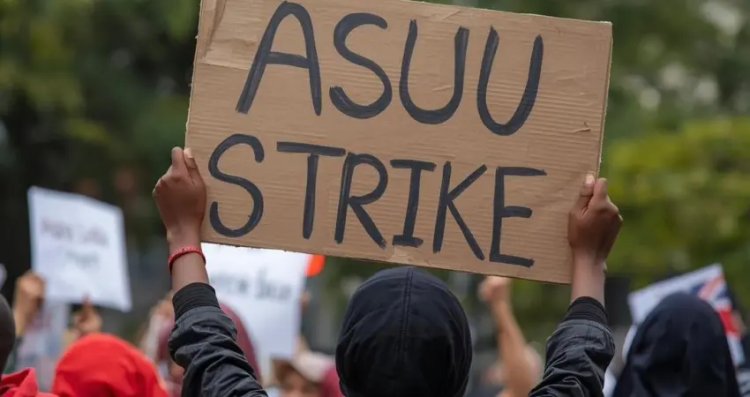
At the same time, ASUU must continue to prioritise dialogue over prolonged industrial action. While strikes remain a legitimate tool for labour unions, constant shutdowns weaken the university system and hurt the very students the union seeks to protect. Both the government and ASUU must return to the negotiation table with sincerity, urgency, and a willingness to compromise in the national interest.
It is deeply troubling that Nigerian students now rank among the largest populations of outbound students globally, trailing only countries like China and India. Thousands of families are sending their children abroad because they no longer trust the stability of Nigeria’s university system. This growing educational migration represents not only a loss of confidence, but also a massive economic drain on the country.
President Bola Tinubu once assured Nigerians that ASUU would not embark on strikes under his administration. This is the time to fulfil that promise. Preventing another shutdown requires more than speeches; it demands concrete action and immediate implementation of agreements already reached.
Nigeria cannot afford another academic paralysis. The future of the country’s youth, the credibility of its institutions, and the stability of its education sector depend on what happens next. The government must act now to avert another ASUU strike before the nation’s universities descend once again into uncertainty and chaos.