FUTMinna VC Reaffirms Global Research Drive as €5M EU–AU "UP-RISE" Delegation Visits
FUTMinna VC Reaffirms Global Research Drive as €5M EU–AU "UP-RISE" Delegation Visits
 UmarFarouk123
The Vice-Chancellor of Federal University of Technology, Minna (FUT Minna), Prof. Faruk Adamu Kuta, has reaffirmed the institution’s commitment to expanding cross-border research collaborations aimed at boosting its global visibility and academic ranking.
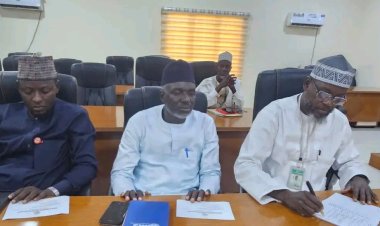
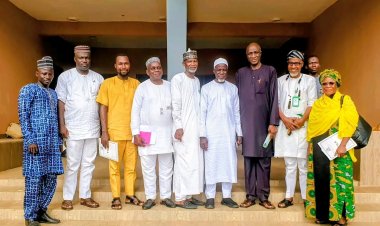
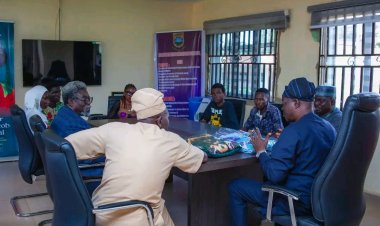
Prof. Kuta made this known while receiving members of the EU–AU Partnership for Resilient, Inclusive and Safe Food System for Everyone (UP-RISE), a key consortium under the Africa Centre of Excellence for Mycotoxin and Food Safety (ACEMFS), during a courtesy visit to his office on Friday, February 27, 2026.
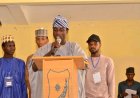
Welcoming the delegation, the Vice-Chancellor described partnerships between universities and international research funding bodies such as UP-RISE as critical to strengthening research output and advancing academic excellence. He highlighted FUT Minna’s strengths within the collaboration, including prudent grant management, highly skilled researchers, and state-of-the-art facilities at ACEMFS designed to drive impactful research and innovation.
Speaking on food security, Prof. Kuta emphasised that true food security goes beyond availability to include safety, noting that safe food is essential for public health, national growth, and sustainable development. He expressed appreciation to the UP-RISE consortium for facilitating the €5 million European Commission grant to FUT Minna through ACEMFS and for recognizing the University as a strategic partner in the project.
In her remarks, UP-RISE Coordinator, Prof. Sarah De Saeger of Ghent University, explained that the delegation’s visit was to assess the level of project implementation at ACEMFS. The evaluation included inspection of research equipment, review of academic programmes coordinated by the Centre, and engagement with Small and Medium Enterprises (SMEs) benefiting from the grant.
She noted that the consortium comprises 13 partners across Europe and Africa, targeting five African countries; Côte d’Ivoire, Benin Republic, Nigeria, Kenya, and South Africa, with the goal of strengthening the African Food Safety System (AFSS) from grassroots to regional levels. Beyond supporting academic research, the project also empowers informal businesses and SMEs to enhance food safety practices within local markets.
“The project is not just an academic programme confined within the university; we are actively working in the field with businesses,” she stated.
Prof. De Saeger described mycotoxin contamination as a global food safety challenge that transcends borders and requires a multidisciplinary response involving chemists, plant pathologists, veterinarians, and computer scientists. She stressed that tackling mycotoxin contamination—one of the most persistent natural toxins worldwide—demands coordinated scientific and policy-driven efforts.
On policy engagement, she disclosed that the delegation met with key stakeholders, including the National Agency for Food and Drug Administration and Control (NAFDAC) and the All Farmers Association of Nigeria (AFAN), to discuss strategies for effective policy uptake and food safety regulation in Nigeria.
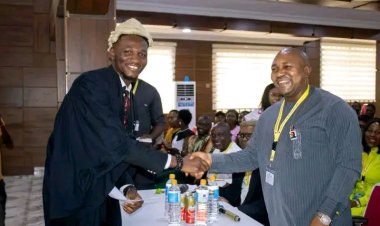
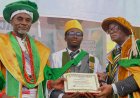
Prof. De Saeger commended the Centre Leader of ACEMFS, Prof. Hussaini Anthony Makun, his team, and the University Management for their notable achievements and successful execution of the European Commission grant.
In his remarks, Prof. Makun stated that the high-level UP-RISE delegation visited Nigeria as part of its mandate to engage stakeholders in combating fungal toxins in food systems. He noted that it was essential for the team to visit FUT, Minna, where the project is officially hosted, and to interact with grant beneficiaries within the Minna metropolis.
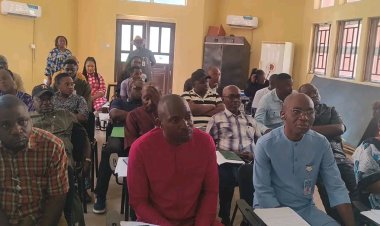
The delegation toured the ACEMFS complex on the University’s main campus, inspecting modern high-tech laboratory equipment, lecture rooms, and other facilities. They also visited grant beneficiaries in Minna, including two Kunu Zaki processing factories and a grain trader at the Minna Modern Market.