Prof. Ochigbo Advocates Biodegradable Alternatives to Curb Nigeria's Plastic Crisis
Prof. Ochigbo Advocates Biodegradable Alternatives to Curb Nigeria's Plastic Crisis
 UmarFarouk123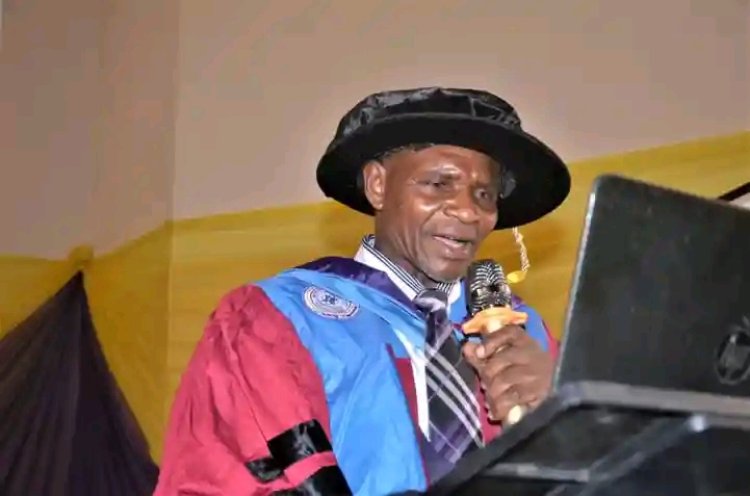
Professor Stephen Shaibu Ochigbo of the Department of Chemistry has called for a decisive shift from managing plastic waste to preventing it through the development of biodegradable polymer materials. He described plastic pollution as one of the gravest environmental challenges facing the modern world.
The Professor of Polymer Chemistry made this appeal while delivering the 120th Inaugural Lecture of the Federal University of Technology (FUT), Minna, titled “Waste Plastics’ Environmental Pollution: Proffering a Holistic Solution Using Biodegradable Polymer Blends and Composites.” The lecture was held on Thursday, 26 February 2026, at the University Auditorium, Main Campus.
In his presentation, Prof. Ochigbo revealed that global plastic waste generation currently exceeds 381 million tonnes annually and is projected to double by 2034. Nigeria, he noted, contributes over 2.5 million tonnes each year, much of which ends up blocking drainage systems, contaminating water bodies, and overburdening landfills.
While acknowledging the numerous advantages of plastics , including durability, light weight, and versatility ,
he stressed that their non biodegradable nature, particularly in the case of single use plastics (SUPs), continues to pose serious environmental risks.
According to him, existing waste management approaches such as recycling and landfilling, though important, do not adequately address the root cause of the problem.He therefore advocated preventive innovation through the adoption of biodegradable polymer blends and composites. These materials, he explained, naturally decompose through microbial activity into biomass, carbon dioxide, and methane, thereby significantly reducing long-term environmental impact.
Highlighting Nigeria’s rich agricultural base, Prof. Ochigbo identified starch and natural rubber as promising raw materials for producing eco-friendly plastics locally. He reflected on his three decades of research in polymer science, including the development of waterborne paint binders derived from natural rubber latex and starch blends, some of which have secured national patents.
He further disclosed ongoing research into biodegradable thermoplastic films produced from non-conventional starch sources such as the Amura plant (Tacca involucrata), which does not compete with food crops. He noted that the establishment of the Biomaterials Research Group (BioReG) at FUT Minna is already facilitating progress toward the industrial scale production of biodegradable thermoplastics.
In his policy recommendations, Prof. Ochigbo urged the enforcement of stricter regulations on single use plastics, the strengthening of waste sorting systems, and increased investment in research and development.
He also emphasised the importance of collaboration between government and professional bodies, including the Polymer Institute of Nigeria, reiterating that plastics themselves are not inherently harmful, but rather the methods of their production, usage, and disposal.
“Plastics will continue to play a vital role in emerging technologies, including smart materials and artificial intelligence,” he noted, stressing that sustainable production practices and biodegradable alternatives are essential for the future.
In his remarks, the Vice-Chancellor, Prof. Faruk Adamu Kuta, commended Prof. Ochigbo for his impactful scholarship and dedication to addressing a critical national environmental issue through innovative research. He reaffirmed the University’s commitment to promoting solution driven research that tackles real world challenges.
The lecture was well attended by principal officers, deans, directors, academic staff, students, and invited guests, all of whom listened attentively to the thought provoking presentation.